On June 26, 2026, Cameroon found itself absent from the 2026 World Cup, a void that strikes at the nation’s core. After the Indomitable Lions dazzled at the 1990 World Cup in Italy, the failure to qualify marks a stark break with a sporting tradition that unites cities, villages and the diaspora. The gap left by the Blues on North American pitches is felt in the cafés of Douala, the schools of Yaoundé and the homes of Cameroonian communities abroad.
Football is no longer just a game; it is the thread that weaves national identity. Since the 1990 exploits, each generation has nurtured the hope of a return to the world stage, turning victories into collective pride and defeats into lessons. The current failure should not be dismissed as a mere slump, but examined as a symptom of a system that, according to Professor Filomain Nguemo, has lost sight of the demands of modern sport.
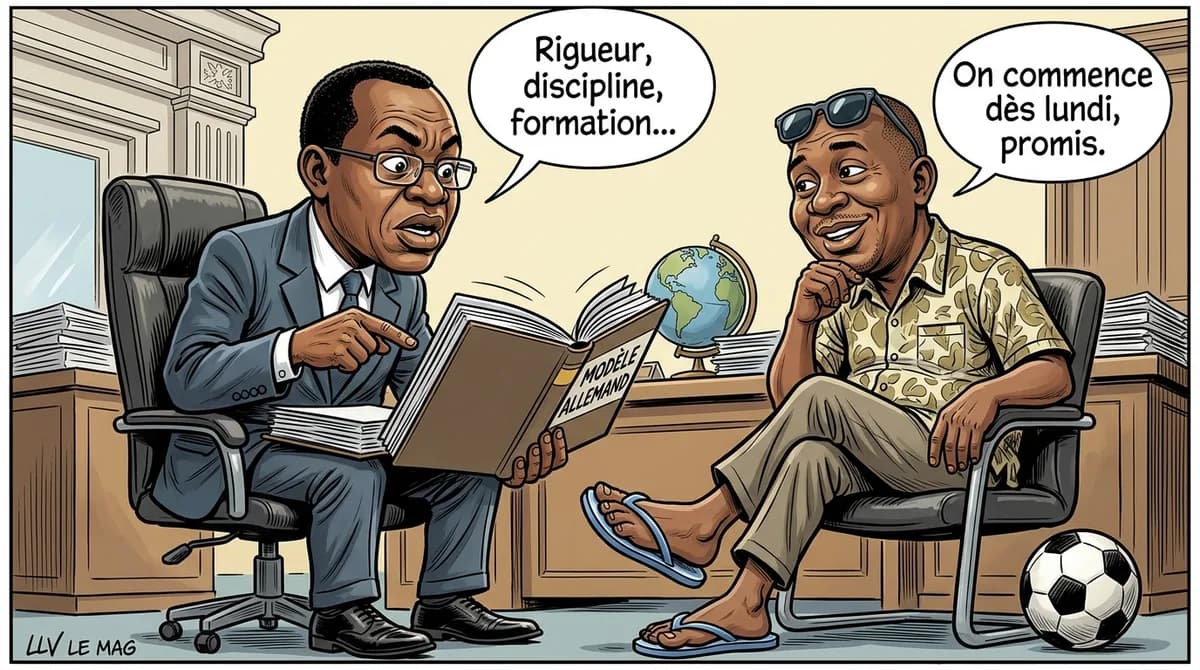
Professor Filomain Nguemo, a sports science academic and former footballer, draws on the German model to outline a series of overhaul proposals. He notes that Germany built its success on strict governance, technical training from an early age, and transparent resource management. By emulating this approach, he urges Cameroonian officials to rethink the national football structure, from grassroots to the governing bodies.
Since the missed qualification, public debate has quickly focused on the responsibility of the Ministry of Sports, the FECAFOOT president, the national coach and even certain players. This tendency to individualise the failure, while understandable, obscures systemic dysfunctions. Professor Nguemo reminds that blaming a single actor ignores the weak links in a chain that must operate as a coherent whole.
Modern football rests on a scientific organization where governance, strategy, transparency and resource management outweigh raw talent. Without clear direction, investments remain scattered, academies lack benchmarks and clubs struggle to attract sponsors. A structured reform would set performance criteria, secure financing and impose rigorous expenditure controls, thereby ensuring optimal use of public and private funds.
For the Cameroonian citizen, the repercussions are manifold. Beyond the loss of prestige, the country's absence on the world stage deprives young talent of an international showcase, curtails economic benefits from television rights and partnerships, and weakens the sense of belonging to a victorious sporting community. The void left by the Indomitable Lions translates into missed opportunities for local clubs, sponsors and supporters awaiting a revival.
In light of these findings, Professor Nguemo proposes a three‑phase action plan: first, establish an independent governance body with regular audits; second, develop a national network of academies aligned with German standards; third, create a transparent support fund dedicated to training and infrastructure. If these measures are adopted with resolve, Cameroon can reclaim its place among footballing nations and offer its youth the promise of a brighter future.