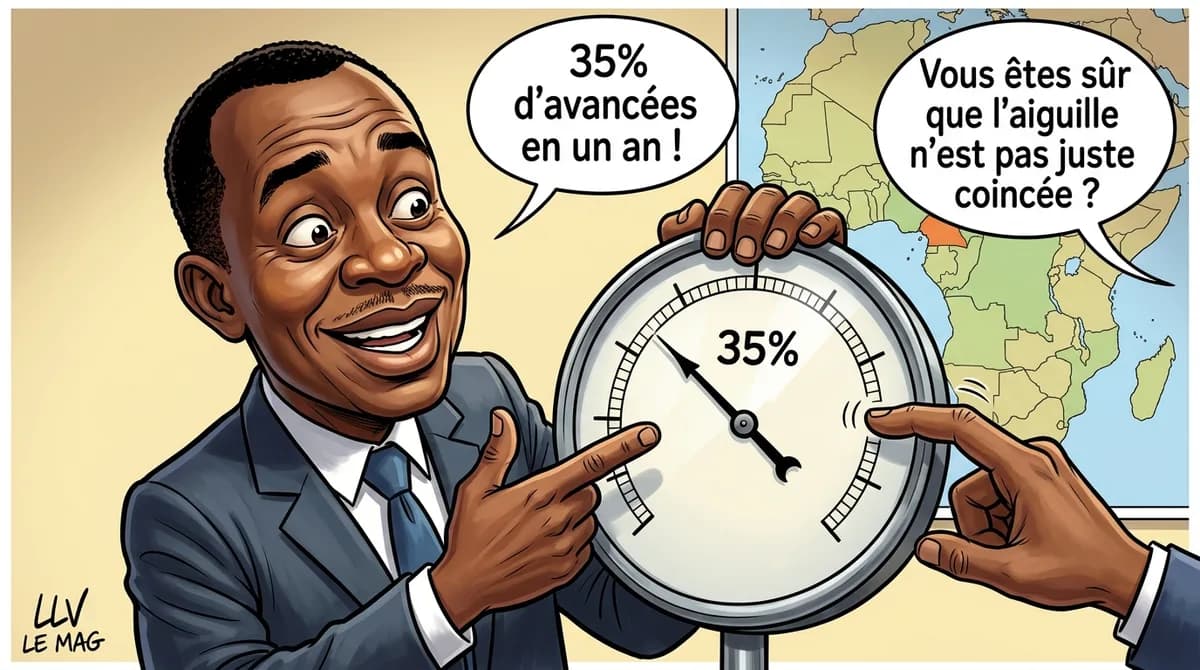
On July 1, 2026, the African Peace Accord Barometer released its first assessment of the treaty signed in Washington between the Democratic Republic of Congo and Rwanda. The report, produced by an independent monitoring and evaluation initiative, indicates that the implementation rate stands at just 35 %, a figure that starkly contrasts with the expectations generated at the official signing.
The agreement was initially concluded on June 27, 2025, by the foreign ministers of the two countries, and was later endorsed in December 2025 by the heads of state – Rwandan President Paul Kagame and Congolese President Félix Tshisekedi – in the presence of U.S. President Donald Trump, who chaired the ceremony in Washington. The dual signing was intended to cement a durable cease‑fire and pave the way for a structured political dialogue.
According to the July 1 report, implementation does not exceed one‑third, amounting to 35 % of the commitments made. The document notes that disarmament measures, troop withdrawals and the creation of security zones remain largely unfinished, even though the parties had pledged to establish a joint monitoring mechanism.
This low rate reveals persistent obstacles on the ground. Mistrust between the Congolese armed forces and Rwandan militias, difficulties in guaranteeing civilian safety, and the absence of a robust verification framework are hampering progress. Without an effective oversight mechanism, the commitments remain unfulfilled promises, fueling the risk of renewed violence.
For neighboring countries, especially Cameroon, the situation holds strategic importance. The shared border with the DRC already sees flows of refugees and illicit trafficking; a setback in stability could increase migration pressures toward Cameroon's North and Extreme‑North regions. Moreover, cross‑border trade, vital to local economies, could be disrupted if hostilities resume.
Analysts stress the need for reinforced international support, both in financing and mediation. The report recommends establishing a mixed commission with sanctioning powers and mobilising regional observers to ensure transparency of actions. Such a dynamic could rebuild trust between the parties and accelerate the fulfilment of commitments.
As the implementation timeline stretches, attention turns to the coming months. Cameroon, like the rest of the region, awaits concrete advances that turn words into actions. The Barometer’s monitoring will remain a key indicator of the two countries’ ability to turn the accord into lasting peace, a prerequisite for stability in the Great Lakes region and the prosperity of bordering populations.