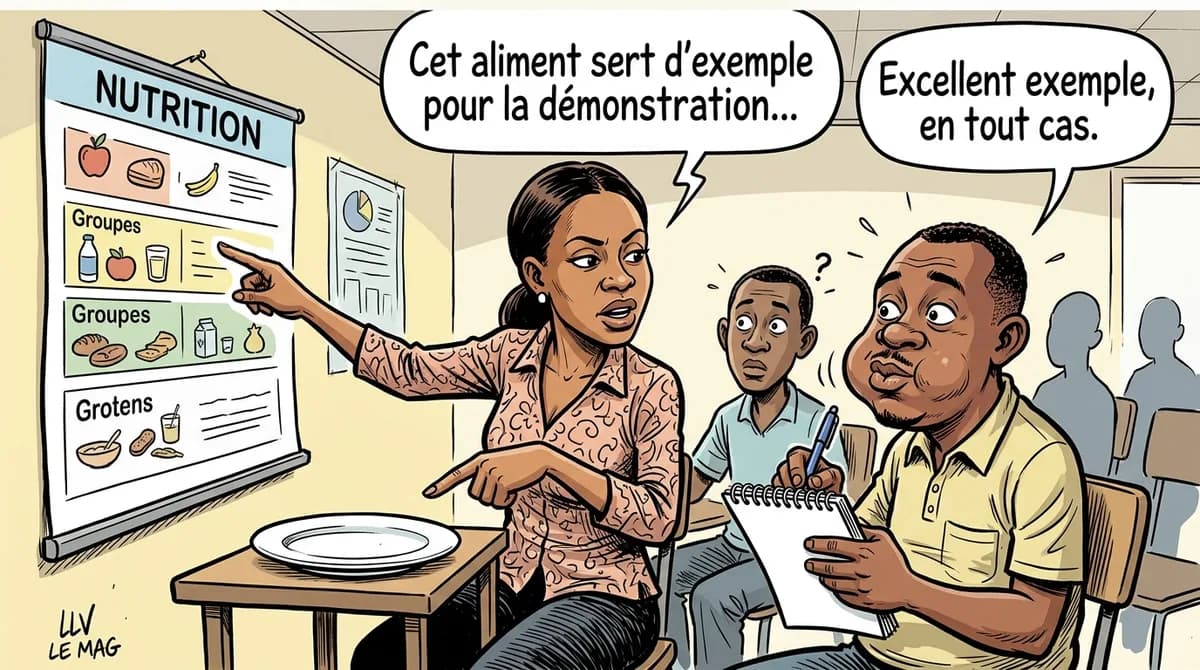
This morning, health teams in Adamawa gathered around a working table where plates, monitoring forms and medical records were intermingled. The goal: to equip practitioners with nutritional tools capable of supporting patients living with HIV, especially women and children, whose vulnerability is well documented in recent data.
The workshop, organized by the World Food Programme (WFP) in partnership with the Ministry of Public Health, spans three days. It combines lectures, hands‑on sessions and experience‑sharing so that each participant leaves with a clear understanding of good dietary practices and how to integrate them into clinical follow‑up. This approach aligns with the now‑accepted triad: antiretrovirals, psychological support and nutritional assistance.
‘Medication alone is no longer enough,’ reminded the Minister of Public Health, Dr. Manaouda Malachie, during the opening ceremony. He noted that the second impact assessment of HIV on the Cameroonian population (CAMPHIA 2024/2025), conducted from September 2024 to January 2025, updated the progress made. The numbers speak for themselves: 21,000 new infections were recorded in 2025, an annual incidence of 0.15 % among those aged 15‑49.
The gender gap is striking: 0.24 % incidence among women versus 0.06 % among men, i.e., four times more new infections in women. This disparity fully justifies the focus on nutrition for pregnant women and breastfeeding mothers, whose immune status is often more fragile. By integrating tailored dietary advice, caregivers hope to reduce malnutrition‑related complications and improve adherence to antiretroviral therapy.
For participants, the training represents a rare opportunity to shift from a purely biomedical approach to a holistic view of care. The modules cover meal composition, energy density, management of drug side‑effects and prevention of deficiencies. Each professional will receive a protocol booklet, nutritional monitoring sheets and a ready‑to‑use toolkit to be deployed in health centres across the region.
The expected outcomes are multiple. On one hand, better treatment adherence should translate into lower relapse rates and fewer hospitalisations. On the other, addressing the nutritional dimension strengthens patients’ confidence in the health system, a key factor for encouraging early testing and regular follow‑up. At the community level, nutrition messages delivered by health agents can also raise awareness among families and help combat HIV‑related stigma.
As Cameroon continues its fight against the epidemic, this joint effort by WFP and the Ministry of Public Health shows that the health response must rest on multidimensional strategies. While early feedback is promising, authorities pledge to extend the model to other regions so that every Cameroonian, wherever they are, can benefit from comprehensive and appropriate support.