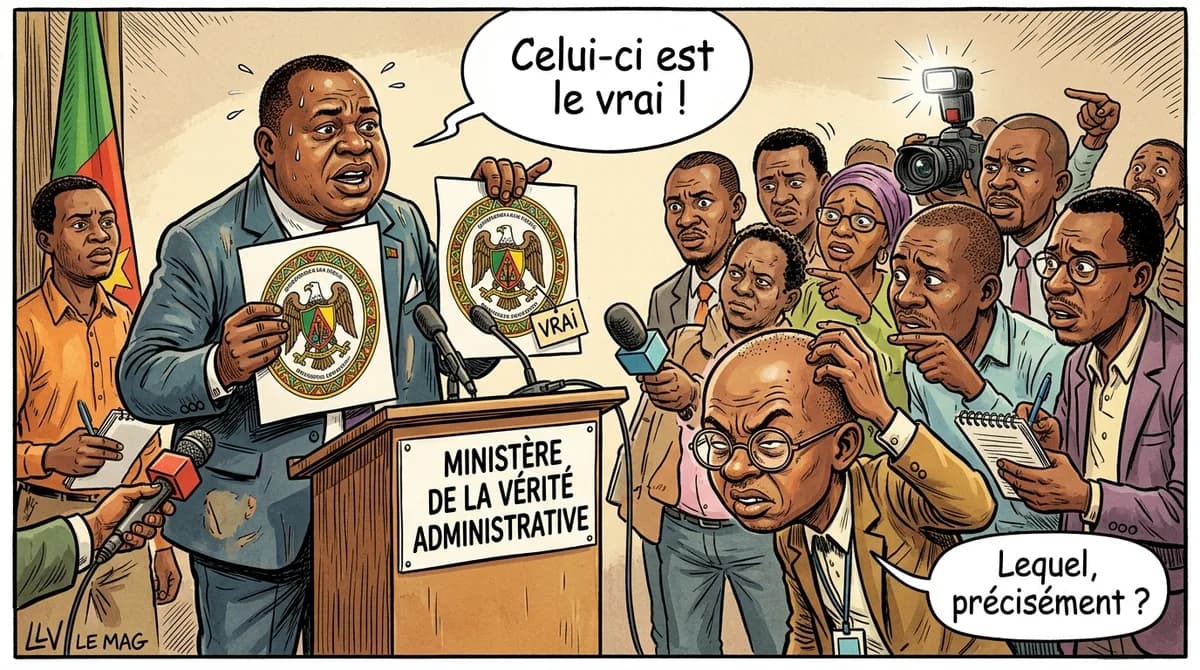
On July 2, 2026, Yaoundé became the stage for a new political twist. For several weeks, the media and social networks have been buzzing about a file that is making a lot of noise: a man turned up at the premises of the national radio, CRTV, and slipped a sealed envelope containing two documents presented as presidential decrees. According to France 24’s correspondent in Yaoundé, Marcel Amoko, these decrees would have appointed a vice‑president of the Republic and a new government.
CRTV officials, accustomed to verification procedures, immediately questioned the authenticity of the contents. After routine checks, they chose not to broadcast the documents, opting for caution in the face of possible manipulation. This discreet decision fed speculation: why such a gesture, and what is really hidden behind it?
What makes the case particularly intriguing are the official presidential seals and the signature attributed to Paul Biya that accompany the two texts. The presence of these marks, usually reserved for authentic acts, heightened the doubt. Archivists and legal experts in the country point out that merely copying seals does not confer a decree’s legitimacy, but a forged signature can still sow confusion in public opinion.
For Cameroonians, the issue goes beyond a simple act of forgery. It touches the trust placed in state institutions and public media. In a context where transparency is often tested, the circulation of a fake document could be used to sow confusion, influence parliamentary debates, or pave the way for unexpected appointments. The risk of orchestrated disinformation threatens political stability and the credibility of the executive.
After several weeks of silence, the government finally broke its muteness by issuing an official communiqué. Without detailing the content of the text, the authorities indicated that an investigation is underway to determine the origin of the envelope and the veracity of the documents. This late statement responds to growing pressure from civil society and the media, which demand clear and swift answers.
The announced inquiry raises crucial issues for press freedom and the protection of institutions. If the documents turn out to be counterfeit, those responsible for their production could be prosecuted for identity theft and defamation of the presidency. Conversely, if part of the content proves authentic, it could trigger an unexpected political reshuffle, affecting alliances within the ruling party and the dynamics of Parliament.
While the country awaits the investigation’s conclusions, the lesson is clear: citizen vigilance and journalistic rigor remain the best bulwarks against manipulation. Cameroonians, both at home and abroad, are watching closely how the authorities will handle this episode. A transparent and swift response could restore confidence, whereas an opaque handling risks feeding the scepticism already present among the population.