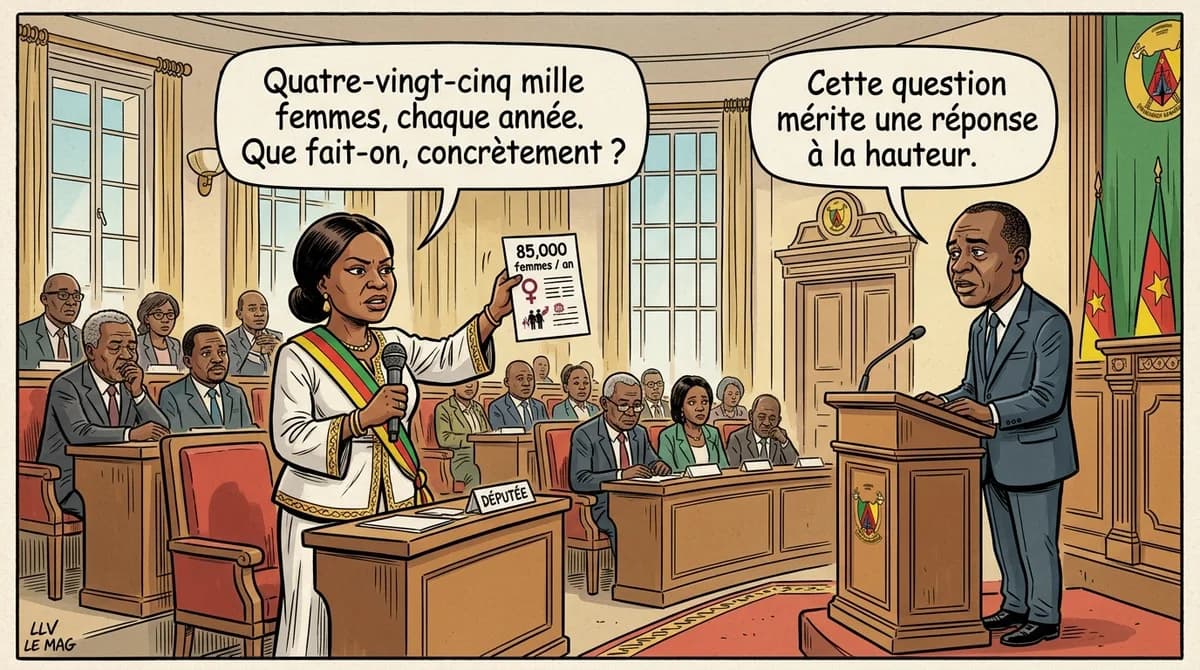
On June 19, 2026, during a plenary session of the National Assembly, Deputy Angèle Toukam Tela posed an oral question to the Minister for Women's Promotion, Abena Ondua, concerning the eradication of femicides. This intervention comes against a backdrop where gender‑based violence is increasingly occupying a prominent place in Cameroonian parliamentary debates.
The term 'femicide' refers to the killing of a woman because of her sex, often perpetrated by an intimate partner or a family member. Globally, human‑rights organisations estimate that 85,000 women are intentionally killed each year by close acquaintances, a figure that underscores the scale of the problem and its systemic nature.
In Cameroon, Minister Abena Ondua was called upon to specify the measures envisaged to end these crimes. While the source text does not detail the minister’s response, it notes that the issue was raised as a priority, hinting at a political will to strengthen protection for women.
The root causes of femicides lie in social norms that legitimize male domination, limited access to justice and protection mechanisms that are often inadequate. In many parts of the country, fear of reporting abuse persists, fueled by stigma and a lack of confidence in judicial institutions.
For Cameroonians, each femicide represents an irreversible loss: a mother, a sister, a worker who disappears, bringing economic and psychological repercussions to families and communities. The social cost translates into reduced female participation in public life and the country’s economic growth.
Parliamentary debates provide a platform to propose legislative reforms, such as harsher penalties, the creation of specialised units for domestic violence, and the implementation of awareness programmes. Developing reliable statistics and training law‑enforcement officers are also essential to ensure an effective response.
The future will depend on the government’s ability to turn verbal commitments into concrete actions. Rigorous monitoring of the promises made by the minister, coupled with civil‑society mobilisation, could create the conditions for a lasting reduction of femicides in Cameroon. Cameroonians are awaiting clear answers and tangible measures to protect women and guarantee their right to life.