
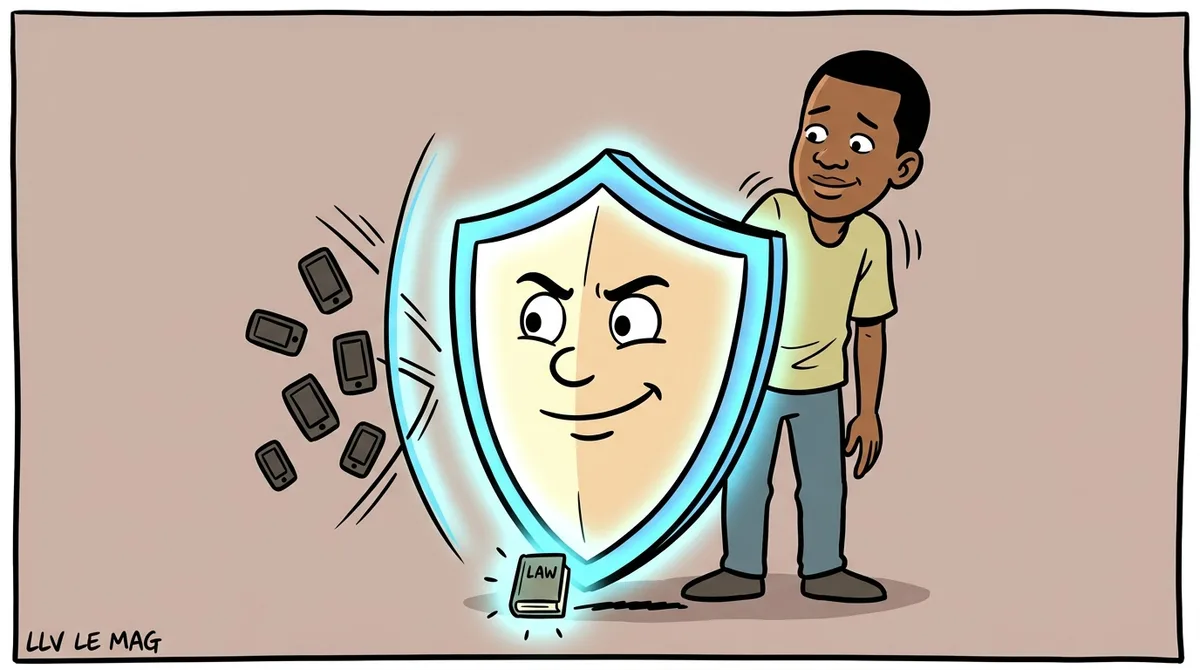
On July 13, 2026, in Yaoundé, the Fondation Cœur de Mère, SNK and Cyber Inno Shield presented the "Digital Shield" program, an unprecedented initiative that brings together digital experts to prevent, raise awareness and support victims of cyberharassment and sextortion, two offences now punishable under Cameroonian law.
In a country where internet access has tripled in five years, online abuse is exploding. Cyberharassment, in the form of hateful messages or threats, and sextortion, the blackmail involving the dissemination of intimate photos or videos, often leave victims isolated, with no recourse or listening ear. Ghislaine Mangoua, general coordinator of the Fondation Cœur de Mère and director of SNK, reminded that "victims often find themselves left to their own devices, not knowing where to turn."
The program is built around three pillars: prevention, through information campaigns in schools and universities; awareness, via training workshops for digital‑sector actors and law‑enforcement; and support, with a telephone helpline and a network of specialised psychologists. The presence of actress Muriel Leumeni, active in the fight against violence against women, underscores the importance of societal mobilisation beyond the legal framework.
Why is this initiative crucial? First, the criminalisation of cyberharassment and sextortion creates a legal framework that allows authorities to prosecute aggressors, but without a support system, fear of stigma still prevents many victims from filing complaints. Second, the lack of training for law‑enforcement on the specifics of digital crime often leads to ineffective investigations. The "Digital Shield" aims to fill these gaps by equipping police with technical tools and up‑to‑date legal knowledge.
The concrete consequences for Cameroonian citizens are already noticeable. In Yaoundé schools, information sessions have enabled more than 1,200 students to recognise the signs of online harassment and know the steps to take. At the community level, local associations report a 30 % increase in sextortion reports since the program’s launch, evidence that the fear of staying silent is waning.
However, the challenge remains immense. The rapid spread of content on social media makes evidence removal difficult, and the legislation, though strict, requires rigorous enforcement. The success of the "Digital Shield" will depend on NGOs’ ability to maintain a constant dialogue with public institutions, fund 24/7 assistance lines, and guarantee victim confidentiality.
Looking ahead, organizers plan to expand the program nationwide, with modules adapted to rural areas where internet access is more limited. The Cameroonian model could also inspire other African nations grappling with the same digital scourges. The message is clear: technology should not be a playground for violence, but a lever for empowerment—provided society as a whole equips itself to protect it.