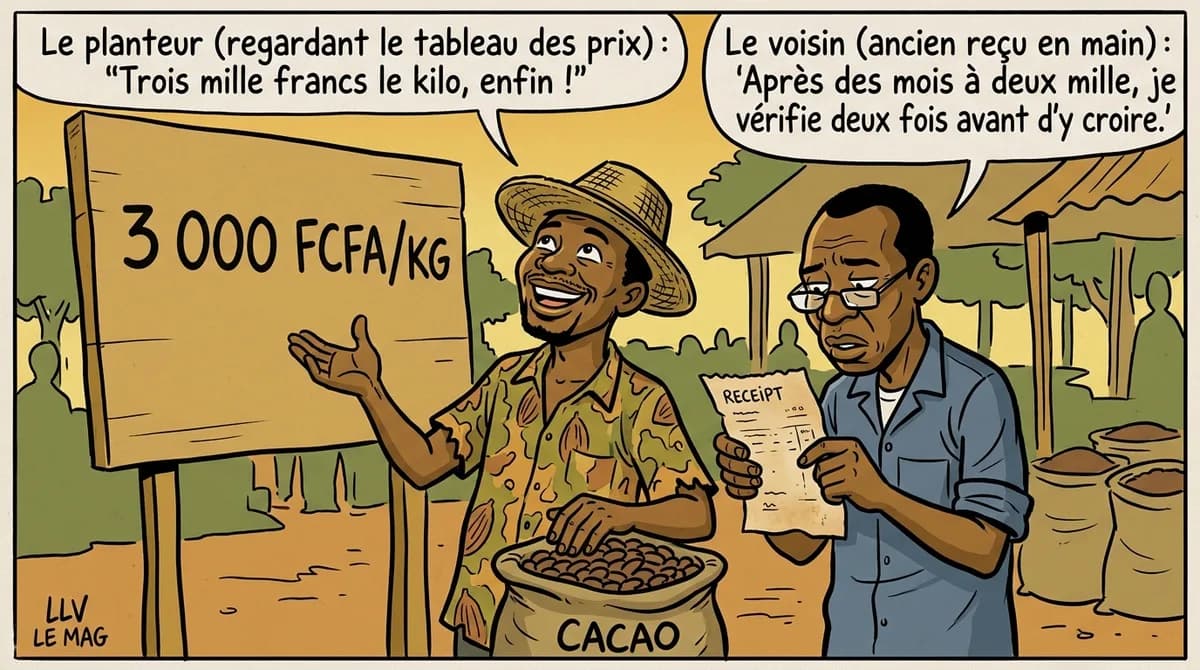
On July 7, 2026, the Cameroonian cocoa price broke the symbolic 3,000 FCFA per kilogram threshold, reaching 3,227 FCFA according to the CAF quotation and 3,149 FCFA FOB, based on data released at 15:41 GMT. This rebound marks the first time in several months that the price has surpassed this level, recalling the robust figures seen before the 2025 slump.
Since the start of the year, producers have endured a period of decline below the 2,000 FCFA per kilogram line, a level that has eroded the profitability of family farms. The 2024‑2025 harvests were sold at prices that no longer covered production costs, forcing many entrepreneurs to cut back on fertiliser and plantation maintenance investments.
In 2025, the market hit a historic peak close to 5,000 FCFA per kilogram, a high that has not been replicated since. That one‑off summit demonstrated the sector's potential when conditions are favourable and international demand is strong. The return above 3,000 FCFA, although far from the record, therefore represents a first step toward the expected stabilisation.
For growers, the price resurgence immediately translates into an improved cash flow. The extra income allows them to settle debts incurred during the downturn, purchase higher‑quality inputs and, crucially, reinvest in the regeneration of ageing trees. Confidence is returning, along with the prospect of a more resilient production system against climate shocks.
On a macro‑economic level, the cocoa price rise should bolster Cameroon's export earnings, a sector that accounts for a significant share of agricultural GDP. Better valuation of the raw product also gives the government more room to consider targeted support measures, such as subsidies for local processing or tax incentives for cooperatives.
Nevertheless, volatility remains the main challenge. A one‑off rebound does not guarantee a lasting trend; fluctuations in global markets, shifts in Asian demand and unpredictable weather can quickly reverse the momentum. Actors across the chain – exporters, processors and authorities – must therefore strengthen price‑monitoring mechanisms and encourage diversification of cocoa‑based products to reduce reliance on raw bean exports.
The future of Cameroonian cocoa will depend on the ability to turn this fresh impetus into a sustainable dynamic. Coherent public policies, broader access to financing and better organisation of producers will be the key levers to consolidate current gains. If these conditions are met, the sector could not only recapture the 2025 highs but also pave the way for sustainable growth that benefits rural communities.