
On July 7, 2026, Public Health Minister Malachie Manaouda unveiled a chilling figure: 21,000 new HIV diagnoses for 2025. This total, drawn from the national Camphia 2024‑2025 survey, confirms that the pandemic remains a major issue for Cameroon, despite reported advances in treatment.
The study, conducted from September 2024 to January 2025 across the country's ten regions, formed the basis of the official presentation at the Hilton in Yaoundé. It shows that the number of people living with HIV exceeds 501,000, a heavy health burden that strains health services and civil‑society organisations.
Geographic disparities are striking. The Northwest records the highest prevalence at 5.6 %, followed by the Centre outside Yaoundé at 5.3 % and the South at 4.8 %. These figures reflect local dynamics where access to testing and prevention services remains uneven, underscoring the need for a targeted response.
Women bear the brunt of the epidemic, especially in the 30‑34 and 50‑54 age groups. This concentration of infections among working‑age adults amplifies economic and social repercussions, while highlighting the importance of interventions tailored to women of reproductive age.
On the treatment front, the picture is more encouraging: 96.4 % of diagnosed individuals are on antiretrovirals, and 95 % of them have an undetectable viral load. This performance places Cameroon among the countries where medical care achieves remarkable success rates.
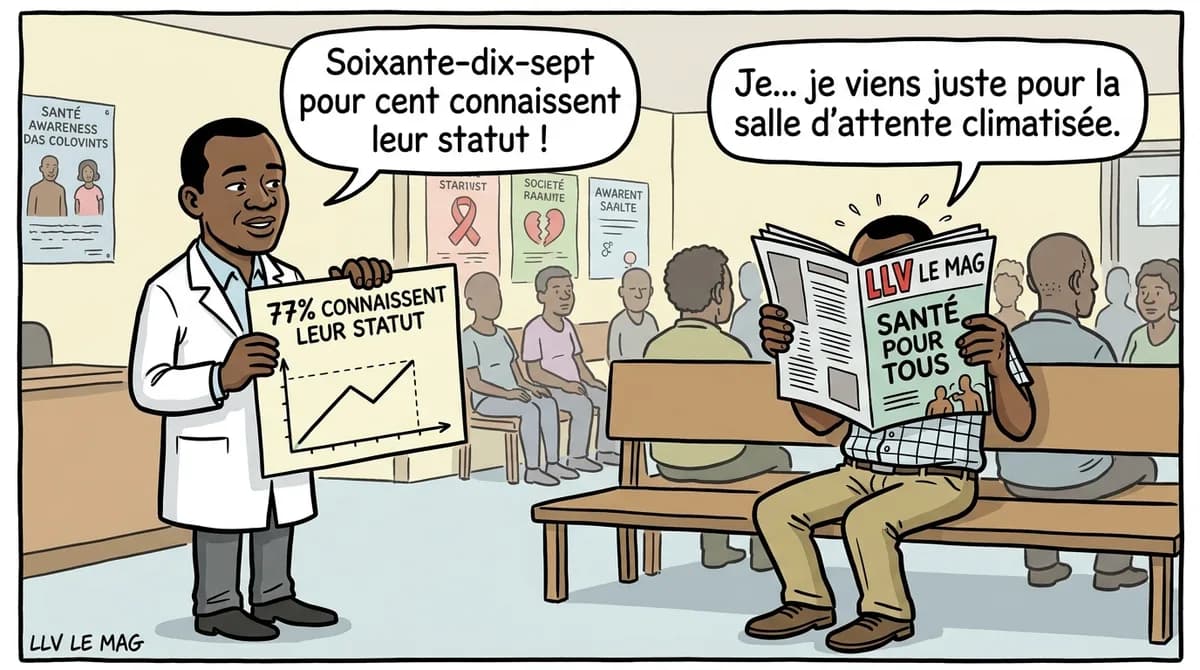
However, the flip side remains knowledge of serostatus. Only 77.1 % of people living with HIV are aware of their infection, leaving nearly a third in the dark. The Health Ministry stresses the need to boost testing campaigns, particularly among youth and men, who remain the most under‑represented groups in testing.
The challenge for the coming months is clear: expand mobile testing sites, engage community leaders and adapt messages to the realities of young men. Without increased mobilisation, treatment gains risk slipping away and the chain of transmission will continue to be fed. Cameroon must turn these data into concrete actions so that every Cameroonian, regardless of age or gender, can know their status and access the care they need.