
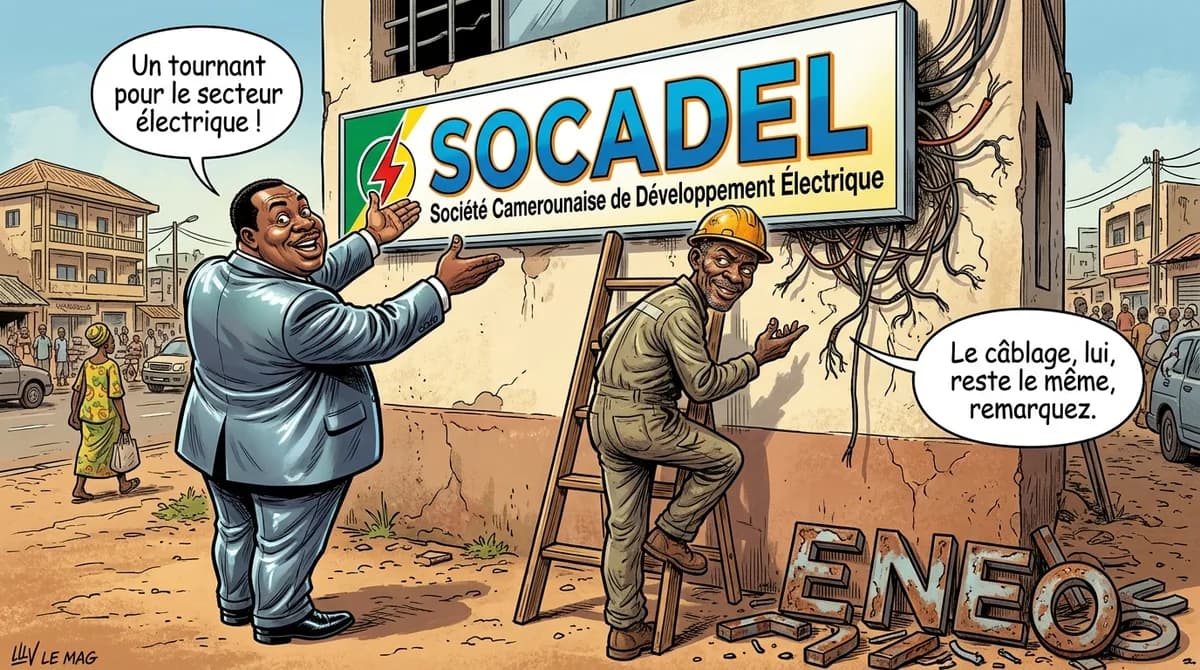
On June 19, 2026, the Cameroonian government officially unveiled the Cameroon Electricity Company, SOCADEL, slated to take over from the current ENEO. The announcement, made by the Minister of Water and Energy in Yaoundé, comes under the presidential decrees of May 4, 2026, which restore full state control of the electricity sector after the buy‑back of Actis Group’s shares.
The government justifies the overhaul of the public monopoly by pointing to a series of chronic failures: a persistent financial deficit, high technical and commercial losses, weak bill collection, and a glaring lack of investment in distribution networks. According to officials, these shortcomings jeopardise the country’s ability to guarantee a stable power supply to a population that relies on electricity for daily life and economic development.
To turn the tide, a three‑year restructuring plan for 2026‑2028 has been drafted. It includes improving revenue collection, refinancing the sector’s public debt, expanding the customer base—especially in rural areas—and modernising distribution infrastructure, with the aim of cutting technical losses by several percentage points.
Combating fraud also takes a central role. In just three weeks, state services recorded nearly 3,000 illegal connections in Yaoundé and Douala, exposing the scale of a problem that drains public finances. A national anti‑fraud brigade will be created to tighten inspections, punish clandestine hookups and restore consumer confidence.
For Cameroonian households, the promise of a more reliable service is already being translated into concrete steps: bolstering technical teams, rolling out smart meters, and instituting more transparent monitoring procedures. If these initiatives bear fruit, the frequent outages that cripple schools, hospitals and small businesses could diminish markedly, creating an environment conducive to productivity and local growth.
Nevertheless, the road ahead is fraught with challenges. Refinancing the debt will require the confidence of international donors, while modernising the grid will depend on skilled personnel, often scarce in the sector. SOCADEL’s success will therefore hinge on the government’s ability to combine political will, financial transparency and private‑sector mobilisation.
If the 2026‑2028 targets are met, Cameroon could finally have a resilient electricity system capable of supporting the energy transition and the continent’s development ambitions. The coming months will be critical to gauge the reform’s real impact and to see whether SOCADEL can truly turn the promise of reliable power into an everyday reality for millions of Cameroonians.