Cameroon boasts a rich natural heritage, including forests, minerals, and energy resources, which form a significant part of its national wealth. However, leveraging these resources remains a major challenge for the country, which faces rapid population growth and often unsustainable exploitation practices.
The African Development Bank (AfDB) and the World Bank emphasize the need to integrate these resources into national accounts to provide a more accurate picture of Cameroon’s economy. This approach would help guide development policies and attract sustainable investments.
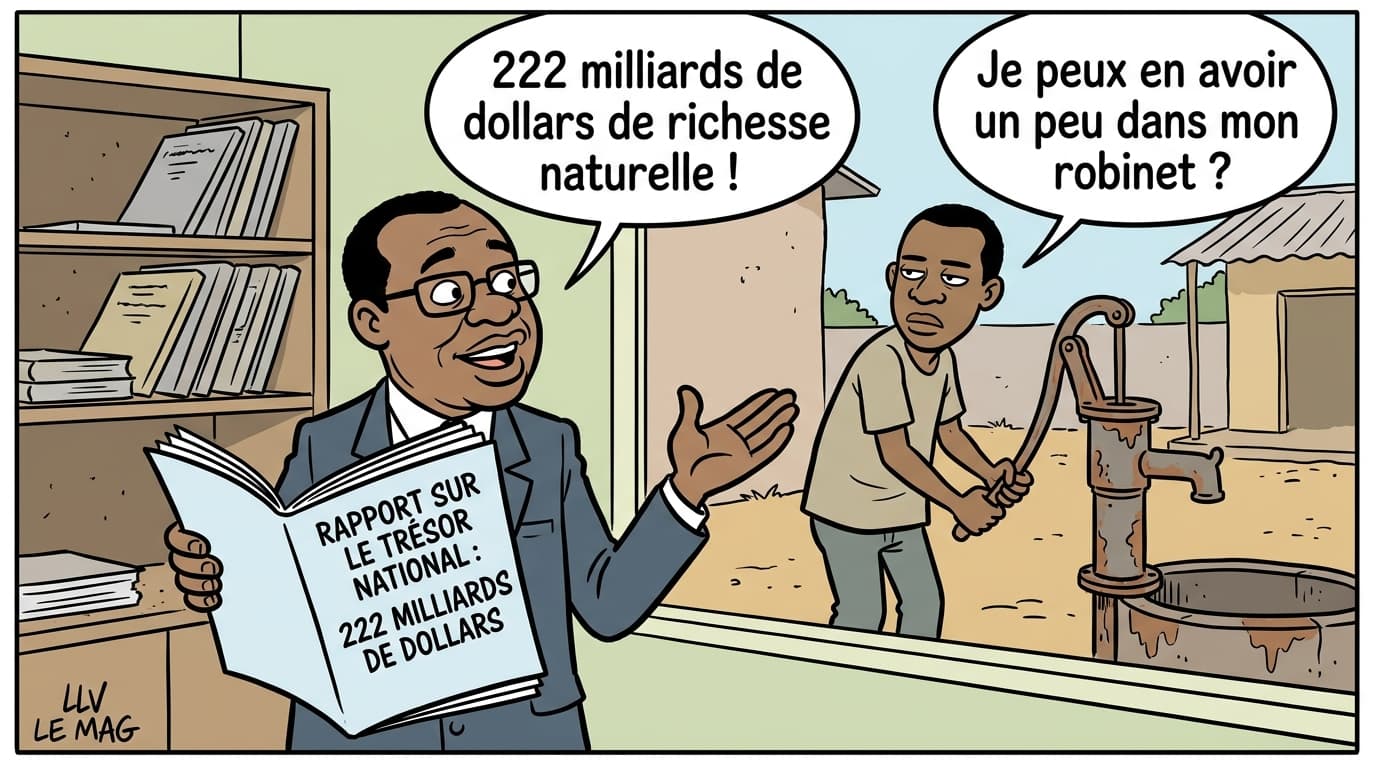
Cameroon’s natural capital is valued at $222.3 billion (130 trillion FCFA) by the African Development Bank. Key figures include: natural capital representing 39% of the country’s national wealth; natural resource rents declining from 6.5% to 4.7% of GDP between 2018 and 2020; per capita natural capital dropping by 47.9% from 1995 to 2020; and the World Bank estimating Cameroon’s natural wealth at 331.8 trillion FCFA in 2025. Human capital accounts for 54% of the national wealth, ahead of natural and produced capital.
The AfDB’s figures highlight a stark contradiction: Cameroon possesses vast natural capital, yet its exploitation no longer yields the same economic benefits as before. This trend is partly due to unsustainable management of resources, particularly forests and minerals, as well as population growth, which dilutes per capita value.
Incorporating these resources into GDP calculations, as advocated by the AfDB and World Bank, is more than a technical exercise. It could reshape Cameroon’s international image, attract green financing, and encourage more responsible policies. For Africa, where economies often rely on natural resources, this model could serve as either a blueprint or a cautionary tale.
However, this transition requires strong political will and structural reforms. Without them, Cameroon risks further erosion of its natural capital, undermining its sustainable development prospects.
For Cameroon, these findings demand urgent reflection on resource management. Better accounting of natural capital could unlock climate financing and international partnerships while enhancing transparency and governance.
On a continental scale, Cameroon’s case underscores a broader challenge: how to balance resource exploitation with environmental preservation. Countries rich in natural capital, such as the DRC or Gabon, could draw lessons from this approach to avoid over-exploitation and build resilient economies.
Cameroon stands at a crossroads: it can either continue to underutilize its natural capital or turn it into a driver of sustainable development. The coming years will be decisive in determining whether the country can transform this potential wealth into shared prosperity while preserving its environment for future generations.