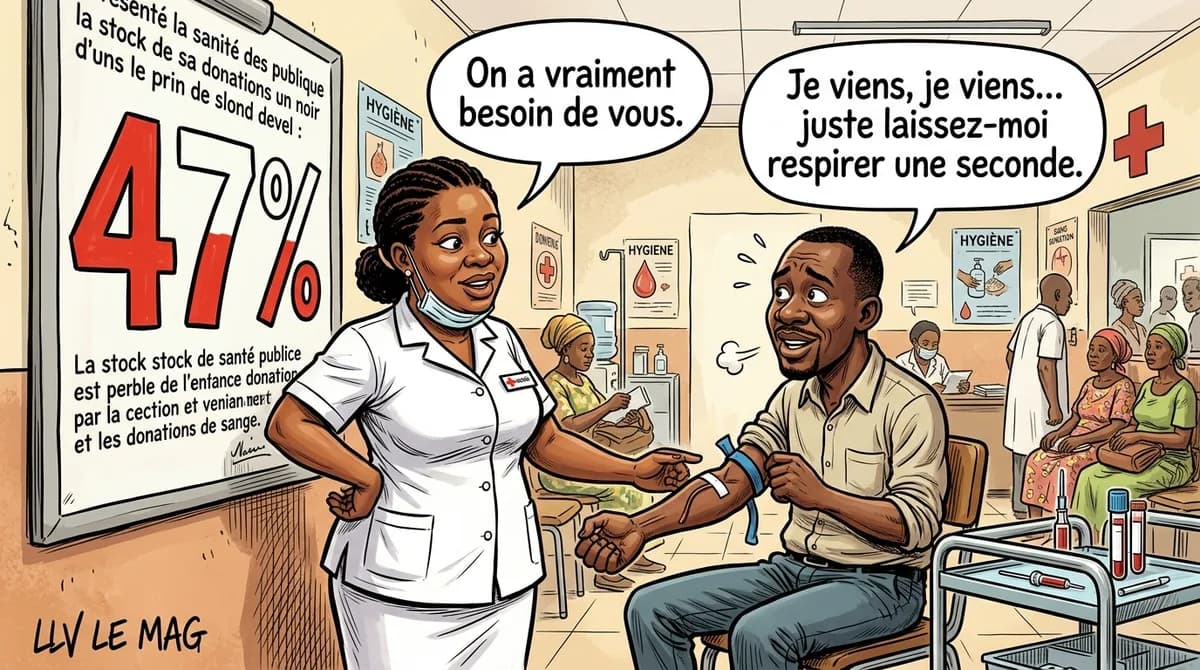
On June 15, 2026, the Journal du Cameroun published an alert that left no doubt: the country is failing to cover even half of its blood needs. According to the National Blood Transfusion Center (CNTS), 187,224 blood bags were collected by the end of 2025, representing only 47% of the national demand. This official and quantified data exposes the fragility of a healthcare system that relies daily on voluntary donations to save lives.
This deficit occurs in a context where public and private hospitals struggle to ensure essential transfusions for surgeries, deliveries, or treatments of chronic diseases. The lack of available blood forces medical teams to postpone interventions, prioritize the most urgent cases, and sometimes resort to less safe alternatives. The 47% figure is not just a statistic; it translates into unresolved emergencies and families desperately waiting for a blood bag for their loved ones.
The reasons for this under-coverage are multiple. The culture of voluntary donation remains marginal, awareness campaigns struggle to reach rural areas, and collection infrastructure is unevenly distributed. In many regions, blood collection centers are distant, discouraging potential donors. Furthermore, the historical reliance on donations from relatives during emergencies creates a reactive rather than proactive system, limiting the establishment of sufficient reserves.
The consequences are felt closest to the patients. Intensive care units report recurrent shortages, scheduled surgeries are suspended, and pregnant women facing post-partum hemorrhages are left without access to vital transfusions. Beyond individual tragedy, these gaps erode public trust in the healthcare system and hinder progress towards universal medical coverage.
In response to these findings, health authorities are reiterating the call for citizen mobilization. The Minister of Health emphasized that the progress made in recent years, although modest, is insufficient to bridge the gap between supply and demand. Mobile collection initiatives, partnerships with civil society organizations, and targeted information campaigns are planned to encourage voluntary donation, particularly among young people and active professionals.
The stakes are clear: without a collective response, the country risks seeing its mortality rate due to blood shortages rise. Readers, whether in Yaoundé, Douala, or in the provinces, are invited to visit collection points, share information around them, and support awareness programs. The national health depends on every drop of blood offered, and today's mobilization can transform the 2025 figures into a future where needs are finally met.