
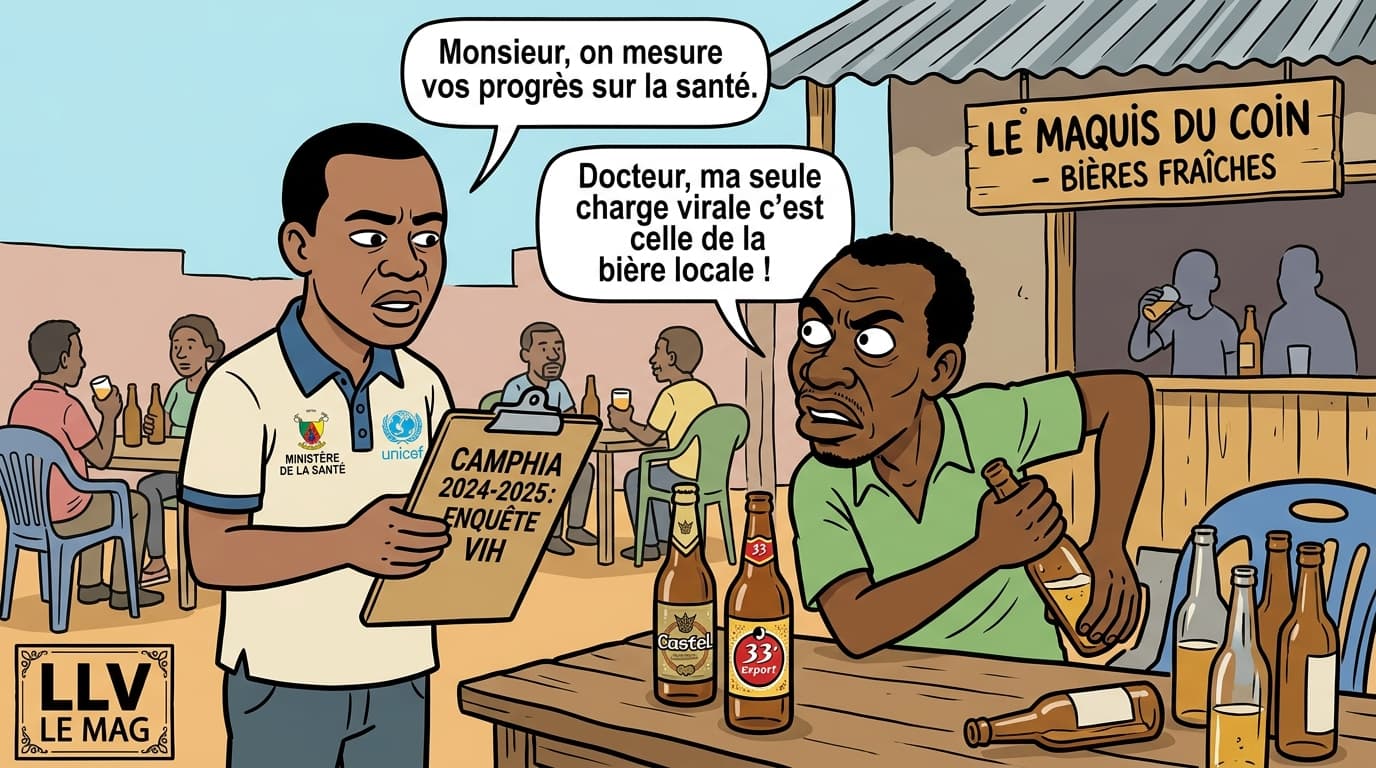
HIV remains a major public health challenge in Africa, particularly in Cameroon, where efforts to curb the epidemic face structural and socio-economic obstacles. Since 2017, the country has relied on national surveys like CAMPHIA to refine its strategies against the virus.
The UNAIDS '95-95-95' targets aim for 95% of people living with HIV to know their status, 95% of those diagnosed to receive treatment, and 95% of those on treatment to achieve viral suppression. These goals are critical to controlling the epidemic by 2030.
The CAMPHIA 2024-2025 survey was conducted between September 2024 and January 2025, involving adults aged 15 and older across all households in Cameroon. It measured three key indicators: national HIV incidence, national and regional prevalence, and the prevalence of viral load suppression (viral RNA levels < 1,000 copies/ml). This is the second edition of the survey, following the 2017-2018 round. The study was led by the Cameroonian government, under the auspices of the Ministry of Public Health (MINSANTE) and the National Institute of Statistics (INS). Funding was provided by PEPFAR (the U.S. President’s Emergency Plan for AIDS Relief), with technical support from the CDC (Centers for Disease Control and Prevention). Field implementation was carried out by the Cameroon Baptist Convention Health Board (CBCHB), INS, and ICAP.
The results of CAMPHIA 2024-2025 are eagerly awaited, as they will assess the effectiveness of public health policies implemented since 2018. Like many African nations, Cameroon must navigate limited resources and significant regional disparities in healthcare access.
Viral load suppression is a particularly critical indicator. It reflects not only the effectiveness of antiretroviral treatments but also the healthcare system’s ability to monitor and support patients long-term. An undetectable viral load drastically reduces transmission risk, which is essential for breaking the chain of infection.
This survey is part of a pan-African push for transparency and accountability. By providing up-to-date data, Cameroon can refine its strategies and secure targeted international funding, such as from the Global Fund or PEPFAR.
For Cameroon, these findings could lead to a reassessment of public health priorities. If results show insufficient progress in certain regions or among specific populations, targeted testing campaigns or strengthened healthcare infrastructure may be considered.
On a continental scale, the lessons from CAMPHIA 2024-2025 could inspire other African countries facing similar challenges. The fight against HIV in Africa requires a coordinated approach, where each nation’s successes and setbacks serve as lessons for the entire region.
CAMPHIA 2024-2025 provides Cameroon with a precise snapshot of the HIV epidemic seven years after the first survey. This data is vital for shaping public health policies and underscores the need for a collective, transparent response. As Africa approaches the 2030 deadline for HIV control, each survey like this marks a decisive step toward a future without new infections.