
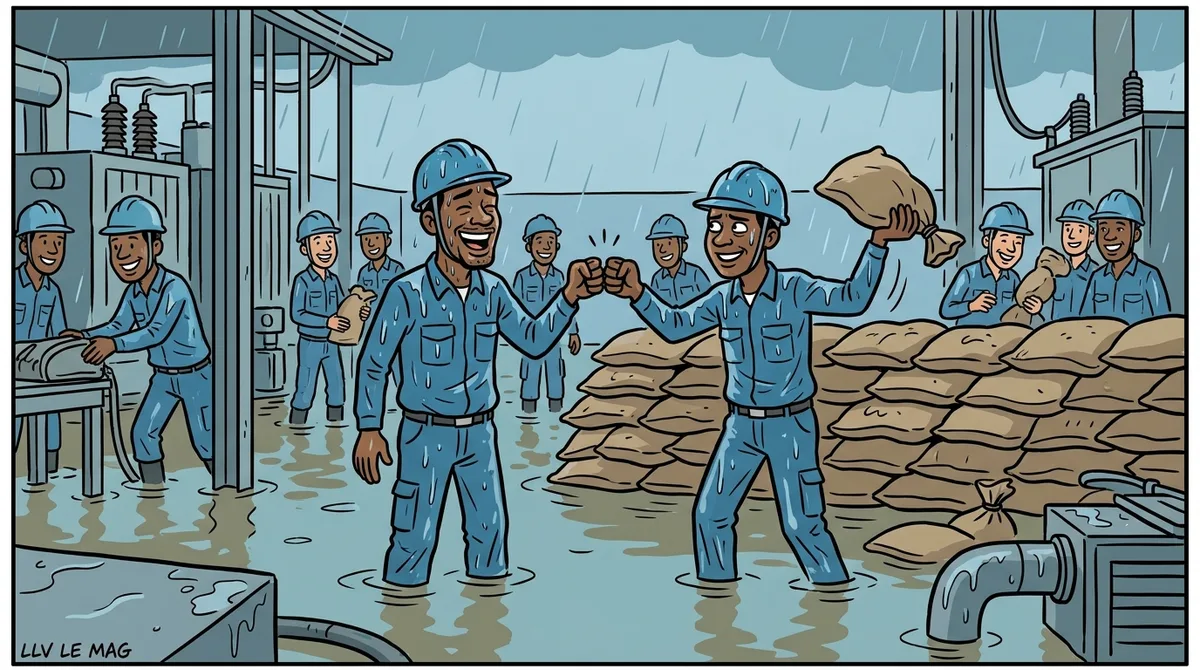
On July 10, 2026, the city of Douala experienced an unexpected rise in water levels, the result of successive heavy rainfalls and an unusually high tide. This combination caused the engine room of the Yato intake station—a critical link in the metropolitan water supply network—to overflow.
The flood quickly threatened production facilities, risking disruption to the water supply for hundreds of thousands of Doualans. Water that seeped into technical areas could have damaged pumps and treatment systems, jeopardizing both quality and continuity of service.
In response to the emergency, the teams from the Directorate of Works and Maintenance (DTM) mobilized without delay. They were reinforced by members of the Yato Special Production Unit and the Douala Agglomeration Regional Division, forming a coordinated intervention force to master the situation.
The operation’s cornerstone was the deployment of four high‑capacity sub‑drainage pumps. These devices, capable of rapidly evacuating large volumes of water, allowed the accumulated water to be drained and protected the sensitive equipment. Their activation proved decisive in preventing the incident from worsening.
Camwater’s General Director, present on site, closely monitored each step of the intervention. His inspection ensured that the measures taken were effective and that residual risks were under control, reassuring local authorities and water‑service users.
Thanks to this swift response, the incident’s consequences were limited. The intake station was able to resume normal operations in record time, guaranteeing continuous drinking‑water supply for Douala’s population, which heavily relies on this critical node.
The episode highlights the vulnerability of infrastructure to increasingly intense climatic events. Torrential rains and high tides, amplified by climate change, demand stronger resilience strategies, both technically and in urban planning.
Going forward, Camwater will need to invest in more robust preventive systems, such as flood barriers and water‑level sensors, to anticipate extreme episodes. The lesson learned from Yato should serve as a catalyst for network modernization, ensuring every drop remains under control even under the harshest conditions.