
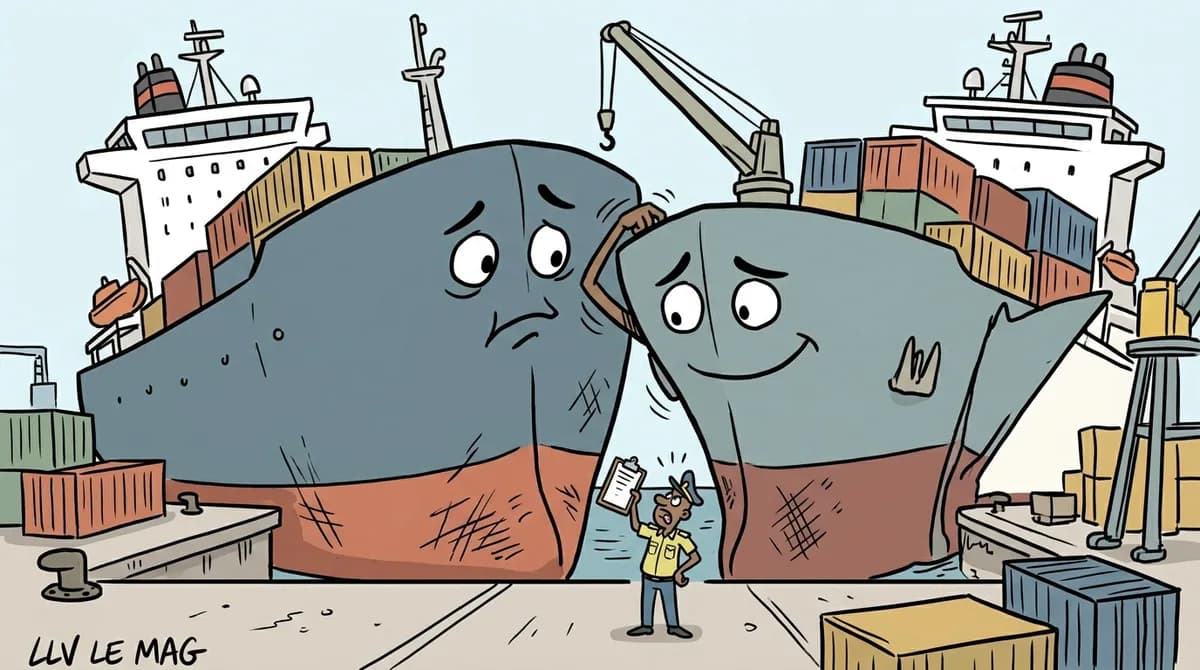
On the morning of July 12, 2026, the port of Douala-Bonaberi awoke to the sound of sirens and emergency lights illuminating the channel near buoy number 20, where the MV SEA HONOR, exiting the port, collided with the MV BLACK RHINO, which was entering. The collision, which occurred around 3 am, left both ships severely damaged but, fortunately, no human lives were lost.
The Ministry of Transport quickly issued a statement detailing the events: the 15 crew members of the MV BLACK RHINO were evacuated safely, while the MV SEA HONOR was cleared and taken to a mooring area. The MV BLACK RHINO was intentionally grounded to free the channel. Rescue and security operations mobilized the port's crisis management system, demonstrating effective coordination between the Douala Autonomous Port and intervention services.
This brief interruption had an immediate impact on maritime traffic. The channel, the main entry and exit point for Cameroon's largest port, was temporarily obstructed, slowing the flow of goods destined for local and regional markets. Logistics operators had to reroute their cargo, causing delays that affected supply chains, particularly in the cocoa, cotton, and crude oil sectors.
The complete restoration of the channel, announced by the Ministry of Transport, marks the end of this brief crisis but raises critical questions about the country's maritime safety. A safety investigation has been opened to determine the exact circumstances of the collision and identify potential responsibilities. Authorities stress the need to strengthen navigation protocols and improve crew training to prevent such incidents from recurring.
For Cameroonian economic actors, the drama highlights the fragility of port infrastructure in the face of human and technical hazards. The port of Douala, the gateway to foreign trade, accounts for over 90% of the country's maritime traffic. Even a brief shutdown can cost millions of dollars in lost productivity and storage fees. Thus, the lesson learned from this accident could lead to targeted investments in modernizing traffic control systems and electronic channel surveillance.
Beyond technical aspects, this event has mobilized the port community around a common goal: ensuring crew safety and trade fluidity. Seafarers' unions, shipping companies, and port authorities have expressed their willingness to collaborate closely during the investigation to transform this incident into an opportunity for continuous improvement. This synergy could become a model for other African ports facing similar challenges.
As traffic returns to normal, attention remains focused on the investigation's conclusions. The resulting recommendations will be crucial in strengthening the resilience of the port of Douala, a pillar of Cameroon's economy. Meanwhile, the Ministry of Transport has reaffirmed its commitment to ensuring maritime safety, noting that each successful intervention wave reinforces the confidence of trading partners and citizens.