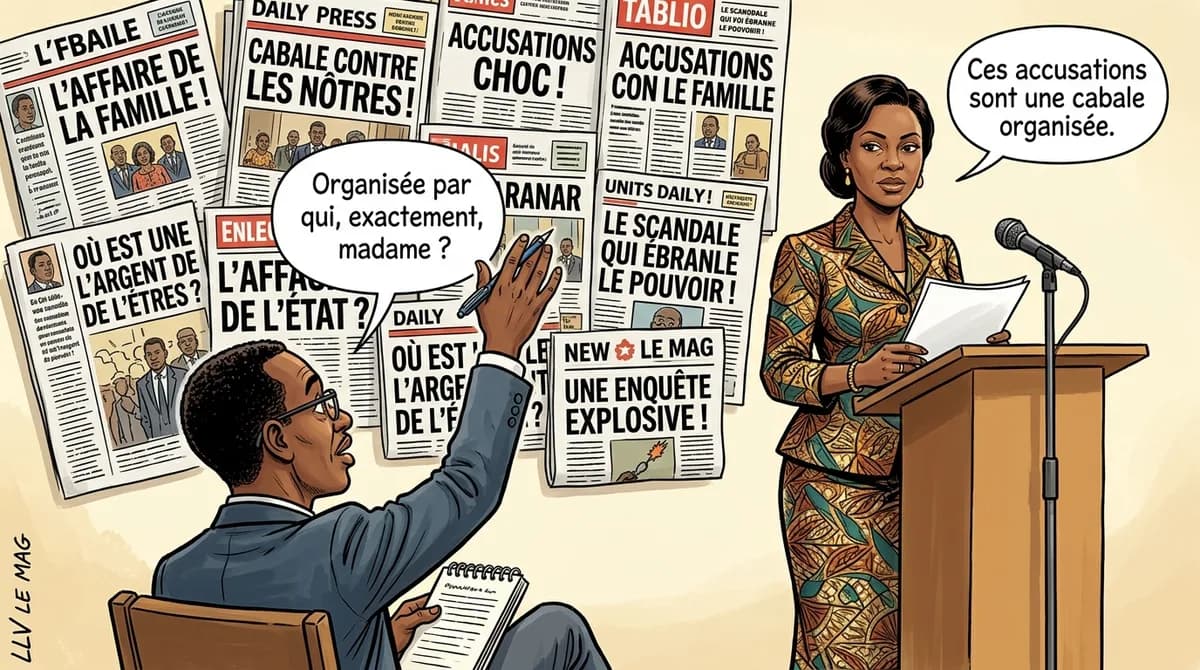
On June 30 2026, Crescence Baboke published an op‑ed that quickly spread across Cameroonian social media. In the piece she denounces a campaign orchestrated against her and her husband, politician Oswald Baboke, which she calls a “cabal”. Her appeal comes in a context where public accusations can swiftly turn a family’s reputation into a target of verbal abuse and legal threats.
“I work hard. I earn an honest living— is it really abnormal for me to be able to afford a nice car or build a nice house?” she writes, reminding that the pursuit of a decent life should not be seen as an illegitimate privilege. This sentence, repeated in several media outlets, underscores her desire to be judged on her merits rather than on unfounded rumors.
She then contrasts “human laws”, which she describes as mutable and sometimes deceitful, with “divine laws”, which are immutable and just. According to her, “divine laws always restore the truth in the end”. This spiritual framing serves to legitimize her struggle, reminding that truth will ultimately prevail even if human forces try to conceal it.
Crescence Baboke lists several accusations she says are fabricated from scratch: first, the alleged gold trafficking, for which there is no tangible evidence; next, forged decrees that were supposedly published without her knowledge; then the invention of houses abroad and properties in Dubai, allegedly bombed by Iranians, as if she were linked to American interests. She demands the production of purchase documents for each property mentioned, otherwise the allegations remain baseless.
The text also mentions the so‑called seven billion francs “stolen” for the import of petroleum products, insinuating that a single marketer could have financed those purchases with his own funds. She argues that this accusation rests on a fallacious logic that ignores the complexity of Cameroon’s energy trade.
These revelations have a direct impact on Cameroon’s political climate. By targeting the Baboke family, detractors aim to undermine Oswald Baboke’s credibility, a public figure whose popularity rests on an image of integrity. For citizens, the spread of these rumors creates a climate of distrust toward institutions and fuels polarization on social networks, where each accusation becomes a power play.
Crescence Baboke concludes by calling for truth and justice, urging authorities to investigate the sources of these defamations. She reminds that a family’s dignity should not be sacrificed on the altar of slander. For Cameroonians, her testimony underscores the importance of fact‑checking before sharing information, to protect social cohesion and ensure that public discourse remains grounded in reality.