
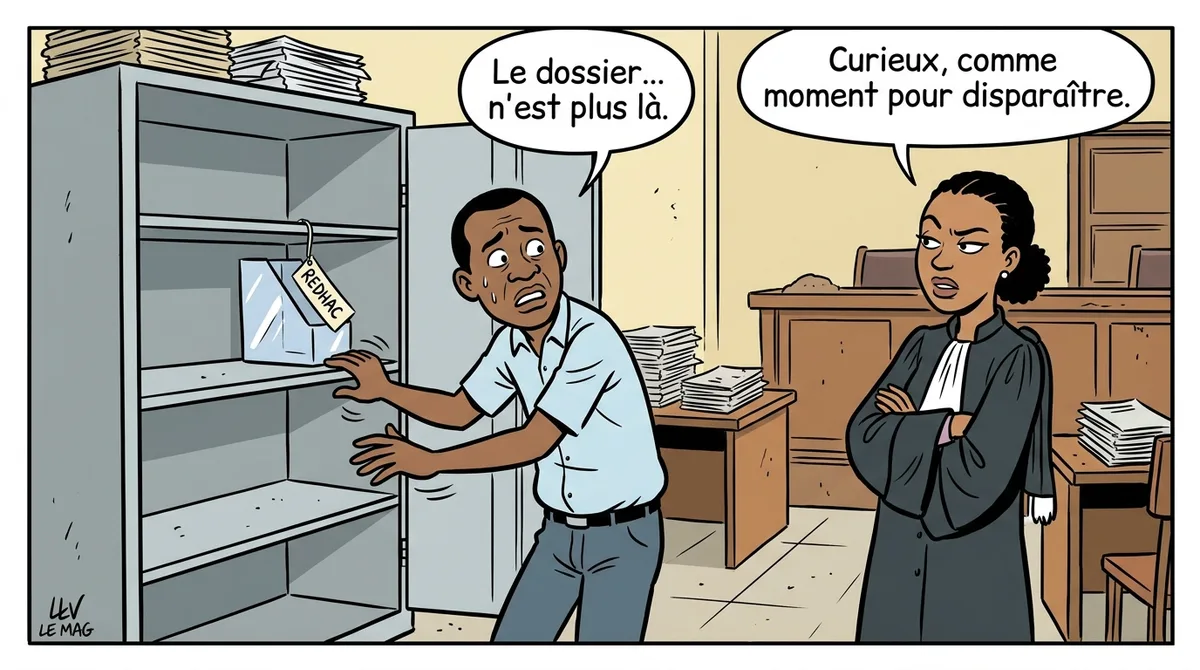
On July 6, 2026, the courtroom of the Douala‑Bonanjo first‑instance tribunal experienced an unexpected turn that left the public and the defendants speechless. In less than twenty‑two minutes, the proceedings were halted, not by a judicial ruling, but by the announcement that a crucial file was missing.
The case pitted the Cameroonian state against attorney Alice Nkom, legal adviser to the board’s presidency, and Maximilienne Ngo Mbe, executive director of Redhac – the Network of Human Rights Defenders in Central Africa. Redhac, a major civil‑society actor, was listed as a civil party, making the presence of its file essential for the public prosecutor’s requests.
The tribunal’s president reminded that the Monday, July 6 session resulted from a postponement requested by the public prosecutor to prepare its requests and the defendants’ counsel’s arguments. However, as soon as the prosecutor’s representative took the floor, he declared, to everyone’s astonishment, that the Redhac file could not be found among the documents in his possession.
The revelation was all the more surprising because the regular prosecutor’s representative was absent; the sub‑prefect of Douala 1st district – who represents the prefect of the Wouri department and the State – was himself away from the city attending a seminar. The tribunal’s president confirmed this absence, noting that the prosecutor’s representative was therefore unavailable for the hearing.
The missing file raises several critical questions. On one hand, it highlights potential weaknesses in the chain of custody for judicial documents, a often‑overlooked but vital link to ensure the right to defence. On the other hand, it exposes human‑rights defenders to the risk of having their arguments invalidated, which could weaken Redhac’s position in an already sensitive case.
For Cameroonians, this setback fuels existing scepticism toward the judicial system. A lost file can mean additional delays, higher costs and, above all, a loss of confidence in the institutions’ ability to deliver impartial justice. In a context where civil‑society organisations play a key role in democratic oversight, each such incident reinforces the perception of a lack of transparency.
The next developments are therefore awaited with keen interest. The parties will need to clarify why the file disappeared and consider scheduling a new hearing. Prompt and transparent communication from the tribunal, the public prosecutor and Redhac will be essential to restore credibility in the judicial process and reassure civil‑society actors and the wider public.