
They were of school‑age, not prison‑age. Eight months after their arrest, three adolescents remain confined in the New Bell central prison in Douala. Their alleged offense: being in their neighborhoods when anger was boiling in the streets of the country, as the official proclamation of the October presidential results approached.
The context is well remembered. The Cameroonian Constitutional Council proclaimed on 27 October the results of the 12 October presidential election. Paul Biya was declared the winner with 53.66 % of the vote, ahead of Issa Tchiroma Bakary, who immediately disputed the figures. The dispute ignited the powder keg. Post‑election protests erupted in Maroua, Ngaoundéré, Figuil, Douala, Dschang, Bafoussam and several other cities. In the economic capital, the crackdown was especially brutal.
The three youths were not spared this wave. Arrested in their own neighborhoods, they are among those whom Cameroonian justice has yet to return to their families. Brought before a judge of the Bonanjo first‑instance court, their case was stripped of any substance: no charges were filed against them.
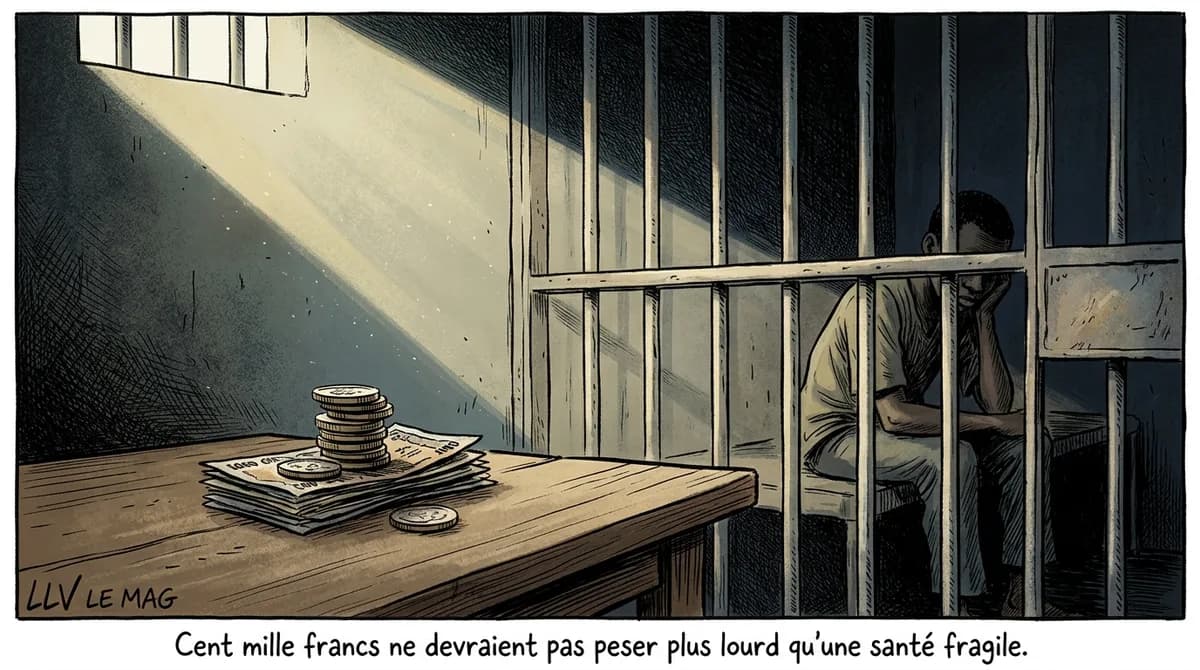
But the lack of charges does not translate into freedom. In theory they could be released. In practice, a condition pins them to their cell: a bail of 100,000 CFA francs—about €150—and two guarantors required for each. A trivial sum for some, insurmountable for others. That is the paradox of the case: the key to the cell exists, but it carries a price these adolescents cannot afford.
The most alarming aspect concerns one of their health. A 16‑year‑old boy has contracted tuberculosis within the walls of New Bell. The disease thrives in cramped, overcrowded spaces, exposing detention conditions that raise questions. How does a minor, never formally charged, become seriously ill in prison?
On the ground, voices are rising. Philippe Nanga, coordinator of the organization Un Monde Avenir, is calling for immediate release. “There is one young man who is particularly suffering,” he warns, describing an adolescent isolated, without contact, and without family support. A cry that resonates beyond the three cases alone.
Because they are only the tip of an iceberg. According to human‑rights groups, hundreds of people remain incarcerated as a result of this crisis. The death of Souleymanou Tobi revives a question that no one at the top seems eager to answer: what will happen to the roughly 150 detainees from the 2025 post‑election crisis who are still held without a final judgment? The sluggish judicial calendar worsens the wait. Since January 2026, hearings have been held at a pace of one per month before the military court in Yaoundé.
The fate of these three Douala adolescents raises a simple yet unsettling question: what becomes of a generation detained without trial, ill, forgotten? Until the bail is raised or lifted, New Bell’s doors will remain shut. For the families, each passing day is one too many. For the nation, it is a test of its ability to turn the page on a crisis that continues to produce silent victims.