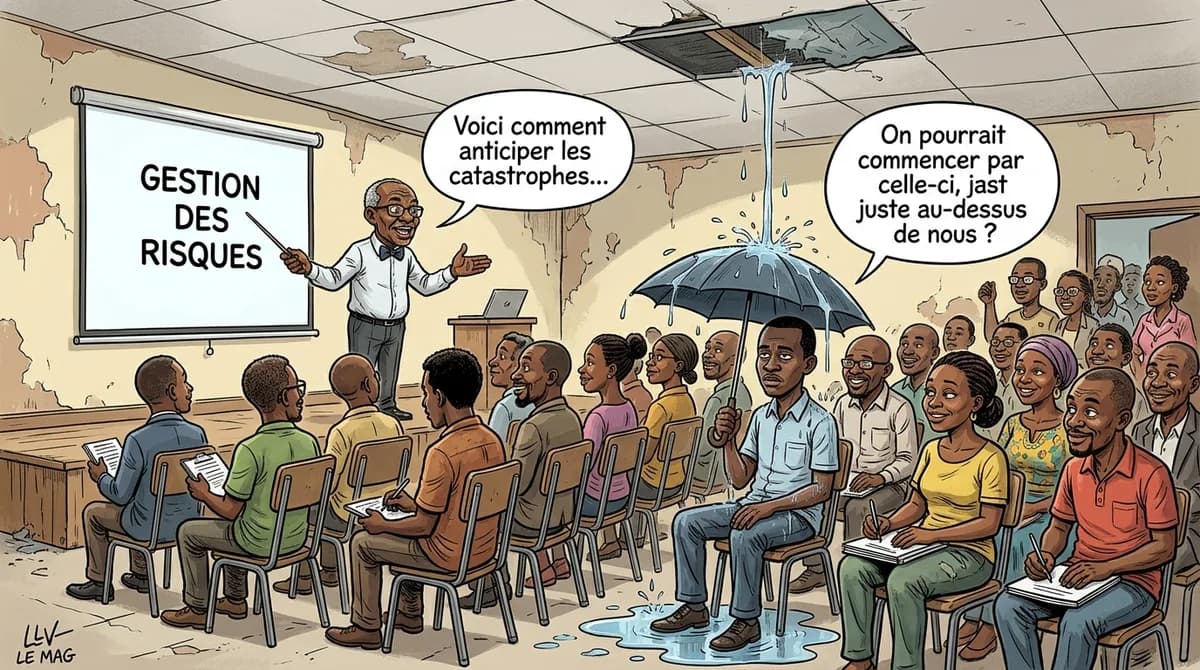
On June 22, 2026, the district of Douala IV opened its doors to a pioneering five‑day workshop aimed at civil‑society organisations and neighbourhood chiefs. The initiative, part of a disaster‑risk governance project, comes as floods and landslides increasingly affect Cameroon’s coastal belt.
Co‑financed by the European Union and the United Nations Development Programme (UNDP), the programme seeks to boost the recovery capacities of local communities. European funds earmarked for “risk‑governance strengthening” are paired with UNDP’s expertise to deliver practical, field‑adapted training.
Participants will deepen their understanding of the types of natural hazards that strike Cameroon, learn appropriate emergency behaviours, and explore feedback and experience‑sharing mechanisms. Interactive sessions will let them rehearse evacuation scenarios, alert management and coordination with local authorities.
The training responds to a pressing need: communities in Douala IV, often the first hit by sudden floods, sometimes lack reliable information and clear action protocols. By equipping NGOs and community leaders with concrete tools, the workshop creates a vital link between rescue services and residents, shortening response times and reducing human and material losses.
Organisers count on rapid dissemination of awareness messages through a network of field‑based relays. Each participant will leave with a communication kit, practical fact‑sheets and the ability to run awareness sessions in their neighbourhood, fostering a culture of prevention where every citizen becomes an actor in their own safety.
Beyond Douala IV, the project fits into a national resilience drive. Confronted with intensifying climate events, Cameroon needs a coordinated strategy among public institutions, donors and civil society. The success of this workshop could inspire other districts to replicate the model, creating a country‑wide vigilance web.
In the coming months, the first feedback will be evaluated and the training modules refined. If participants demonstrate an improved capacity to mobilise their communities, European funding and UNDP support may be extended to cover additional risk‑prone areas, further cementing the path toward a more resilient Africa.