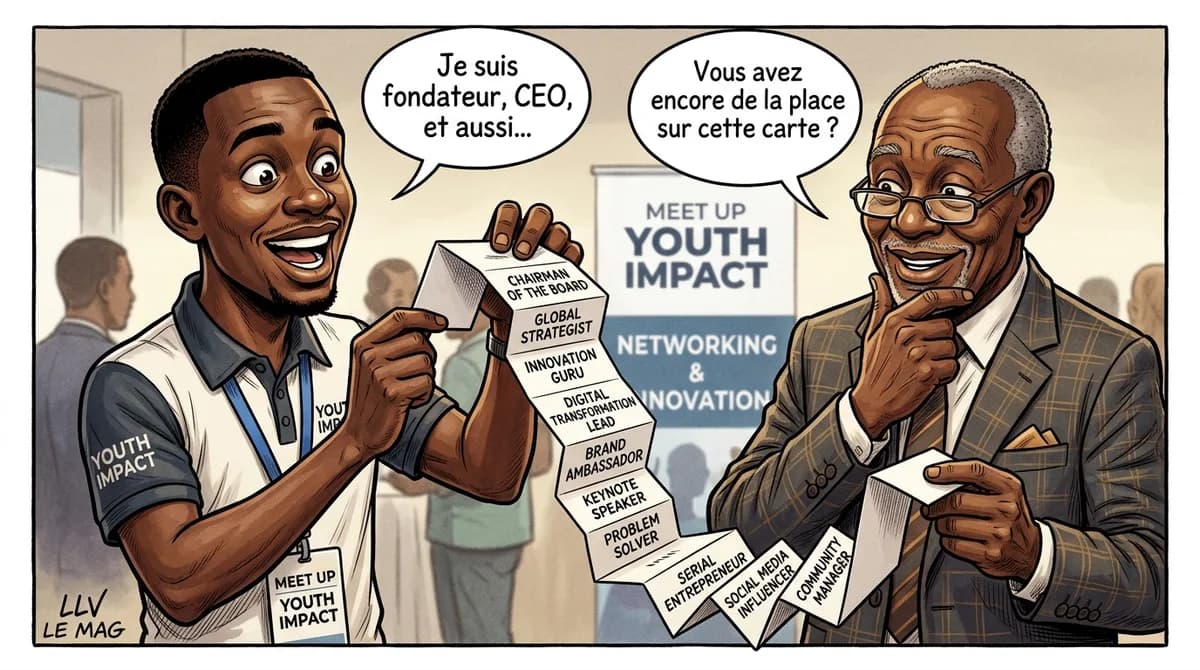
On July 4, 2026, the city of Douala buzzed with an unprecedented gathering: more than two hundred young people from diverse backgrounds came together to seize the opportunities offered by entrepreneurship, on the occasion of International Day of Micro, Small and Medium Enterprises.
Organised by the Association of Young Entrepreneurship Enthusiasts (AJAE), the "Meet Up Youth Impact" provided a networking platform where participants could exchange ideas, forge partnerships and access concrete resources. The event was chaired by Pierre Marcel Bille, representative of the Littoral governor, underscoring institutional support for this dynamic.
Dimitri Balla, the activity coordinator, reminded that networking is "a crucial lever to break the isolation of entrepreneurs and accelerate the transition to the formal sector." This sentence captures the main challenge: moving from informal, often marginalised activity to official recognition that opens the door to financing and public contracts.
Figures from the Ministry of Small and Medium Enterprises, Social Economy and Craftsmanship (MINPMEESA) confirm the growing importance of youth. In 2025, 42 % of newly created SMEs were founded by people under 35, up from 36.4 % in 2019. The country now counts 472,208 active SMEs, a 6.5 % increase in one year, for a total of 569,208 formal economic units. In total, 16,845 new SMEs were registered this year, of which 42 % were launched by young promoters.
These statistics translate into a considerable employment potential: the new firms are expected to generate nearly 90,000 jobs. In a country where youth unemployment exceeds 20 %, each new enterprise represents a breath of fresh air, capable of reducing precariousness and stimulating local consumption.
However, the road to formalisation remains fraught with obstacles. Access to finance, mastery of administrative procedures and market visibility remain major challenges. The "Meet Up Youth Impact" therefore highlighted the need to support young project leaders with training programmes, one‑stop‑shop services and targeted fiscal incentives.
If initiatives like Douala's continue to multiply, Cameroon’s economic landscape could undergo a lasting transformation. The bet is clear: turn the energy and creativity of youth into engines of growth, while strengthening the entrepreneurial fabric already at the base of the country's economy.