
On July 7, 2026, Congolese authorities announced that the death toll from the Ebola outbreak in the east of the country had passed the 500 mark, with 506 deaths recorded among 1,561 confirmed cases. This figure, etched in official reports, marks a worrying escalation for a region already weakened by conflict and massive displacement.
The hardest‑hit provinces are Ituri, North‑Kivu and South‑Kivu. In Ituri, 24 of the 36 health zones are now infected, a saturation rate that exceeds local capacities. The latest zones declared infected – Nia‑Nia on the border of Tshopo province, Lita, Drodro in the Djugu territory, and especially Nizi, which hosts a large population – illustrate rapid spread and difficulty containing the virus.
Why is Ituri becoming the epicenter of the crisis? High population density, frequent movements between villages and markets, and limited access to health infrastructure create fertile ground for the pathogen’s transmission. Health teams, often overwhelmed, struggle to isolate cases and trace contacts, feeding a vicious cycle of infection.
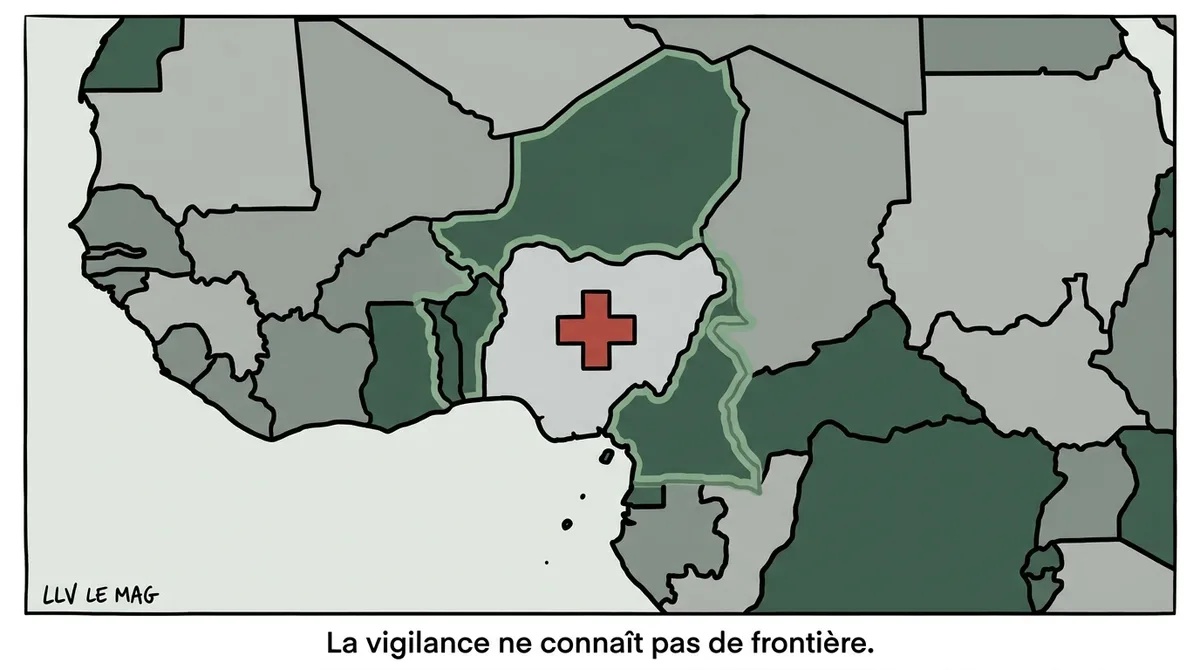
For Cameroon, a western neighbour of the DRC, the situation is a warning signal. Cross‑border roads, trade flows and refugee migrations provide potential pathways for transmission. Although the country has not yet reported any cases, Cameroonian health authorities are tightening surveillance at entry points and intensifying community awareness in border areas to prevent a resurgence.
On the ground, humanitarian organisations are multiplying interventions, but they face major logistical challenges: limited access to remote areas, a shortage of trained personnel and, at times, heightened distrust of health teams by local populations. A lack of available vaccines, combined with the need to adhere to biosafety protocols, complicates an effective response.
The impact on local health systems is already palpable. Hospitals in eastern DRC are seeing isolation beds reach capacity, while treatment centres such as Rwampara in Ituri struggle to maintain care standards. This overload risks diverting essential resources from other endemic diseases, further aggravating the region’s overall disease burden.
The future will depend on the ability of Central African states to coordinate their efforts. A regional strategy that includes data sharing, mobilising vaccine reserves and strengthening surveillance capacity is indispensable. Time is running out: each additional day without a coordinated response raises the risk of spread beyond the Congolese borders.