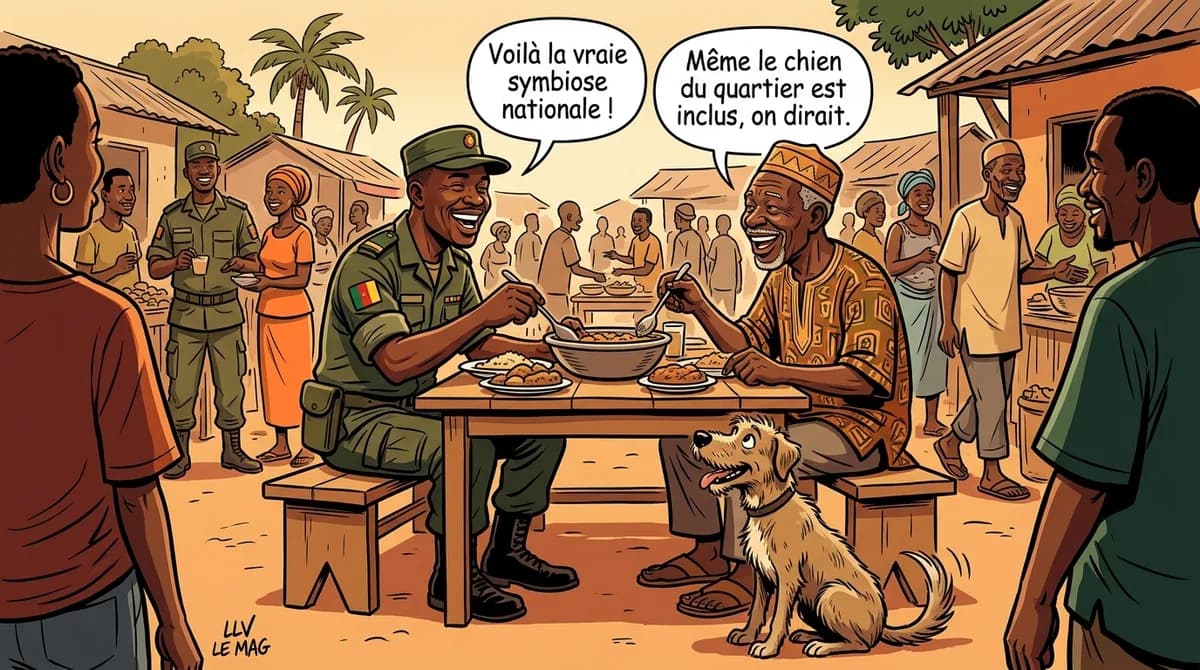
On June 27, 2026, Colonel Atonfack Guemo, head of the Ministry of Defence’s communication unit, reminded listeners of the programme “Honor and Fidelity” that the Cameroonian army is no longer confined to a sealed posture: it is opening itself to citizens, building bridges, and aims to be the “Crucible of National Unity”. This statement follows a tradition that, for several years, has seen barracks transformed into spaces for public interaction.
Open‑house days, rank promotions, public command ceremonies and information campaigns in schools illustrate a deliberate outreach effort. By deploying these actions, the army seeks not only to raise its profile but also to embed its legitimacy in the everyday lives of Cameroonians, demonstrating that every tribe and community has a place within the national defence framework.
This constant proximity generates a collective energy in which the armed forces draw on the country’s diversity. Colonel Guemo notes that the population provides “a multitude and variety of energies” which, when combined, enable the army to operate harmoniously. In other words, each region and ethnic group adds to the operational richness of the defence apparatus without having its identity diluted or softened.
Including all ethnic groups forms the bedrock of popular legitimacy. By integrating cultural and linguistic specificities into training and awareness programmes, the army positions itself as a true mirror of the nation. This strategy bolsters citizens’ confidence, who see their military representatives as both protectors and respectful of their particularities.
The phenomenon of business fairs and school information campaigns also creates economic opportunities. Young people introduced to defence careers discover employment prospects, while local companies gain increased visibility during military events. This economic synergy contributes to social stability by offering concrete alternatives to unemployment challenges.
For Cameroonian citizens, the army’s heightened visibility translates into a reinforced sense of security. Knowing that defence forces are present, accessible, and engaged in daily dialogue eases concerns about insecurity. The army‑nation link thus becomes a pillar of social cohesion, where mutual trust is built through exchange and transparency.
Looking ahead, Colonel Guemo envisions this dynamic persisting, by consolidating outreach programmes and expanding collaborations with civil actors. An army that remains close to its people is better equipped to meet security challenges while reinforcing national unity. The path charted by these initiatives could well become a reference model for other African nations seeking to harmonise defence and social cohesion.