
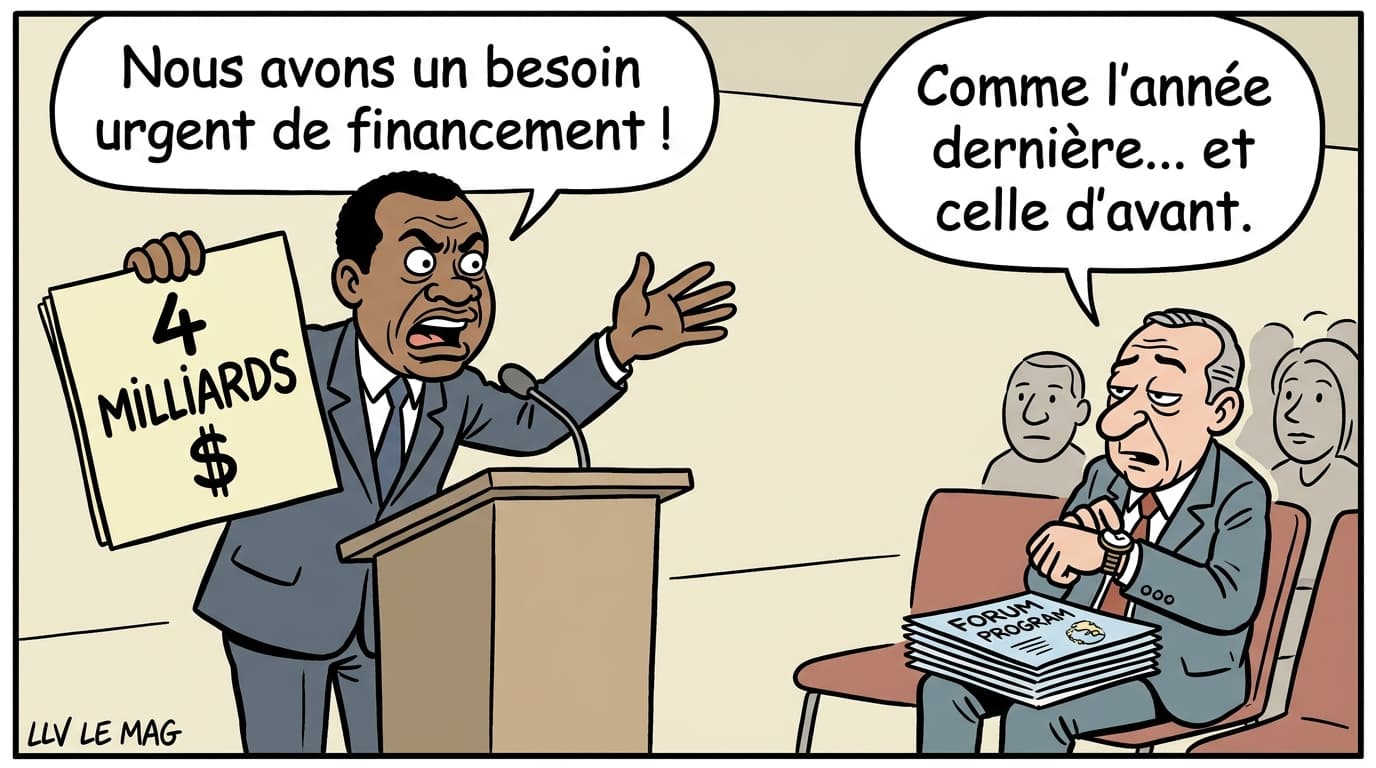
On July 15, 2026, under the scorching sky of N'Djamena, Minister of Water and Energy Gaston Eloundou Essomba addressed the African Water Forum as the personal representative of the Head of State. His speech, both factual and impassioned, highlighted Cameroon’s paradox: abundant water resources, yet a large share of the population still lacking access to safe drinking water.
According to the data presented, nearly 30 % of Cameroonians do not have access to a reliable water source, a figure that heavily burdens agriculture, livestock and industry. This shortage directly affects field productivity, animal health and factory competitiveness, while also threatening the stability of the national energy grid, whose hydro‑electric generation accounts for about 80 % of the energy mix.
To meet these challenges, the government has drafted the Water Compact, a national roadmap aimed at securing water access and turning the resource into a development lever. The programme, estimated at close to US $4 billion, envisages massive investments in infrastructure—dams, distribution networks, treatment plants—as well as institutional reforms to improve sector governance.
To date, roughly 30 % of the required financing has already been mobilised through earlier commitments from multilateral partners. However, the minister stressed that the remaining deficit remains critical and that without an increased commitment from donors, the Water Compact’s objectives risk remaining out of reach. He therefore issued a clear call to technical and financial partners to fill this budgetary gap.
In the same breath, Gaston Eloundou Essomba praised the support already provided by the World Bank and the African Development Bank, notably through the SEWASH project. This programme, which combines water, sanitation and hygiene services, serves as a model of regional cooperation and shows the way toward a sustainable partnership between Cameroon and international financial institutions.
The implications for Cameroonian citizens are tangible: better water management could reduce agricultural losses, secure livestock incomes, stimulate job creation in public works, and ensure a more stable energy supply for households and businesses. Moreover, strengthened governance of the water sector would help curb conflicts over water access, an increasingly sensitive issue in the country’s arid zones.
The future of the Water Compact now hinges on Cameroon’s ability to mobilise the necessary resources and implement the announced reforms. If partners answer the call, the country could, by the end of the decade, see a significant rise in the proportion of the population with access to safe drinking water, laying the groundwork for more inclusive and resilient economic growth.
Ultimately, the minister’s advocacy in N'Djamena is not merely a funding request; it is an invitation to jointly build a future where water, the source of life, becomes the cornerstone of sustainable development for Cameroon and, by extension, for the whole African continent.