On 7 July 2026, the Cameroonian government officially announced a clean‑up operation of the family allowance register, a scheme that pays nearly 3 billion CFA francs each month to families with dependent children. Faced with an “atypical” rise in the number of children declared, authorities said massive fraud, partly attributable to public officials, threatens the balance of the social budget. The statement, relayed by the Ministry of Finance, puts the fight against misappropriation at the heart of the political agenda.
According to the finance minister, the amount allocated to family allowances amounts to about 3 billion CFA francs, or €4.57 million, each month. He recalled that the warning was already issued in 2023, when the figures began to diverge alarmingly. Although the audit should have been launched in 2024, it was only included in the budget the following year, which, he said, delayed the detection of irregularities.
Fraud in the allowance system is not merely a waste of public money; it weakens the state’s ability to support the most vulnerable households. Every child falsely declared diverts resources that could have funded education, health or poverty‑reduction programmes. For taxpayers, the loss translates into heavier taxes or degraded public services, feeding a sense of injustice.
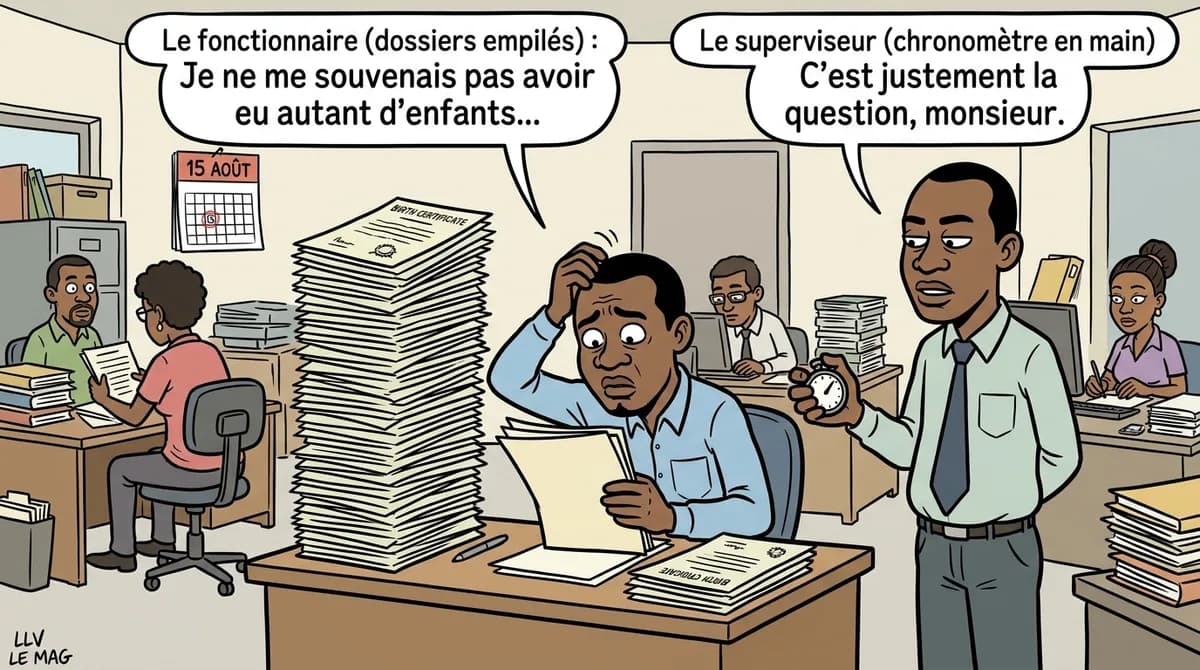
The government therefore ordered all concerned public agents to submit, by 15 August, the original birth certificates and collective life certificates for each declared child. These documents will be verified by the General Directorate of Taxes, which will cross‑check the data with the national birth register. Files deemed fraudulent will be removed from the register immediately, and undue beneficiaries will have to repay the amounts received.
The measure comes with a heavy administrative burden. Some officials, accustomed to flexible procedures, fear the complexity of gathering documents and the possible challenge to their past declarations. The risk of legal disputes is real, as is the need to train agents on the new traceability requirements.
Beyond the purely financial aspect, the operation fits into a broader drive to combat corruption within the civil service. By displaying a willingness to be transparent, the authorities hope to restore citizens’ confidence in institutions. The clean‑up could also pave the way for a reform of the allowance system, with stricter criteria and increased automation.
The coming months will be decisive. If the checks prove effective, the budget earmarked for family allowances could regain a stable trajectory, freeing up resources for development programmes. For Cameroonians, the success of this initiative represents a promise of social justice and better governance. The government said it will closely monitor the results and, if necessary, consider further measures to guarantee the integrity of the scheme.