
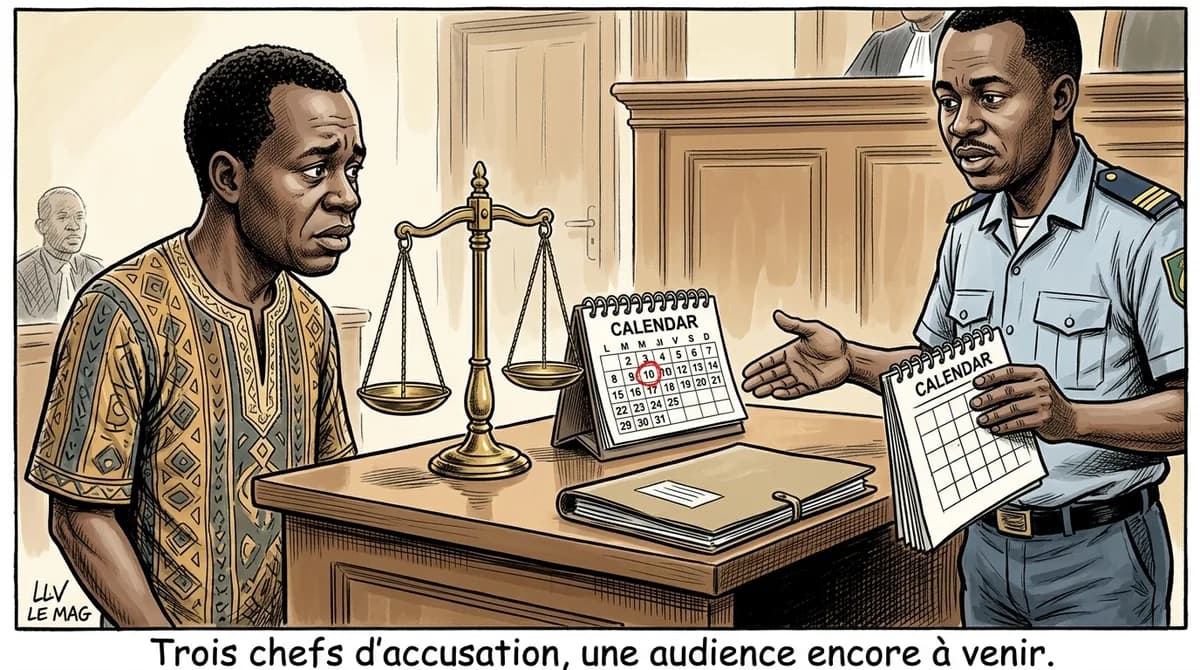
On July 3, 2026, the daily Journal du Cameroun published an update that placed the case of Jacques Bertrand Mang, a figure in political activism, at the centre of the judicial news. Detained for two days at New‑Bell prison, the people's lawyer now faces three charges. The case, broadcast by Equinoxe Television, unfolds in a climate where every arrest of an opponent sparks a national debate on freedom of expression and governance.
New‑Bell, a prison in the Littoral region, received Mang on July 1, after his arrest in Douala. Judicial authorities have not yet detailed the charges, but the pre‑trial detention has already provoked a wave of reactions from human‑rights organisations. The fact that the activist has been kept in custody for two days without a public hearing fuels concerns about the transparency of the process.
At the same time, Mang's lawyers have filed a request for release on bail, arguing that deprivation of liberty is unjustified before the trial begins. The first‑instance court of Douala‑Bonanjo, handling the case, has postponed the hearing to July 10, giving the parties additional time to prepare their arguments. While procedural, the decision highlights the occasional slowness observed in political cases.
The three charges remain unspecified in official statements. Their existence, however, implies that the prosecution considers Mang's conduct serious enough to warrant indictment. Cameroonian law provides variable penalties depending on the nature of the offences, but the lack of detail prevents the public from gauging the gravity of the accusations. This opacity fuels scepticism and strengthens calls for transparency.
Why does an activist like Mang attract the authorities' attention? His role as a spokesperson for citizen demands—particularly on local governance and the fight against corruption—places him at odds with institutions. The indictment can be seen as a signal intended to deter other dissenting voices. For Cameroonian readers, this means the space for political contestation may shrink, risking the stifling of public debate.
The concrete consequences are an atmosphere of caution among civil‑society organisations. Fear of heightened repression may curb mobilisations, while media outlets, already under pressure, hesitate to cover sensitive cases. In this sense, the monitoring of Mang's procedure becomes a barometer of the judiciary's ability to guarantee a fair trial, a prerequisite for citizen confidence.
On July 10, the courtroom of Douala‑Bonanjo will host a decisive new stage. Observers are hoping for a public hearing that could clarify the reasons for detention and the charges pressed. Until that day arrives, the nation remains vigilant, calling for the protection of fundamental rights and strict respect for the presumption of innocence. The fate of Jacques Bertrand Mang could well reflect the evolution of Cameroon's judicial landscape.