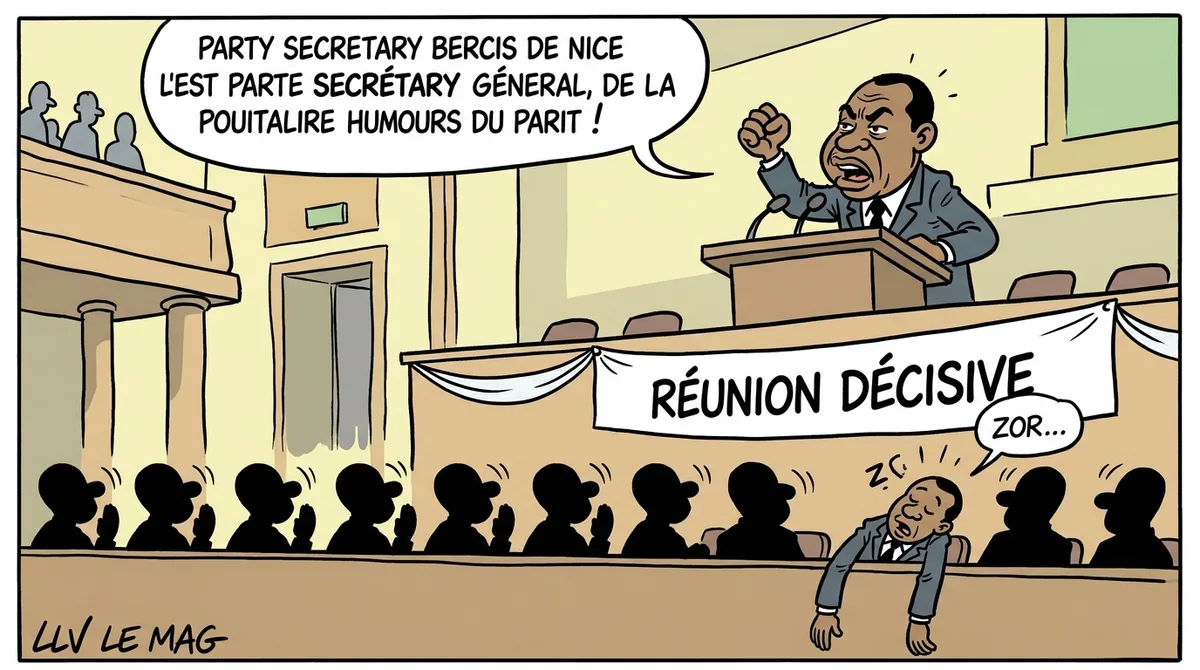
This Wednesday, July 22, 2026, the Yaoundé Conference Center hosted a major meeting of the Cameroon People's Democratic Movement. At 10 a.m., the Secretary-General of the Central Committee, Mr. Jean Nkuete, opened the session, reminding attendees of the importance of rigorous organization for the party that has governed the country for more than half a century. The official announcement, relayed by Professor Jacques Fame Ndongo, the RDPC's communications secretary, highlighted the “important” nature of the event.
Around the table were the heads of the regional permanent delegations, the heads of the departmental permanent delegations, as well as the mission officers attached to these structures. This composition reflects the party's desire to bring together key actors at every territorial level, to ensure coherence in political and administrative actions. Their presence also demonstrates a commitment to strengthening the link between the centre and the country's peripheries.
The press release dated July 14, 2026, states that the session aims to “participate in an important working meeting.” While the agenda was not detailed, it is reasonable to assume that discussions will focus on implementing local strategies, mobilising party cadres, and preparing for upcoming electoral milestones—usual concerns for the RDPC in Cameroon’s political context.
For party members, the meeting offers an opportunity to re‑appropriate the directives of the national leadership and adjust their actions on the ground. In a country where regional dynamics heavily influence political decisions, coordination among the permanent delegations is crucial. Thus, each delegation head can return to his or her region with precise instructions, strengthening the RDPC’s presence close to citizens.
Jean Nkuete’s role, as a central figure of the party, goes beyond merely chairing the session. His authority, recognized since his appointment as Secretary‑General, lends the meeting legitimacy that reassures party officials. By recalling past governmental successes and emphasizing the need for unwavering unity, he seeks to consolidate the confidence of his collaborators.
The impact of the gathering was felt immediately in the capital’s political circles. Local media, including Actu Cameroun, reported the event, eliciting supportive reactions from RDPC supporters and questions from opponents. This media visibility reinforces the perception of an active organization ready to face upcoming challenges.
As the country moves toward the electoral deadlines that will mark the coming months, the July 22 meeting stands as a strategic milestone. It prepares the ground for increased mobilisation, better coordination of local campaigns, and a reinforced party presence in every corner of Cameroon. The future of the RDPC now depends on these delegations’ ability to turn directives into concrete actions, serving national stability and development.