
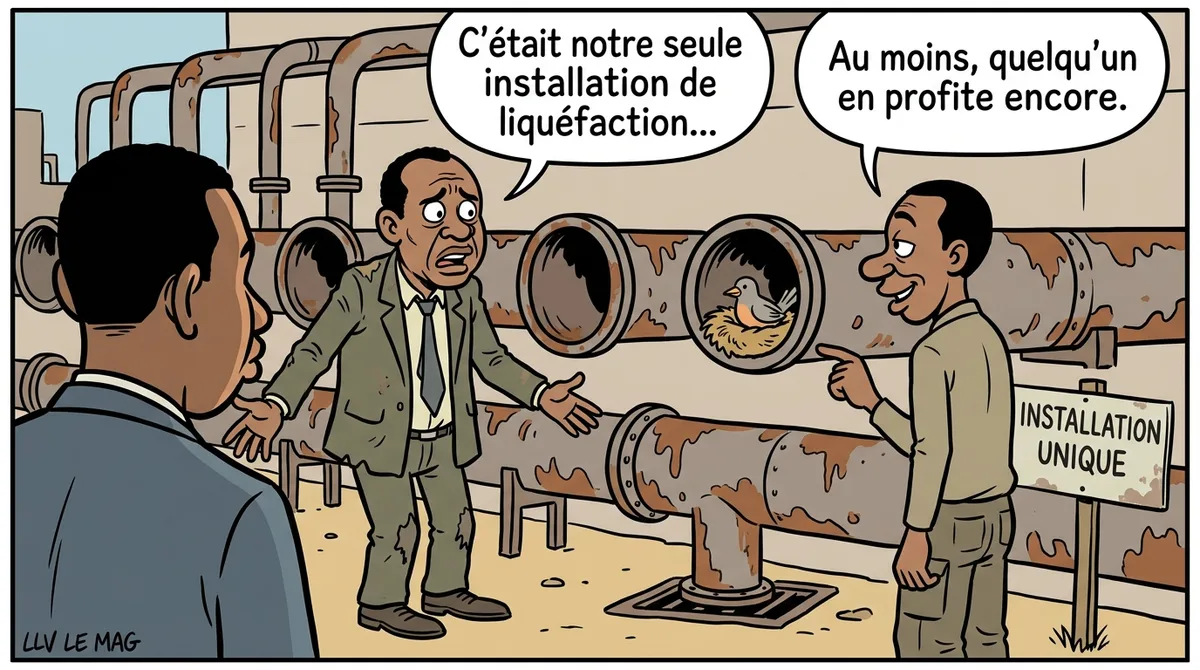
This July 2026 marks a decisive turning point for Cameroon's energy industry: the only facility capable of converting natural gas into liquefied natural gas (LNG) is leaving the country's waters, taking with it the revenue prospects that this value chain has generated for nearly a decade.
The Hilli Episeyo, a former methanizer that was converted, was put into service off Kribi eight years ago under the Norwegian shipowner Golar LNG. Throughout that period, the vessel extracted raw gas, liquefied it onboard, and loaded it onto LNG carriers for export, thus providing Cameroon’s first and only LNG production.
This floating installation was more than just a technical asset; it was the cornerstone of Cameroon's export strategy, allowing the monetisation of offshore gas reserves without the need for costly onshore infrastructure. Its departure leaves the country with no domestic liquefaction capacity, a gap the government has yet to fill.
Analysts already describe the financial consequences as “severe”. Without the Hilli Episeyo, the expected revenues from LNG sales abroad evaporate, affecting the trade balance and the hydrocarbon sector’s budget forecasts. The immediate loss of liquidity could also stall infrastructure projects that depended on these cash flows.
At a time when Cameroon is seeking to diversify its energy mix, the lack of an alternative solution highlights the vulnerability of a policy overly reliant on a single mobile asset. Authorities will have to consider either building an onshore liquefaction plant or negotiating capacity‑sharing agreements with regional partners, but no concrete alternative has been announced yet.
Golar’s decision to redirect the vessel to Latin America reveals a market dynamic where LNG project profitability is shifting rapidly. This repositioning indicates that international operators now favour regions where LNG demand and prices are more stable, leaving Cameroon lagging behind and underscoring the urgency of a strategic reassessment.
For Cameroonian readers, the Hilli Episeyo’s departure is not merely a news item; it is a warning bell that compels decision‑makers to revive the debate on energy sovereignty. Establishing an incentive framework, mobilising private investment, and fostering regional cooperation will be key to regaining the ability to turn gas into LNG, so the country no longer loses such a valuable potential revenue source.