
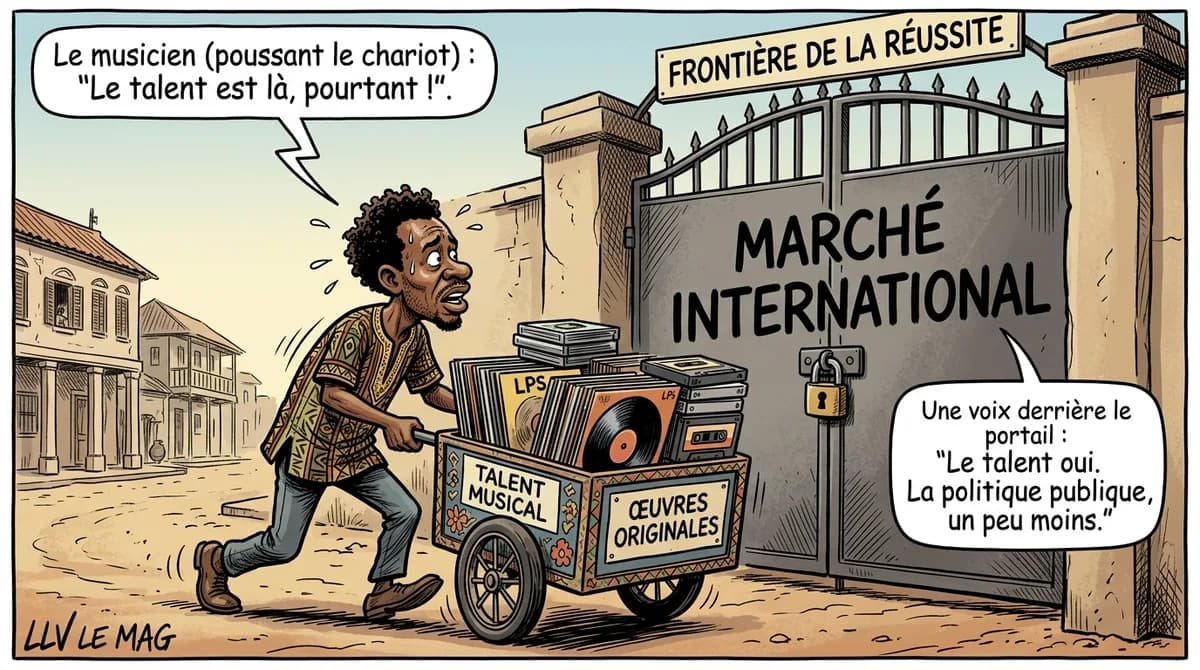
On June 25, 2026, Cameroon once again celebrates its musical heritage, yet the international stage remains out of reach. The country, birthplace of legends such as Manu Dibango, faces an invisible wall that prevents its sounds from traveling beyond its borders.
From Francis Bebey to Salatiel, and through Libianca, Cameroonian creativity has always found a global echo. Today, artists such as Lydol and Cysoul showcase the same energy, yet their tracks struggle to reach foreign playlists. The contrast between cultural richness and limited visibility is becoming increasingly stark.
In the music industry, "export" refers to the distribution and sale of works abroad. This concept guided the "Cameroon Music Projects," a study carried out in 2024 by the Cameroonian Music Council (CCM) with support from the French Institute of Cameroon (IFC). The report highlights immense creative potential but also reveals structural gaps that hinder access to foreign markets.
"It’s always frustrating to know that music made in Maroua might not even reach the stages of Douala, let alone abroad," says Didier Toko, president of the CCM and founder of the Douala Music Art Festival (DOMAF). His testimony underscores the gap between local production and national distribution, a further step before reaching the international arena.
The obstacles are numerous: lack of a dedicated public policy, limited distribution networks, and insufficient investment in digital infrastructure. Without an institutional framework, artists struggle to secure financial support, licensing deals, or placements in foreign media. The result is a stagnant flow of works, even as diaspora audiences demand authentic sounds from their homeland.
For Cameroonians, this situation translates into a loss of economic and cultural opportunities. Music that does not circulate abroad fails to generate royalties, concerts, or collaborations that could energize the sector. The country thus forfeits potential revenue and sees its cultural influence wane compared to other African nations that export more.
Hope rests on a collective mobilization: the CCM, public institutions, and private actors must co‑create an export strategy. Concrete measures—targeted subsidies, international training programs, and partnerships with streaming platforms—could turn the local scene into a genuine global springboard. The time has come to let Cameroonian music resonate beyond its borders.