
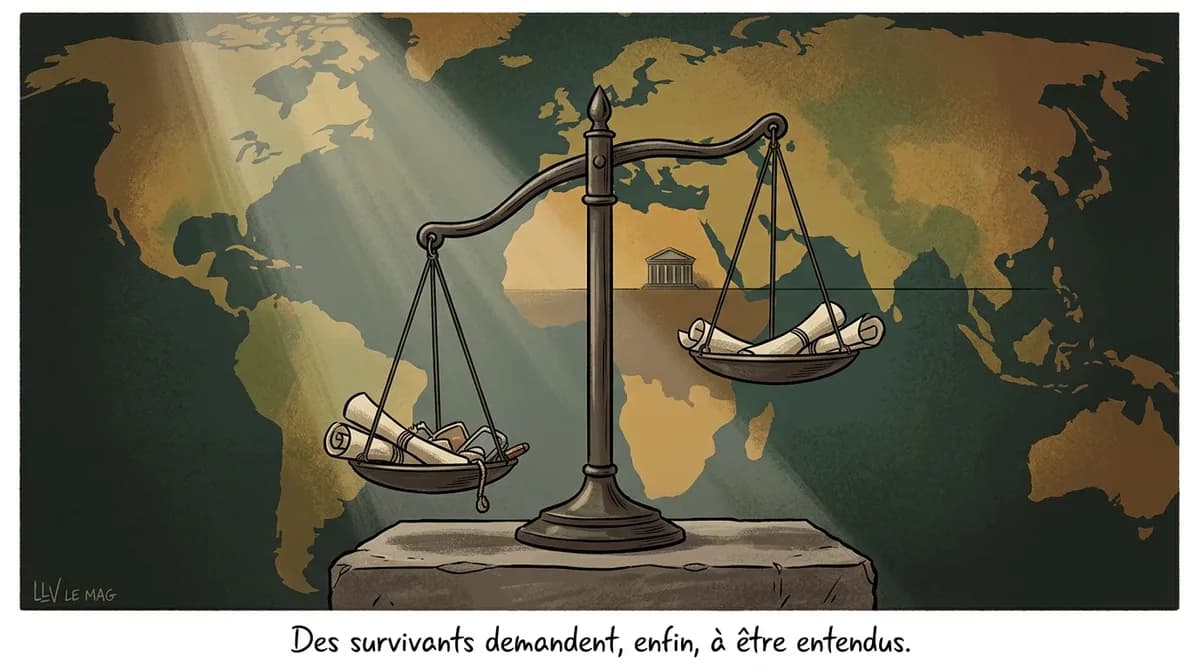
On 20 June 2026, a group of Darfur conflict survivors filed a complaint before the International Criminal Court (ICC). Their petition seeks to hold the commanders of the Rapid Support Forces (RSF) and their foreign backers, including the United Arab Emirates, accountable for the massacres committed in El Fasher, northern Darfur. The bold, unprecedented move highlights the international dimension of Sudan’s war, long seen as a purely local tragedy.
El Fasher, a strategic town in Darfur, became the scene of fierce fighting in 2023, where hundreds of civilians were killed. Survivors claim RSF troops, logistically and financially supported by the UAE, carried out terror operations that included summary executions and looting. Their testimonies, gathered by local NGOs, point to the direct involvement of foreign military advisers, which they say breaches international humanitarian law.
The accusation comes against the backdrop of a recent UN resolution that labeled slavery as “the most serious crime against humanity.” The decision, welcomed by the international community, paves the way for tougher prosecutions of slave‑trade actors and their political sponsors. The resolution, adopted by the United Nations, reiterates that slavery in all its forms must be eradicated and that perpetrators must face justice.
At the same time, several African and Caribbean nations convened in Accra, Ghana, to debate a hefty reparations agenda. Heads of state agreed to explore compensation mechanisms for Darfur victims while calling for stronger cooperation with the ICC. The regional initiative aims to create a reparations fund that could finance the reconstruction of devastated communities and support reconciliation programmes.
For Cameroonian readers, these developments carry a dual significance. On one hand, they demonstrate victims’ ability to make their voices heard on the world stage, underscoring the importance of the right to justice even in the most complex conflicts. On the other, they highlight the growing influence of Gulf powers in African affairs, a trend reshaping the continent’s geopolitical balance, especially in security and investment.
While the ICC filing is symbolically powerful, it does not guarantee a swift outcome. The court must first assess the admissibility of the complaint before launching a full investigation. Legal experts warn the process could take several years, but they stress that each step reinforces the legitimacy of international law and deters actors who contemplate supporting violence by proxy.
Until the court renders a decision, the Sudanese community and African observers remain vigilant. The next summit in Accra, slated for the third quarter of 2026, will need to translate reparations pledges into concrete action and monitor human‑rights violations. For Cameroon, where internal conflicts continue to threaten stability, these talks offer a glimmer of hope: an international justice system that could eventually curb impunity and promote lasting peace across the continent.