
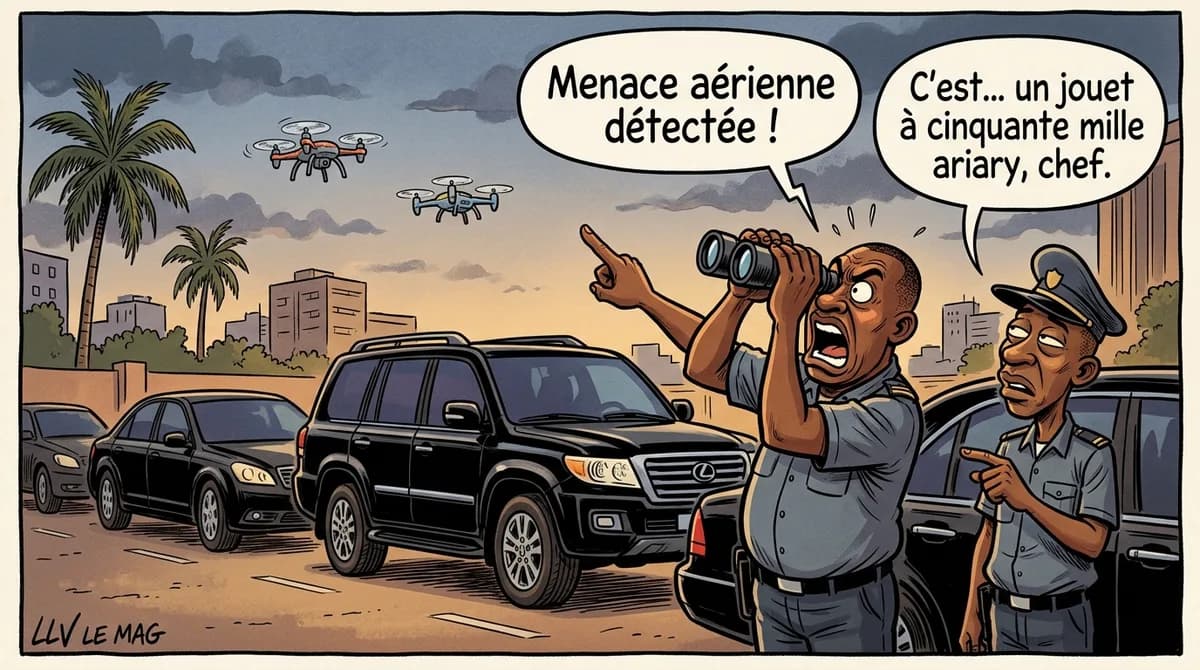
On Friday July 3, 2026, the centre of Antananarivo was the scene of an unprecedented incident: two drones flew over the convoy of Colonel Michael Randrianirina, head of the Malagasy transitional state. The event, relayed by the presidency in an official communiqué, comes as the region is in the midst of security upheaval.
According to the released text, the devices followed the official car for several minutes before climbing to an altitude that the presidential guard's fire could not reach. The guards opened fire, but the drones, too high, evaded the projectiles. Colonel Randrianirina arrived at his residence unharmed, and authorities immediately bolstered security at the site.
This is not the first report of its kind. The day before, a first drone had already followed the same convoy before moving away, without the guard intervening. In April 2026, a similar incident had already been reported, indicating a trend that goes beyond a simple isolated accident.
The use of armed or surveillance drones, once reserved for the armed forces, is becoming widespread in several African countries. Their low cost, ease of acquisition on the black market and ability to operate at high altitude make them attractive tools for groups seeking to intimidate or gather intelligence. In Madagascar, where political tensions remain high since the overthrow of the president in 2023, these flights raise questions about the origin and intentions of the operators.
For Cameroon, a neighboring country and a major actor in the fight against terrorism, this episode raises cross‑border security questions. An escalation in the use of uncontrolled drones could complicate operations of President Paul Biya's Joint Forces, already engaged against armed groups in the north. The ability of these devices to cross borders undetected could also fuel instability in the Lake Chad region and beyond.
Malagasy authorities announced the launch of an official investigation and the strengthening of protection measures around the presidential residence. They also called on the international community to condemn any illegal use of drones. At the same time, regional partners, including ECOWAS and the African Union, are being urged to establish information‑sharing protocols to trace the origin of these devices.
As investigations continue, observers recommend that African states reinforce their legislative frameworks on unmanned aerial vehicles and invest in suitable detection systems. The next challenge will be to prevent these fly‑overs from turning into attacks, thereby safeguarding the political stability of a continent already facing multiple threats.