
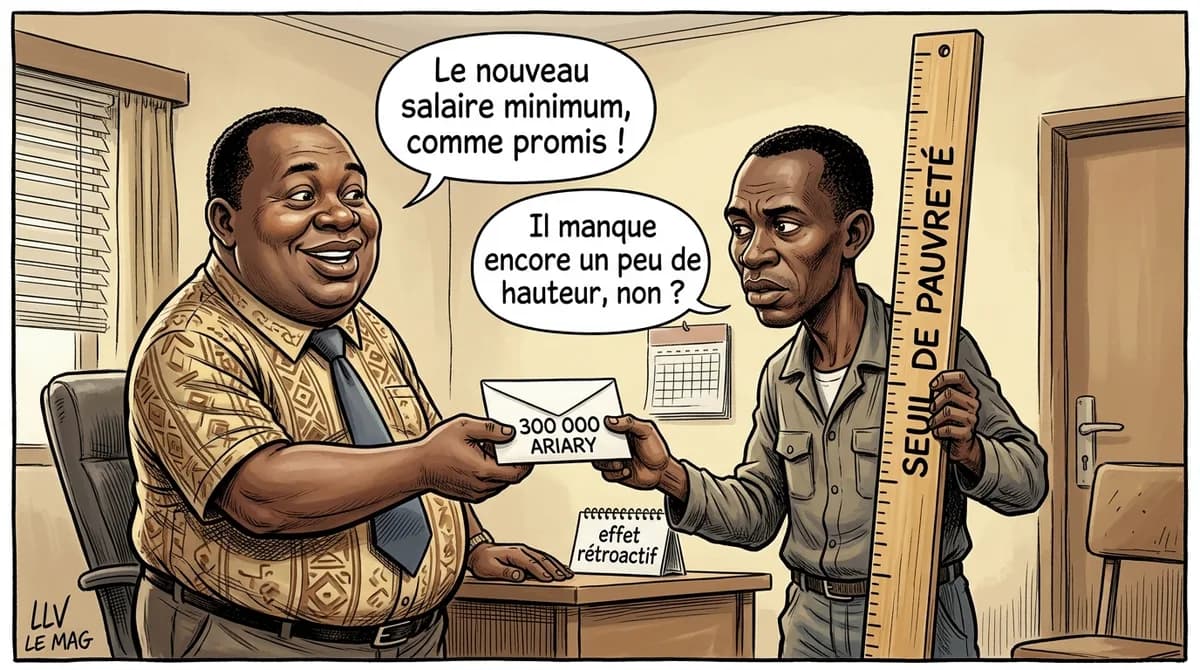
Antananarivo, July 6, 2026 – The government of Madagascar has signed a decree redefining salary scales in the private sector. Effective March 1, 2026, the entry-level minimum wage will be set at 300,000 ariary (about €60) in the non‑agricultural sector and at 304,300 ariary (around €61) in agriculture. The measure applies to all professional categories in the private sphere.
The legal text obliges employers to immediately pay four months of back‑pay to workers who earned less than the new threshold before it took effect. This retroactive component aims to compensate employees who have long endured wages far below the set level, while avoiding a sharp break in purchasing power.
Unions, who have been awaiting the reform for months, greeted it with visible relief. Barson Rakotomanga, secretary‑general of the Randrana Sendikaly union, noted that “these amounts remain below the international poverty line.” He reminded that, despite the increase, the wage level is still insufficient to guarantee a decent life, especially in urban areas where housing costs keep rising.
The international poverty line, set at $1.90 per day, translates to roughly 1,200 ariary. Even with the new scale, the entry‑level minimum wage sits only slightly above that threshold, leaving a narrow margin. For an average worker, this equates to a monthly income of about 9,000 ariary, or $1.80 per day, far short of what is needed to cover health, education and transport expenses.
Within the African context, Madagascar joins several countries revising their wage floors to meet social pressures and labour‑market demands. Benin, Ghana and Kenya have recently adjusted their minima, creating a regional dynamic that could influence debates in Cameroon, where unions are also calling for a basic‑wage uplift. Cameroonian policymakers are watching these experiences closely to calibrate their own salary policies.
The economic impact of the increase can be measured on two fronts. On the one hand, workers’ purchasing power rises, stimulating local consumption and fostering job creation in the informal sector. On the other hand, companies—especially SMEs—will have to absorb higher labour costs, which could lead to price hikes or, in the worst case, layoffs if profit margins remain tight. The government said it will closely monitor inflation and adjust fiscal measures if necessary.
The coming months will be crucial to assess the decree’s real reach. Observers await the first assessments from employer organisations and chambers of commerce, as well as workers’ reactions to the arrears payments. If feedback is largely positive, Madagascar may consider another raise before year‑end, aiming to bring the minimum wage closer to the international poverty line and meet the demands of social partners.