
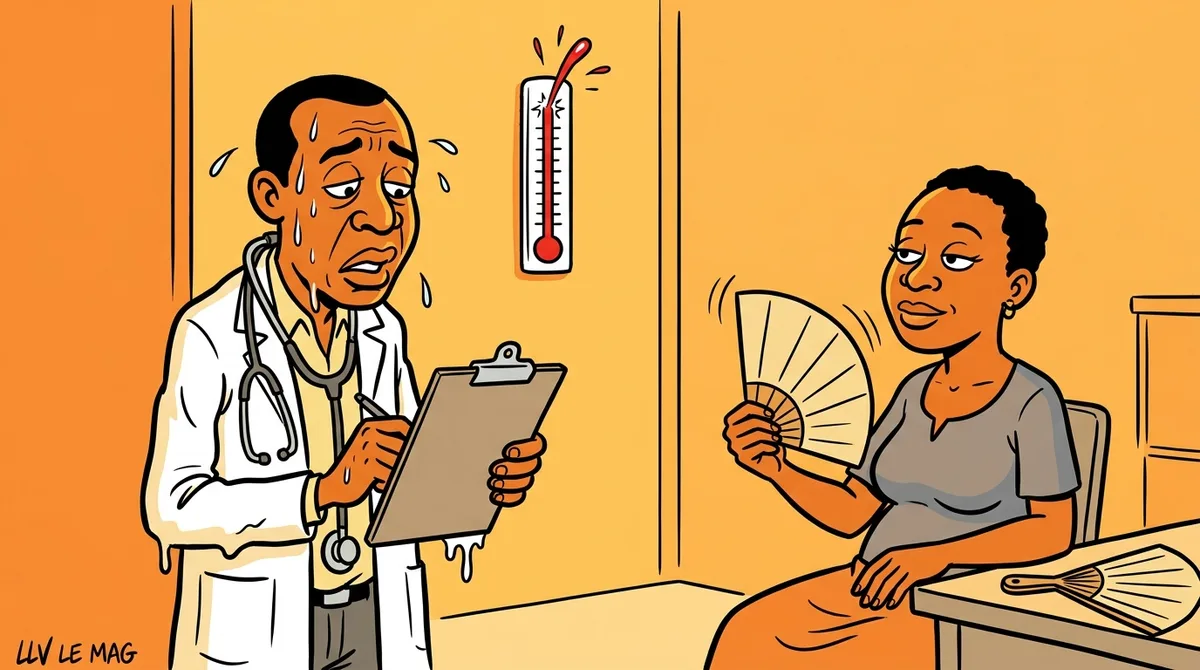
On July 13, 2026, Morocco experienced another intense heatwave, with temperatures hovering around 50 °C in several regions. This thermal peak, felt from north to south of the kingdom, underscores that the country is no longer shielded from climate extremes, and each day under the scorching sun becomes a survival challenge for citizens and public services alike.
Since May, the country has already recorded three heatwave episodes, a pace that turns the exception into the norm. Moroccan summers, once marked by occasional spikes, now see their thermometers soaring repeatedly, a tangible sign of climate disruption woven into daily life.
Morocco's health system reveals its limits under this new reality. Dr. Hamdi Tayeb, a health policy researcher, points out the lack of official figures on excess mortality or hospital admissions linked to heatwaves: “Unfortunately, in Morocco we do not have exact published and official numbers.” This opacity hampers assessment of the problem’s scale and the mobilization of targeted responses.
The consequences are already evident: emergency services are stretched thin, patients with chronic illnesses and the elderly are the most vulnerable, and cases of dehydration are rising. In 2024, the city of Fez recorded 21 deaths during a previous heatwave, reminding that the human cost of these episodes is far from negligible.
For Cameroonians and other French‑speaking African nations, the Moroccan scenario sounds a warning. The continent is also experiencing a surge in heatwaves, and health systems are often under‑funded and ill‑prepared. The lack of reliable data, as seen in Morocco, hinders the implementation of effective prevention strategies.
Concrete measures are needed: establish early‑warning systems, strengthen data collection on heat‑related admissions and deaths, create air‑conditioned spaces accessible to disadvantaged populations, and train medical staff on heat‑related illnesses. Investment in urban resilience, notably greening cities and sustainable water management, also represents a crucial lever.
The future will hinge on governments’ ability to turn these lessons into public policy. Regional cooperation, backed by international organisations, could enable the sharing of best practices and funding of climate‑health projects. By exposing its shortcomings, Morocco offers a learning opportunity for the whole of Africa, which must prepare for a future where heatwaves are the rule rather than the exception.