
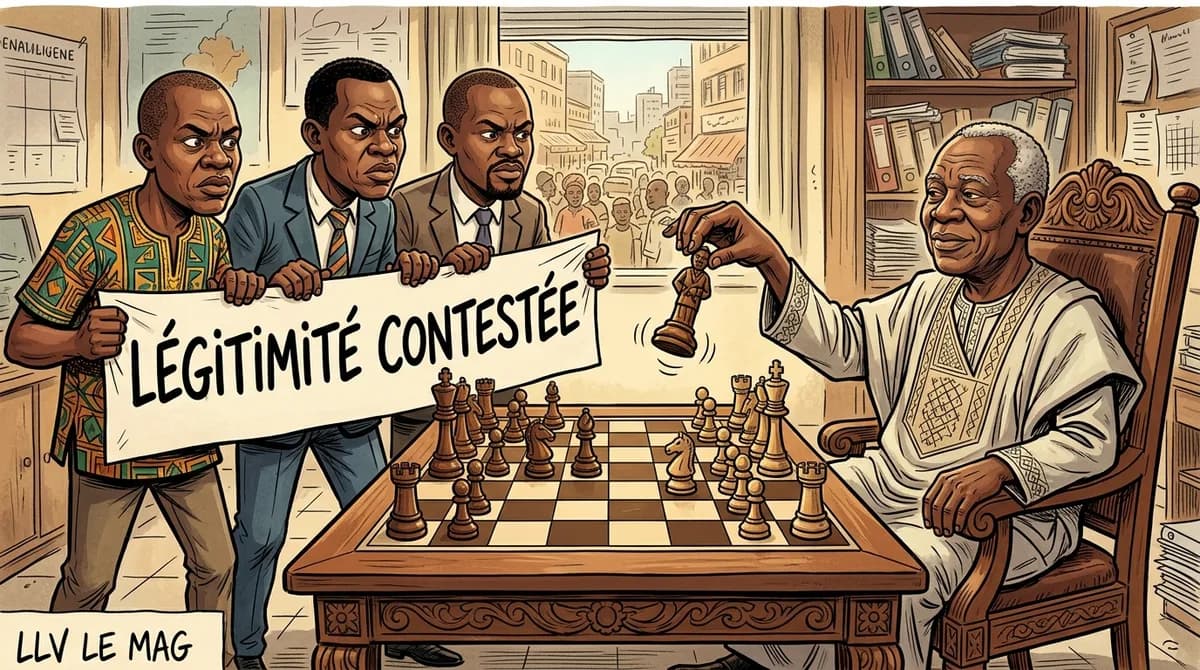
This Thursday, July 9, 2026, three activists of the Movement for the Renaissance of Cameroon (MRC) lodged a petition before the summary judge of the first‑instance court in Ekounou, located in Yaoundé’s 4th district, to contest the legitimacy of Maurice Kamto’s leadership of the opposition party.
The three petitioners ask the courts to rule on the validity of actions taken by Maurice Kamto since his return to the MRC’s helm, arguing that his status as president is tainted by internal irregularities. The hearing was set for the same day, July 9, at the Yaoundé court, where the judge will have to decide on the party leader’s legitimacy.
The dispute comes against an already charged backdrop. In June 2025, Maurice Kamto announced his resignation from the MRC to join the African Movement for New Independence and Democracy (Manidem), which had put forward his presidential candidacy – a candidacy ultimately invalidated by authorities. His return to the MRC therefore raises questions about the continuity of his mandate and the conformity of his actions with the party’s statutes.
Parallel to the legal proceedings, the MRC leadership responded by expelling one of the three complainants, a decision publicly announced by the party’s spokesperson. This expulsion, seen as a disciplinary measure, heightens internal tension and shows the leadership’s intent to protect its authority in the face of contestation.
The stakes go beyond a simple legal dispute. A fragmented opposition weakens the MRC’s ability to present a united front against the incumbent government, especially as electoral deadlines approach. Challenging the legitimacy of its president could trigger a split, or even the creation of rival factions, which would risk diluting the opposition vote and favoring the status quo.
For Cameroonian voters, this legal conflict signals uncertainty about the stability of opposition forces. If the court confirms Maurice Kamto’s legitimacy, the party could quickly regroup, but the distrust generated by the expulsion of a activist may tarnish its public image. Conversely, an adverse ruling could open the door to further internal demands and the search for a new spokesperson.
Observers are now awaiting the summary judge’s decision, expected in the coming days. The outcome of this hearing could redraw fault lines within the MRC and, by extension, influence Cameroon’s political dynamics ahead of the next electoral cycle.