On July 15, 2026, Douala’s airwaves once again pulse to the rhythm of makossa: Ngalle Jojo’s debut album, “Na Bo Ndedi,” resurfaces thanks to Celluloïd Records, reminding us that African music continues to reinvent itself.
Born as Joseph Ngalle, this low‑profile yet essential musician grew up in the bustling streets of Douala, where traditional drums sit alongside the first imported synthesizers. As a child he tinkered with school instruments, and as a teenager he joined the “circuit” of bands shaping the country’s sound.
In the 1970s‑80s, makossa became Cameroon’s sonic flag, carried by artists who blended Bantu rhythms with Western influences. Ngalle Jojo stood out for his boldness: he introduced synthesizers, forging an alchemy between the traditional and the modern—a bridge that would carry makossa beyond its borders.
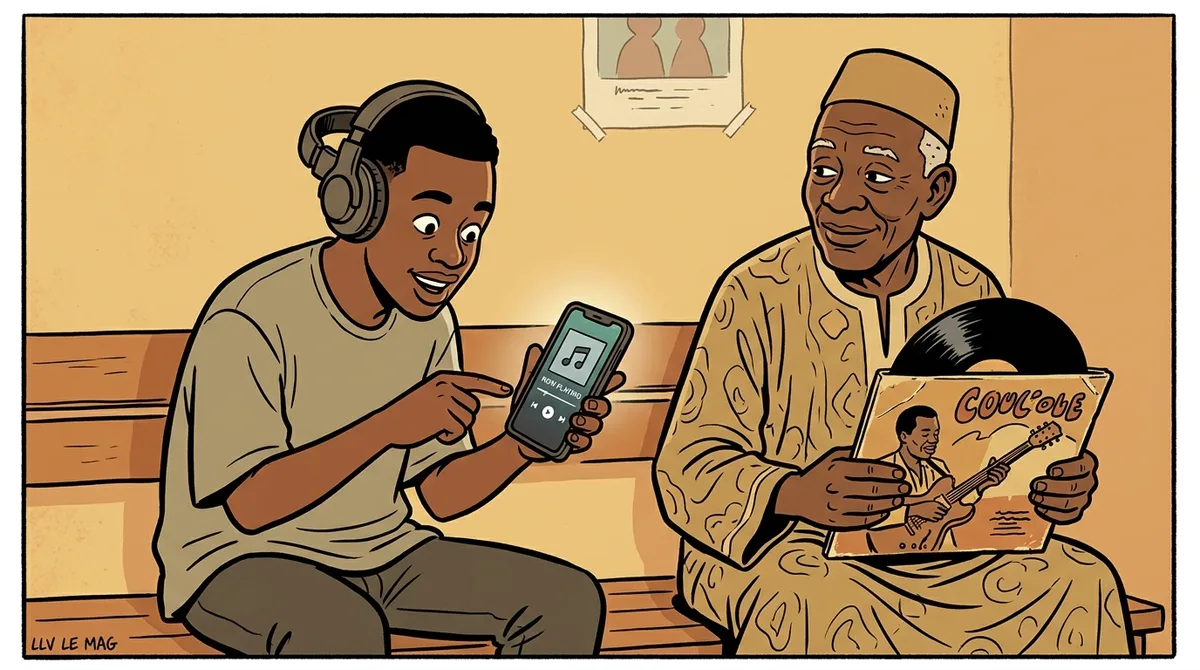
Celluloïd Records, a label committed to preserving African musical heritage, has chosen today to reissue “Na Bo Ndedi.” The record, long consigned to collectors’ vaults, now receives both digital and physical distribution, giving new generations the chance to hear the sound that once propelled makossa worldwide.
For young Cameroonian artists, this reissue is more than a historical reminder: it is a source of inspiration. By rediscovering Ngalle Jojo’s textures, they can draw from a rich repertoire, reinterpret the rhythmic motifs and adapt them to contemporary productions, thereby strengthening the continuity of a living musical identity.
Beyond Cameroon’s borders, the African diaspora already feels the echo of this renewal. Makossa, already present in clubs in Paris and Brussels, finds fresh vigor thanks to the album’s availability. This resurgence contributes to the valorisation of African cultural heritage, reminding us that every note carries the history of a people.
As the continent asserts itself on the global cultural stage, the spotlight on “Na Bo Ndedi” shows that the past is not a museum but a source of energy for the future. Through this reissue, Ngalle Jojo invites every listener to rediscover makossa, to make it dance in the streets of Douala as well as the lounges of Lagos, and to carry it proudly onto international stages.