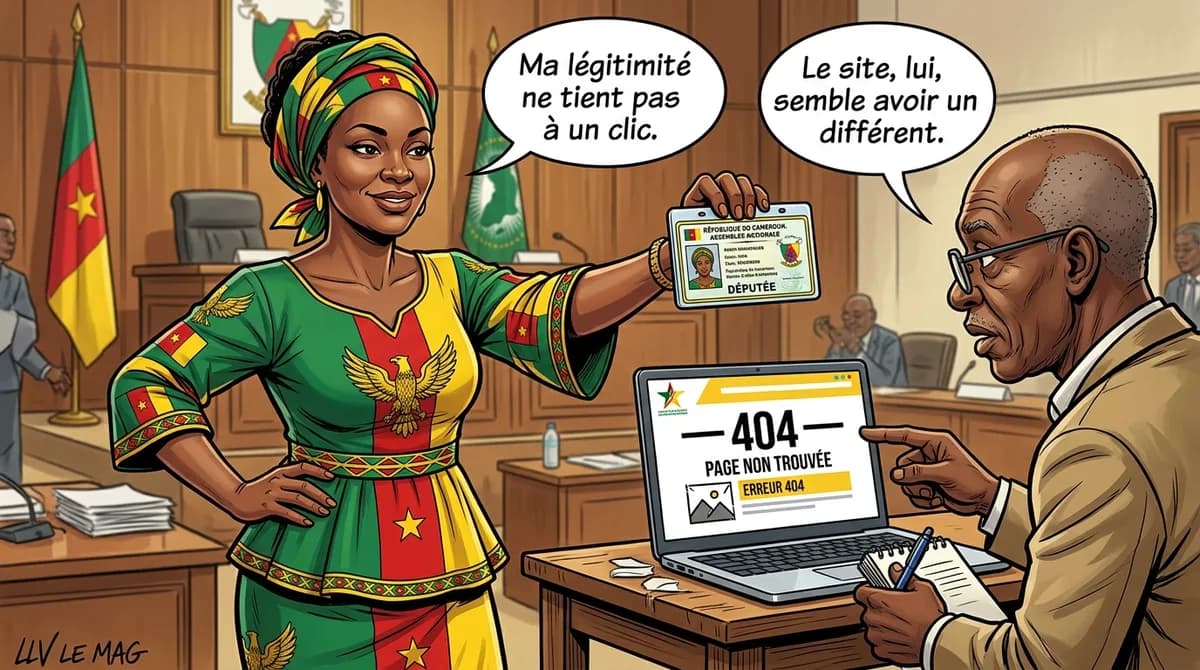
On June 21, 2026, Cameroonian social media erupted after the portrait of MP Nourane Foster vanished from the official website of the Party for National Reconciliation (PCRN). The removal, announced without explanation, sparked a flood of comments, memes and debate about whether a digital avatar can measure an elected official’s worth.
In a statement posted on the party’s platforms, Nourane Foster replied firmly: “I want to reassure the public: my legitimacy does not depend on a website update. If some people still confuse political action with managing a photo album, I will gladly leave them to their technical expertise.” She noted that whether the technicians acted on instruction or on their own initiative “didn’t matter to me,” describing the episode as “political naïveté.”
Her remarks raise the central question of how much digital media shape the perception of a mandate. In Francophone Africa, online visibility quickly becomes a barometer of notoriety, but the MP stresses that a politician’s track record, bills and parliamentary interventions remain the real criteria for evaluation. A click that erases an image cannot, in her view, erase a record or reputation built over years.
By affirming that her endorsement by the PCRN remains intact, Nourane Foster reminded that the party “granted her its endorsement, we built the party together.” She stressed respect for institutions and a “dignified silence in the face of provocations,” arguing that political legitimacy rests on work, not on updating a digital album. This stance aims to defuse attacks that might reduce her work to a mere technical glitch.
For PCRN supporters, the controversy could become a lesson: digital communication must be backed by a solid content strategy, otherwise it becomes a playground for opponents. The portrait’s removal, even if it was just a page edit, exposes the fragility of a public image that relies on servers and technicians. The party will therefore need to strengthen its internal procedures to prevent such incidents from being interpreted as challenges to internal coherence.
Beyond the specific case, the incident reflects a broader dynamic in Cameroonian politics: the tension between institutional tradition and digital modernity. Voters, increasingly connected, demand transparency and responsiveness, yet they still cling to tangible touchpoints—constituency meetings, local projects, field visits. Foster’s statement reminds that legitimacy is measured primarily by real impact on communities, not by the glow of a screen.
Looking ahead, the MP reiterates that her priority remains work on the ground, serving citizens. She calls on observers to move beyond virtual squabbles and focus on concrete actions that will improve everyday life for Cameroonians. The PCRN, meanwhile, must learn from this episode to solidify its digital presence without letting technology supplant political substance.