On July 5, 2026, the debate over Cameroonian gold resurfaced in the media, driven by an op‑ed from Me Christian Ntimbane Bomo, a lawyer and political figure. He reminded that the mining code and the decree establishing SONAMINES already require individuals who extract gold to sell it to the state—a rule he says must be rigorously enforced.
‘A great deal of money will flow into Cameroon as foreign exchange. The state will collect substantial taxes. Public coffers will be replenished. We will then be able to launch major infrastructure projects and even triple salaries,’ Ntimbane Bomo asserts. He views controlled gold sales as a revenue stream capable of closing budget gaps and financing roads, schools and hospitals that have stagnated for years.
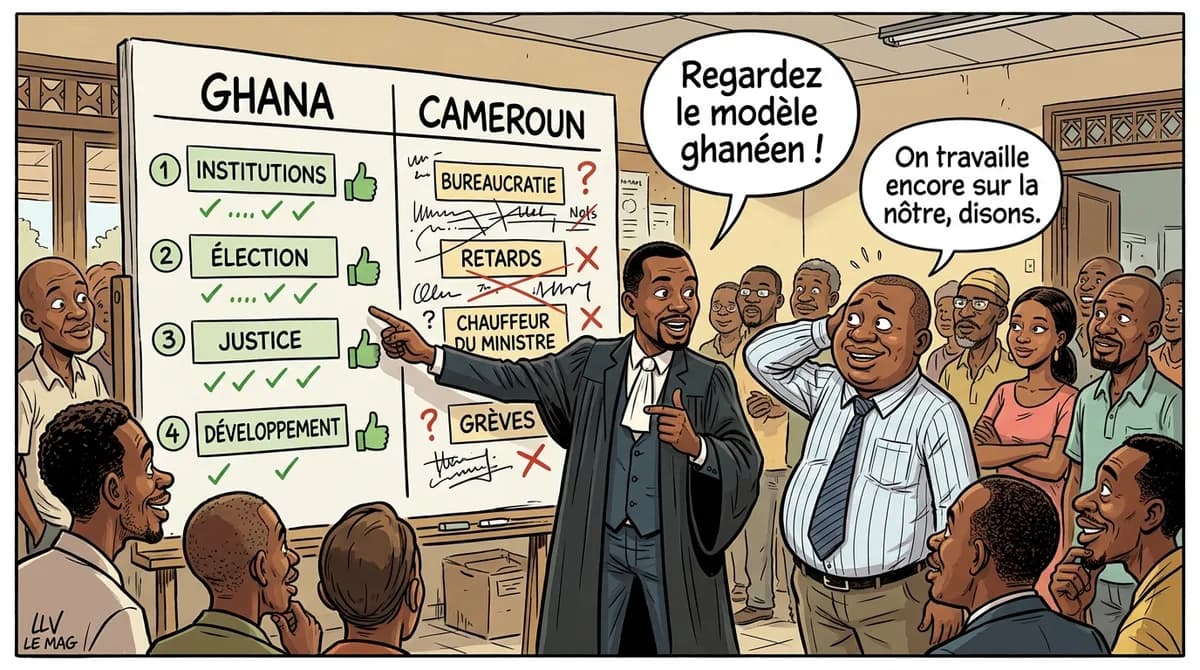
To back his argument, he points to Ghana, which, he notes, suffered a severe economic crisis a few years ago. In September 2022, Ghana’s total debt had risen to $55 billion—more than twice Cameroon’s current debt, estimated at 15 trillion CFA francs. The situation led to a downgrade of Ghana’s sovereign rating, cutting off access to international financing.
Three years later, Ghana rebounded. According to the op‑ed, public coffers were refilled, large infrastructure projects were built and major initiatives completed. Ntimbane Bomo concludes that centralized management of gold played a crucial role in the economic recovery, even though the piece does not detail the exact mechanisms.
The lawyer’s plea comes amid a context where informal gold exports constitute a significant share of mining trade. Without oversight, the metal leaves the country without generating tax revenue, depriving the budget of resources needed to modernize public services. He therefore urges every responsible Cameroonian: ‘THIS IS WHY EVERY RESPONSIBLE CAMEROONIAN MUST DEMAND AN ABSOLUTE BAN ON PRIVATE EXPORTS OF OUR GOLD TO FOREIGN MARKETS.’
If SONAMINES were to become the sole outlet, authorities could set reference prices, ensure traceability of the metal and levy taxes proportional to profits. This approach would convert gold into foreign exchange, bolster reserve holdings and support social development programmes, according to Ntimbane Bomo’s projections.
The stakes are therefore twofold: on the one hand, safeguarding natural resources from illicit outflows; on the other, turning an untapped deposit into a growth lever. The debate remains open, but Me Christian Ntimbane Bomo’s op‑ed has unmistakably placed the issue of gold sales at the heart of Cameroon’s economic strategy, drawing inspiration from an African example that, in his view, shows the way forward.