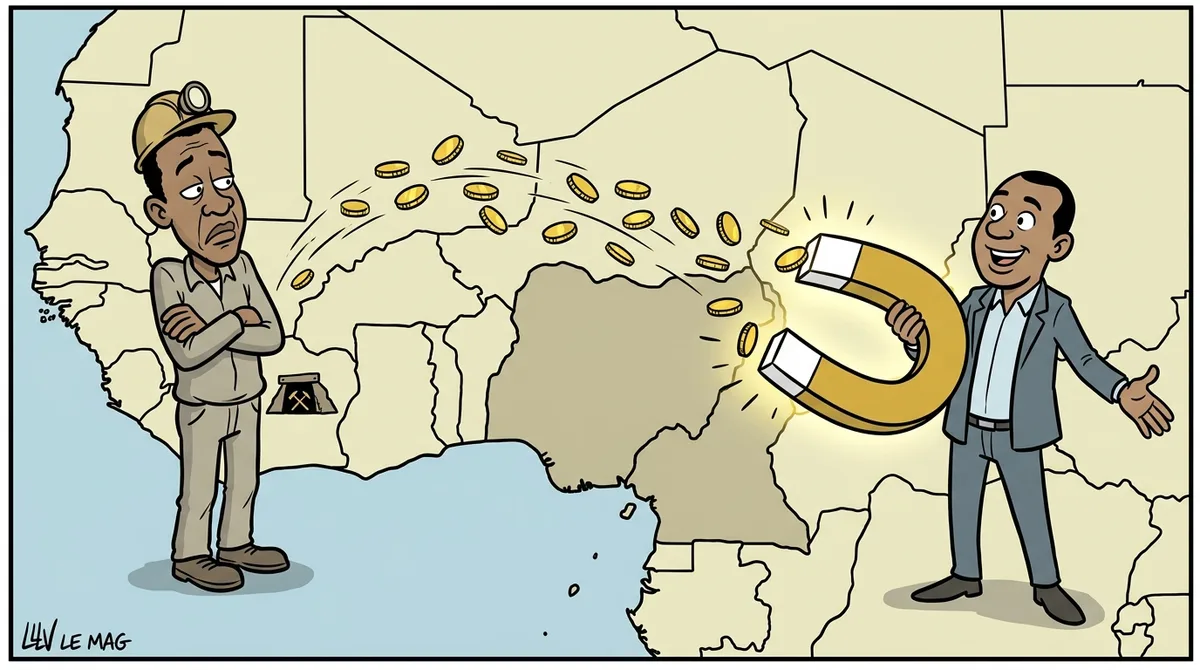
On July 13, 2026, France International radio aired a briefing on the new dynamics reshaping the map of gold investments in West Africa. As the hunt for the precious metal continues, the sub‑regional states are competing to woo multinational mining firms. This redistribution, far from being trivial, promises to remodel capital flows, employment and the continent’s geopolitical balances.
In Mali, Burkina Faso and Ghana, governments have tightened their grip on mining sectors, imposing stricter regulatory frameworks and heightened transparency requirements. This surge in mineral sovereignty, welcomed by local populations, has however chilled foreign investors, who fear legal uncertainty and conflict risk. The result: a gradual disengagement from ongoing projects and an active search for more stable ground.
Against this backdrop, Côte d’Ivoire and Guinea have risen to the top of preferred destinations. The massive Koné project, backed by an international consortium, is slated to start production before the end of the year, several months ahead of its original schedule. This prospect of rapid returns, combined with a business climate deemed predictable, has drawn capital that only weeks ago was looking to set up in Mali or Ghana.
Further east, Mauritania and Senegal are also positioning themselves as new investment hubs. A gold miner photographed on 16 January 2025 in Kédougou, Senegal, illustrates the growing presence of technical teams on the ground. Mauritanian authorities, meanwhile, have launched fiscal incentives to accelerate exploration phases. These initiatives aim to turn a reputation for stability into a genuine investment magnet while creating local jobs.
For Cameroon, an immediate neighbour of many of these economies, the reconfiguration of gold flows represents both an opportunity and a challenge. A clear legal framework, security guarantees and a profit‑sharing policy could make the country attractive to firms seeking to diversify their sites. The Ivorian model, with its Koné project, offers a concrete example of how speed of execution and predictability can turn a resource into a growth engine.
The expected benefits go beyond mere mining revenue. Higher production generates tax receipts, funds infrastructure and stimulates cross‑border trade. However, recent history of gold in Africa shows that capital inflows can sometimes bring environmental pressure and community tensions. Transparency in concession management, adherence to environmental standards and inclusion of local populations are therefore essential to ensure the economic windfall does not become a source of discord.
As sector players watch the coming months, several indicators will be decisive: the completion of the Koné project, new licences granted in Mauritania, and Senegal’s ability to secure its extraction sites. Cameroon, if it wishes to ride this wave, will need a strategy that blends regulatory stability, social dialogue and fiscal attractiveness. The redistribution of gold investments is not merely a balancing act between states; it is an invitation to rethink the governance of the continent’s natural wealth.