Yaoundé, 5 July 2026 – Under the Francophonie flag, the secretaries-general of francophone parliaments began their work in the Cameroonian capital, marking the kickoff of the 51st session of the Parliamentary Assembly of the Francophonie. This first day, set against a backdrop where modernity meets tradition, offered Cameroon an exceptional platform to present its bicameral legislative model.
The Association of Secretaries‑General of Francophone Parliaments (ASGPF), under the auspices of the President of the Cameroonian Parliament, gathered senior parliamentary officials from more than thirty francophone countries. The programme, focused on parliamentary practices, enabled exchanges on oversight mechanisms, citizen participation and inter‑institutional cooperation, while underscoring the uniqueness of Cameroon’s system.
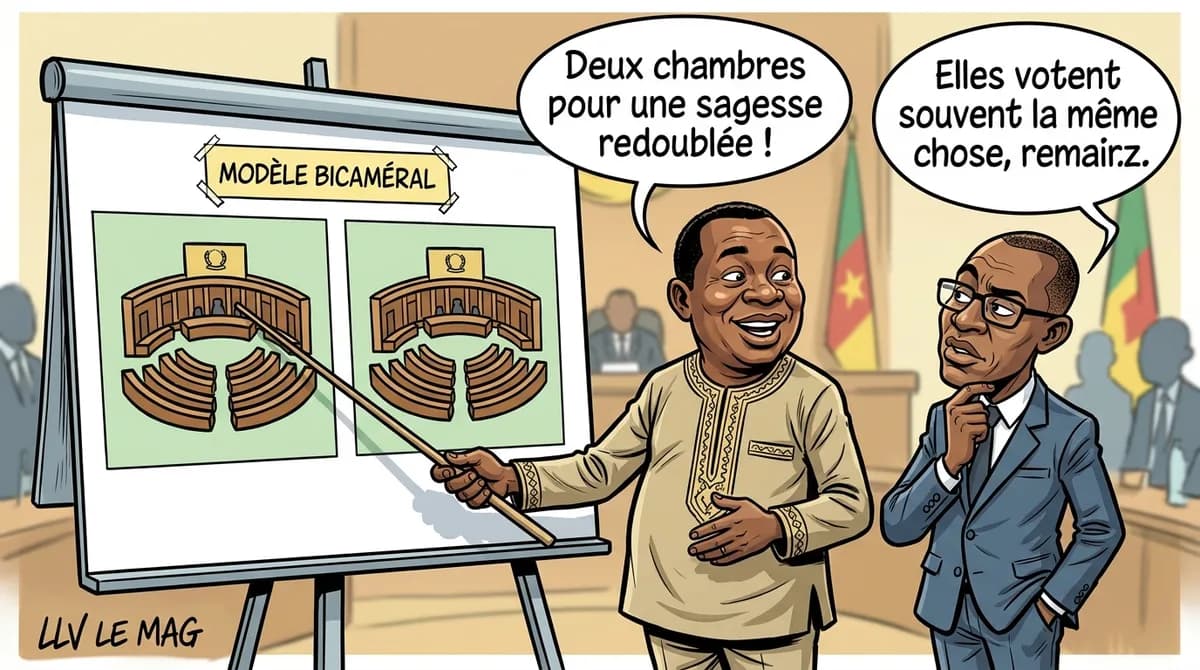
Since the 1996 constitutional revision, Cameroon has had a bicameral parliament composed of the Senate and the National Assembly. The Senate, the upper chamber, represents the regions and territorial collectivities, while the National Assembly, the lower chamber, embodies the people through its elected deputies. The first senatorial elections, held in 2013, put this structure into practice, providing a dual level of legislative deliberation and mutual oversight.
This dual legislative framework aims to strengthen decentralisation and ensure better consideration of local specificities. In practice, the Senate participates in law‑making, proposes amendments and acts as a counter‑balance to the National Assembly’s decisions, thereby promoting political stability and policy coherence. For Cameroonian citizens, this translates into greater transparency and an increased ability to voice the concerns of remote provinces.
During the inaugural session, participants were also invited to discover Cameroon’s cultural heritage. Exhibitions of crafts, traditional music and dance punctuated the debates, reminding that legislation does not exist in a vacuum but is rooted in the richness of local identities. This showcase reinforced a sense of belonging and illustrated the parliament’s role as guardian of cultural diversity.
The discussions highlighted concrete avenues for cooperation: training programmes for parliamentarians, sharing of digital legislative‑tracking tools, and the creation of networks of governance experts. Cameroon’s bicameral model, presented as an example of inclusive governance, could inspire other francophone assemblies to consider similar reforms, particularly regarding regional representation and parliamentary oversight.
At the close of the first day, the secretaries‑general stressed the importance of ongoing dialogue and the pooling of best practices. Cameroon is preparing to continue showcasing its experience in the upcoming sessions, aiming to contribute to a collective strengthening of francophone parliamentary institutions. Looking ahead, the parliamentary community hopes to turn these exchanges into concrete actions for more effective and citizen‑centric governance.