
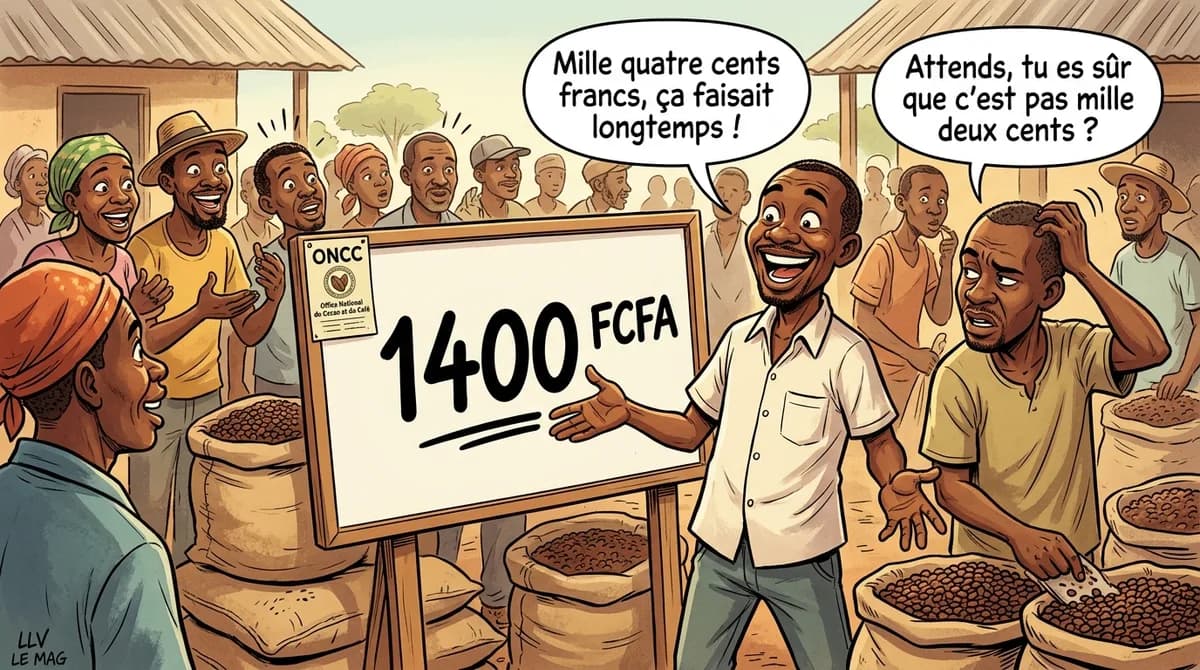
On June 18, 2026, the robusta coffee market in Cameroon showed the first signs of a rebound. After a period of stability, grain prices now range between 1,275 and 1,400 FCFA per kilogram, according to data from the Sector Information System (SIF) of the National Office of Cocoa and Coffee (ONCC). This modest rise breaks the flat prices observed for several months and gives a new breath to producers in the production basins.
The increase is first explained by the international context. Global demand for robusta, driven by major roasting brands, has picked up after the post‑pandemic economic recovery, putting upward pressure on African exports. At the same time, climatic hazards – sporadic droughts in some plantations in the South‑West – have limited local supply, reinforcing price dynamics. Finally, the depreciation of the CFA franc against trading currencies has made Cameroonian coffee more attractive to foreign buyers.
For growers, the price recovery represents a welcome relief. A 10‑15 % rise in average revenue per kilogram could allow them to better cover production costs, especially phytosanitary inputs and transport fees to collection centres. Nevertheless, prices remain below the levels reached in the first quarter of the year, reminding that the rebound is still fragile. Local cooperatives fear another bout of volatility that could erode the gains achieved.
The ONCC, through the SIF, plays a key role in ensuring market information transparency. By regularly publishing price ranges, the institution helps sector actors anticipate fluctuations and plan their activities. This visibility also improves negotiations with exporters, who can now rely on reliable references to set their contracts. Monitoring prices thus becomes a lever for improving the robusta coffee value chain.
Beyond the immediate benefit for farmers, higher prices have repercussions for Cameroon's rural economy. Robust coffee remains one of the main sources of export earnings, contributing to public revenues and financing infrastructure projects in agricultural zones. Improved incomes can stimulate local consumption, support nearby shops and reduce migration pressure to cities. However, reliance on a single product exposes communities to external shocks, highlighting the need for crop diversification.
Outlook remains open but conditioned by several factors. A policy supporting plantation modernization – adoption of resistant varieties and better farming practices – could strengthen Cameroon's competitiveness on the world market. Moreover, price stabilization will require close coordination among authorities, producer organisations and private actors to mitigate the effects of climatic and monetary fluctuations. In the meantime, the price rise offers tangible hope to growers, who finally see their efforts rewarded.