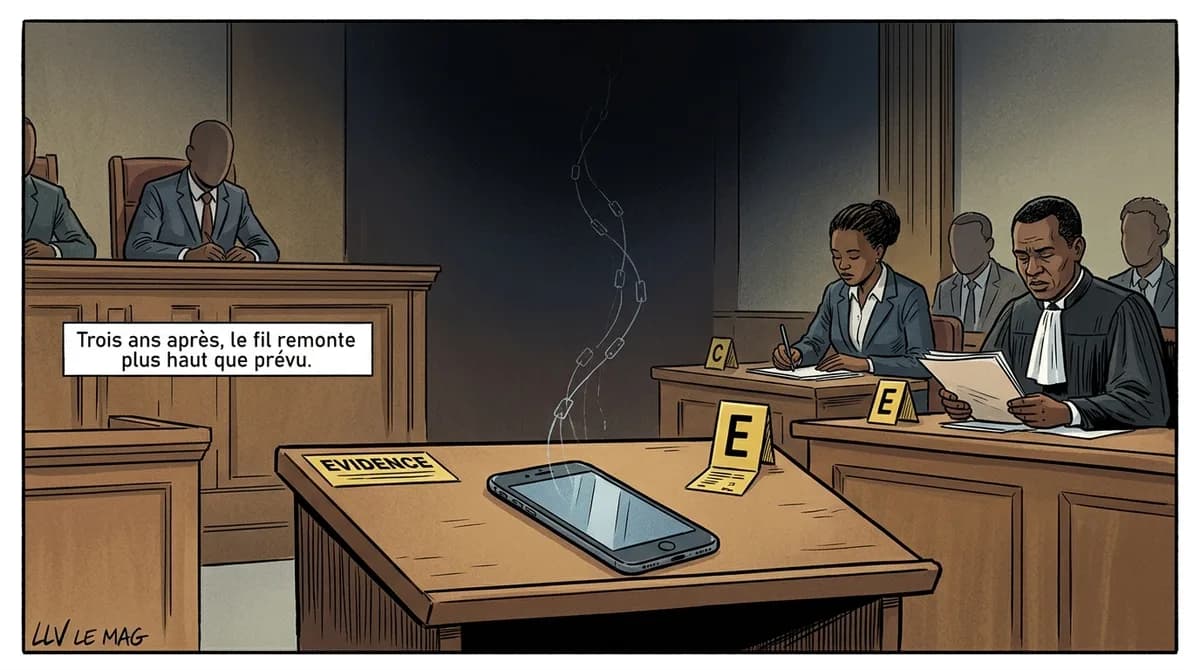
On June 22 and 23, 2026, Yaoundé's military tribunal reopened the case of radio host Martinez Zogo's murder, three years after the tragedy that shocked the capital. The trial, closely monitored by civil society, proceeds amid palpable tension, each new hearing fueling debate over the transparency of Cameroon's justice system.
The main witness on those two days was Jean‑Pierre Eloumou, a cyber‑crime expert, who explained his mandate: to examine the phones of the victim and several defendants to reconstruct their digital exchanges. In his testimony, he emphasized a 'frequent relationship' between Zogo and Ferdinand Ngoh Ngoh, the presidential secretary‑general, suggesting the host was regularly in contact with the state's top official.
This revelation raises crucial questions. Martinez Zogo, known for his investigative programmes, was often seen as a mouthpiece for denunciations against the authorities. A close link with the secretary‑general could indicate an unusual proximity for an investigative journalist, perhaps a form of protection or influence that may have played a role in the events leading to his assassination.
The expert, however, adopted an ambiguous tone. After detailing the communications, he stated that three of the accused – media magnate Jean‑Pierre Amougou Belinga, his then‑associate Bruno Bidjang, and former director of external intelligence – could not be implicated based on the digital evidence. This exoneration, announced without detailed justification, leaves the public awaiting a clearer explanation and fuels speculation about possible behind‑the‑scenes power games.
In the Cameroonian context, where clan battles within the political elite are frequently cited, Eloumou's testimony shines a light on a complex internal dynamic. While the phones reveal frequent contacts, they do not necessarily establish direct complicity, but they suggest Zogo was caught in a web of relationships that goes beyond a purely professional framework.
The public soon reacted. On January 21, 2026, a banner honoring Martinez Zogo was hoisted at the entrance of Amplitude FM in Yaoundé, underscoring the lasting memory of the journalist among listeners. The symbolic gesture, captured in a photograph by Richard Onanena for RFI, demonstrates a collective will not to let the murder fade from the record.
As the military court continues its examination of the evidence, the stakes exceed a simple murder resolution. The trial's outcome could either bolster Cameroonians' confidence in the judicial institution or deepen the sense of impunity that already pervades public debate. The coming days will be decisive in determining whether justice can truly illuminate the shadows uncovered by Eloumou's digital analysis.