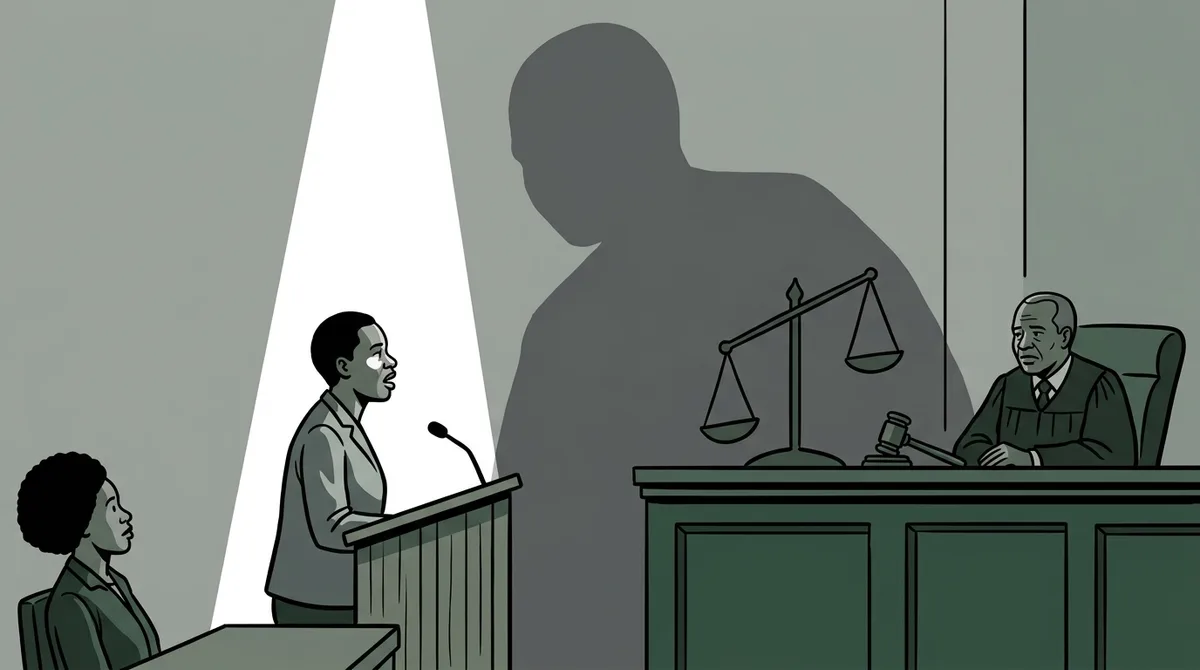
On July 15, 2026, the Yaoundé court heard the 34th witness in the Martinez Zogo case: Colonel Jean‑Pierre Ottoulou. Former head of the gendarmerie company for the Centre region at the time of the incident, he was called to the stand to clarify the circumstances surrounding the discovery of the journalist’s body on January 21, 2026. His testimony, both factual and laden with allegations, shakes the three principal defendants in the case.
According to Colonel Ottoulou, he launched the investigation as soon as his team arrived at the vacant lot in Ebogo, a few kilometres from the capital. It was his unit that first found Martinez Zogo’s body, setting in motion the judicial chain that has led to today’s trial. This initial action places the colonel at the centre of the narrative, not merely as an observer but as the original actor in the procedure.
Now posted in the Littoral region, the colonel recalled that his probe uncovered a collusion between Lieutenant‑Colonel Danwe and media magnate Jean‑Pierre Amougou Belinga. In a recorded conversation, Belinga allegedly asked Ottoulou to “silence” Martinez Zogo. This revelation, presented before the court, sheds new light on potential links between security forces and the country’s major press groups.
The ramifications of these accusations are manifold. On one hand, they raise the issue of a media figure meddling in a judicial matter, which could undermine press independence and public confidence in institutions. On the other hand, implicating a senior gendarmerie officer fuels fears of a collusion between law‑enforcement bodies and private interests—a scenario that, if confirmed, could exacerbate existing tensions surrounding freedom of expression in Cameroon.
The defence, meanwhile, has attacked Colonel Ottoulou’s credibility, arguing that his statements are inconsistent and that his role as the initial investigator makes him biased. This challenge aims to erode the witness’s reliability and shield the accused from any implication in a possible silence‑enforcing network orchestrated by the media magnate.
In the broader national context, where several journalists have already faced pressure, intimidation and even disappearances, this testimony revives painful memories within Cameroon’s media community. For LLV LE MAG readers, the question is no longer purely legal: it is whether the judicial system can truly guarantee journalists’ protection and restore public trust in the institutions.
Developments remain to be seen. The court must decide on the veracity of the colonel’s claims, while civil society demands greater transparency and safeguards for reporters. A verdict that either paves the way for structural reforms or, conversely, upholds the status quo will be decisive for the future of press freedom in Cameroon.