
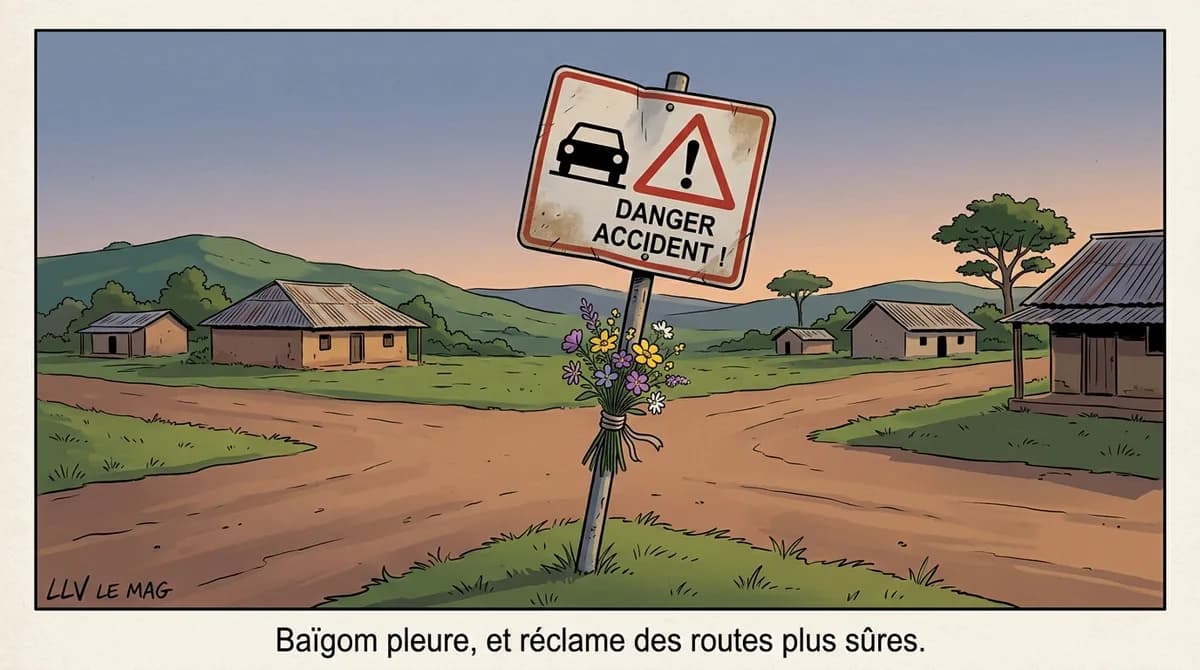
In the early hours of Tuesday 1 July to Wednesday 2 July 2026, Cameroon’s West Region was shaken by a tragedy that struck local communities. At the Carrefour Ferme junction in Baïgom, on the strategic road linking Foumban to Foumbot, a 70‑seat bus went out of control, causing a violent traffic accident. The vehicle, which had departed from Foumban en route to Douala, was carrying passengers, most of whom were workers and students.
According to the Cameroon Tribune, the driver deviated from his lane, causing the bus to overturn and collide with a fixed obstacle. First responders, dispatched quickly, found four dead at the crash site. Twenty‑six others were injured, some seriously, and required emergency medical care at regional hospitals.
Local authorities have opened an investigation to determine the exact circumstances of the disaster. The transport operator, identified as a regional company, has been ordered to cooperate with police and gendarmerie services. The families of the deceased, grieving, are demanding answers and financial assistance to cover funeral costs and loss of income.
The accident highlights the ongoing challenges of road safety in Cameroon’s West Region. Roads, often poorly maintained and inadequately signposted, are daily traversed by overloaded public transport vehicles. A lack of proper driver training, combined with the absence of regular inspections, raises the risk of major incidents, especially on heavily used routes such as the Foumban‑Foumbot corridor.
For the affected communities, the loss of four lives is a heavy blow both socially and economically. Each victim was often the main support for several family members, and their death creates a difficult void. The injured face high medical expenses and possible temporary or permanent disability, further deepening the existing precariousness in many households.
Cameroon’s government, through the Ministry of Transport, has reiterated its commitment to strengthening public transport regulation. Measures such as intensified vehicle inspections, ongoing driver training, and road‑infrastructure improvements are regularly announced, although implementation often proceeds slowly. Local authorities also deployed rescue teams and ambulances to evacuate the injured to the best‑equipped hospitals.
As the country moves toward better mobility, this tragic episode underscores the urgent need for coordinated action. The public expects concrete answers, investment in road safety, and tighter oversight of transport operators. Only sustained political will, coupled with active participation from road users, can reduce the number of similar tragedies and ensure daily journeys no longer turn into nightmares.