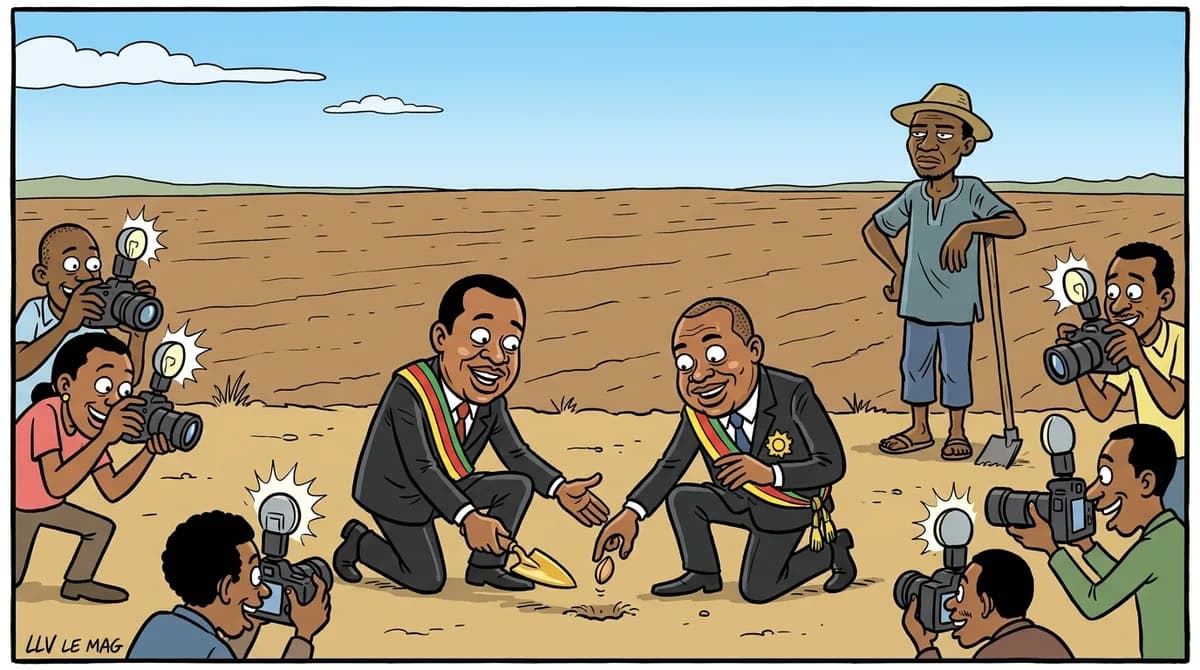
On July 14, 2026, the Cameroonian government unveiled a bold plan: to produce 70,000 tonnes of certified seeds in the northern regions by the end of 2026. The announcement, reported by Journal du Cameroun, is part of a drive to strengthen the country's food sovereignty, as northern farmers face climate challenges and increasing pressure on arable land.
At the heart of the scheme, 83 tonnes of improved basic seeds will be distributed over 7,500 hectares, with technical support from the Institute for Agricultural Research for Development (IRAD). This scaling up aims to ensure the genetic quality of the plants, reduce post‑harvest losses and provide local producers with reliable seed material that meets national and international certification standards.
Why is this initiative crucial? The North of Cameroon, characterized by often poor soils and irregular rainy seasons, largely depends on imported quality seeds. By localising production, the country hopes to lower acquisition costs, secure yields and reduce vulnerability to global market fluctuations. A controlled supply chain could also boost short‑circuit marketing, creating more profitable outlets for farmers.
Agriculture and Rural Development Minister Gabriel Mbairobe presented the programme as a national priority. “We must invest in research and the dissemination of certified seeds to guarantee the resilience of our countryside,” he said at the official launch. This statement reflects a political will to place agriculture at the core of the economic recovery plan, mobilising public resources and fostering partnerships with research institutions.
For northern growers, the expected impact is twofold. First, access to certified seeds should raise average plot productivity, providing extra leeway to diversify crops. Second, certification opens the door to subsidies and technical‑support programmes, strengthening farmers’ ability to adopt modern, sustainable agronomic practices.
However, the project's success will hinge on several factors. Training farmers to use the seeds optimally, the availability of adequate storage facilities, and IRAD’s capacity to provide continuous monitoring are all challenges to be addressed. The government announced the creation of monitoring units in each affected region, but concrete implementation remains to be seen. Future developments will be closely watched by sector stakeholders and international observers.
If the targets are met, Cameroon could claim a major step forward in its quest for food self‑sufficiency, while offering a replicable model to other countries in the sub‑region. The stakes are high, but the commitment shown by Minister Mbairobe and IRAD’s support suggest a hopeful momentum for the millions of families whose livelihoods depend on the northern soil.