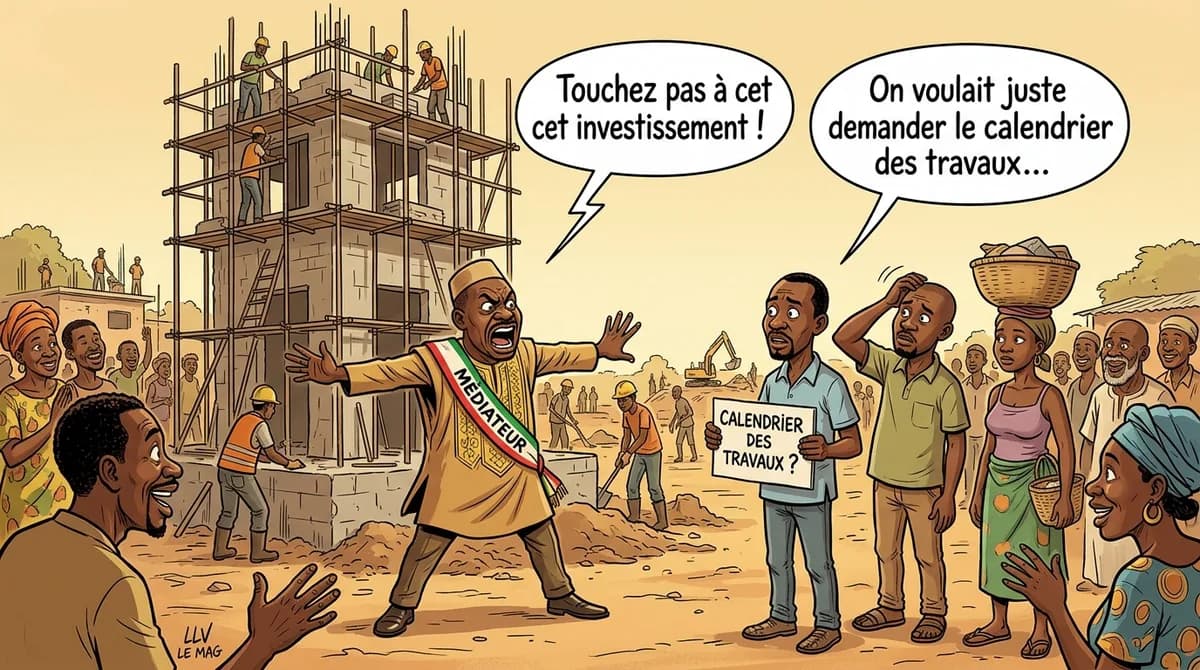
On July 6, 2026, in the heart of Douala, Shanda Tonme broke the silence surrounding the Djeuga Palace. In brief, he explained that his visit to the site, accompanied by building specialists, convinced him to speak publicly in defense of a project that, in his view, must continue unabated.
As Universal Mediator, president of the Independent Commission Against Corruption and Discrimination (COMICODI) and head of the Popular Movement for Dialogue and Reconciliation (MPDR), Tonme emphasized his role as a guarantor of investment integrity. His expertise, combined with his knowledge of sector stakeholders, enabled him to assess the technical and human challenges of the construction.
"I understand," he said, before calling on "nationals who believe in their country" to back the project. His message was clear: the Djeuga Palace must not be abandoned; it must move forward, be completed, and become a beacon of Cameroonian modernity. He stressed the need to encourage entrepreneurs who invest in republican institutions.
The building stands at the Joss interchange, a strategic crossroads in the city. Although some work has been halted, the structure awaits technicians and funding to resume its ascent. The project is championed by Claude Feuteu, a recognized deputy and businessman who also founded the prestigious Djeuga Palace hotel in Yaoundé. His ambition is to create a "platform for official ceremonies" that will mark Douala's boulevard.
For Cameroonians, the Djeuga Palace is more than just a building. It promises hundreds of direct and indirect jobs, a boost to the business tourism sector, and a symbol of controlled urbanization. In a country where youth unemployment remains high, each large‑scale project becomes a lever for social growth.
Tonme warned of the "true curse of nations that do not develop," attributing the lag to misjudgments and a lack of economic nationalism. He presented Cameroon as a "case study" where political will can reverse the trend, provided decision‑makers back structural initiatives.
The message is directed at private investors, local authorities and citizens alike. By supporting the Djeuga Palace, they contribute to a project that could become a regional attraction hub, stimulating cross‑border trade and enhancing the country's visibility on the international stage.
The future of the construction now hinges on stakeholders' ability to mobilize the necessary resources. Tonme called for stronger coordination among public institutions, financial partners and building experts to prevent further stoppages and ensure delivery within the planned timeline.
In conclusion, the mediator reaffirmed that the Djeuga Palace must "continue, continue and finish." His appeal serves as a reminder that progress comes through perseverance, mutual support, and confidence in Cameroon's ability to deliver large‑scale projects.