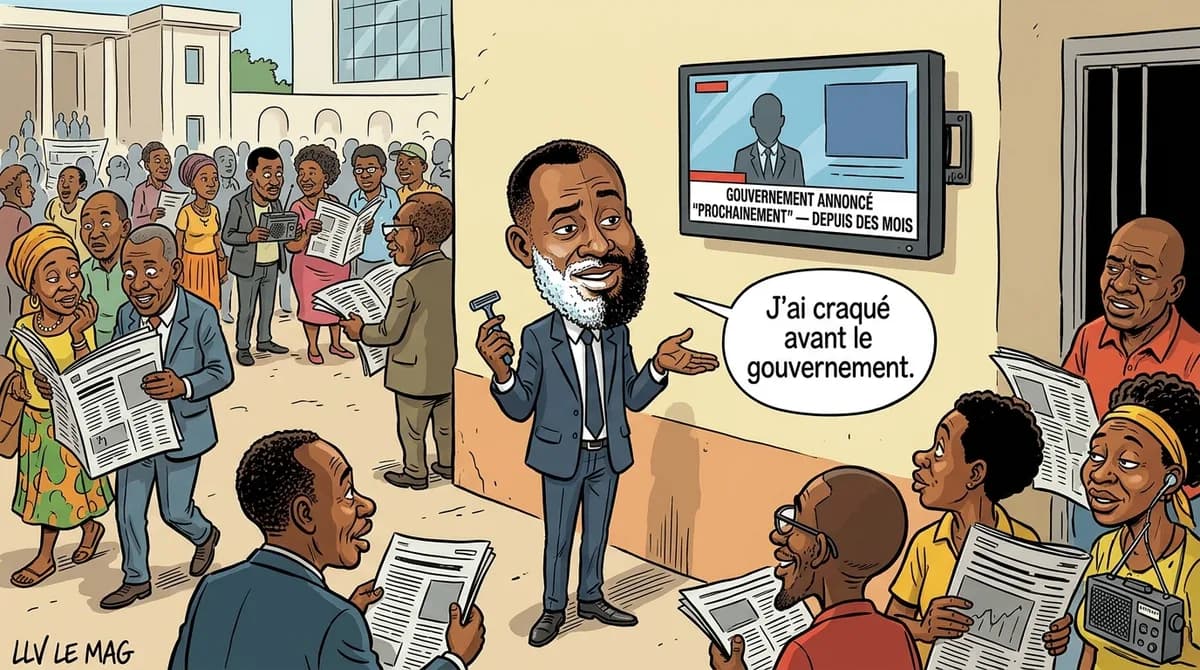
On July 3, 2026, Cameroonian reporter Souley Onohiolo let his beard fall and shaved his head, an act that quickly spread across social media and national media.
Since President Paul Biya's year‑end speech, in which he promised the formation of a new government, Onohiolo had pledged to keep his beard as a form of silent protest, waiting for political promises to materialise.
Accompanied by family members and close friends, the journalist went to the barber. Among the supporters, colleague François Bikoro hailed his colleague's “symbolic revolt,” noting that the gesture had lasted eight months, since the presidential promise was made.
In the barber’s chair, Onohiolo said he was ending his personal revolt, explaining that the cut signalled a decision taken “without waiting any longer.” He reminded that his act was meant to echo the Cameroonian people's waiting for a government that is slow to materialise.
Although personal, the gesture resonates beyond a simple shave. It reflects the frustration of the middle class and independent press who see their political hopes diluted by unkept promises. By turning his face into a living tableau, the journalist offered a visual metaphor for stagnation and the desire for change.
Reactions are mixed. Some commentators view it as a call for citizen mobilisation, while others see it as a mere symbol with no concrete impact. In any case, the act underscores that public discourse can sometimes manifest in unexpected actions, especially when institutions lag behind legitimate expectations.
As the promised new government remains pending, Onohiolo’s haircut will be remembered as an illustration of the tension between political promise and everyday reality. The now‑shaven journalist carries a different kind of visibility: that of a spokesperson who, with a simple shave, reminded everyone that the era of speeches is giving way to action.