On June 26, Owona Nguini aired a barrage of accusations against President Paul Biya, even insinuating that the leader was on the brink of death. The tirade flooded the inbox of Armand Djaleu, a journalist for the pan‑African daily, who chose to answer publicly on June 29 in an op‑ed that aims both to defend his position and to issue a warning.
"Speculating on the death of heads of state is part of my job," the writer writes, reminding that the freedom to investigate sometimes means venturing into uncertainty. He stresses that for "real journalists" nothing is sacred, and that drafting obituaries before a public figure actually dies is not a myth but an established practice in the press world.
He cites the example of François Mitterrand, whose reporters were once called "dogs" by the president himself, illustrating the long‑standing tradition in which power and the press maintain a tense, sometimes violent, relationship. This historical reference places the current controversy in a broader context where criticism and provocation serve as tools of control and counter‑power.
In the Cameroonian context, where state security remains highly sensitive, the journalist warns that the "pack" stalking public figures can manifest as pressure or even retaliation. He mentions the possibility that "security‑sphere zealots" could intervene, underscoring the concrete risks any professional faces when questioning a head of state's health.
The author wonders who Nguini’s diatribe is truly aimed at, suggesting the discourse may be directed at the "Ekang supremacists," a political group that, in his view, manipulates incendiary concepts to sow discord. This query opens the door to a sociographic profile of the target audience—those who consume and spread rumors as ideological weapons.
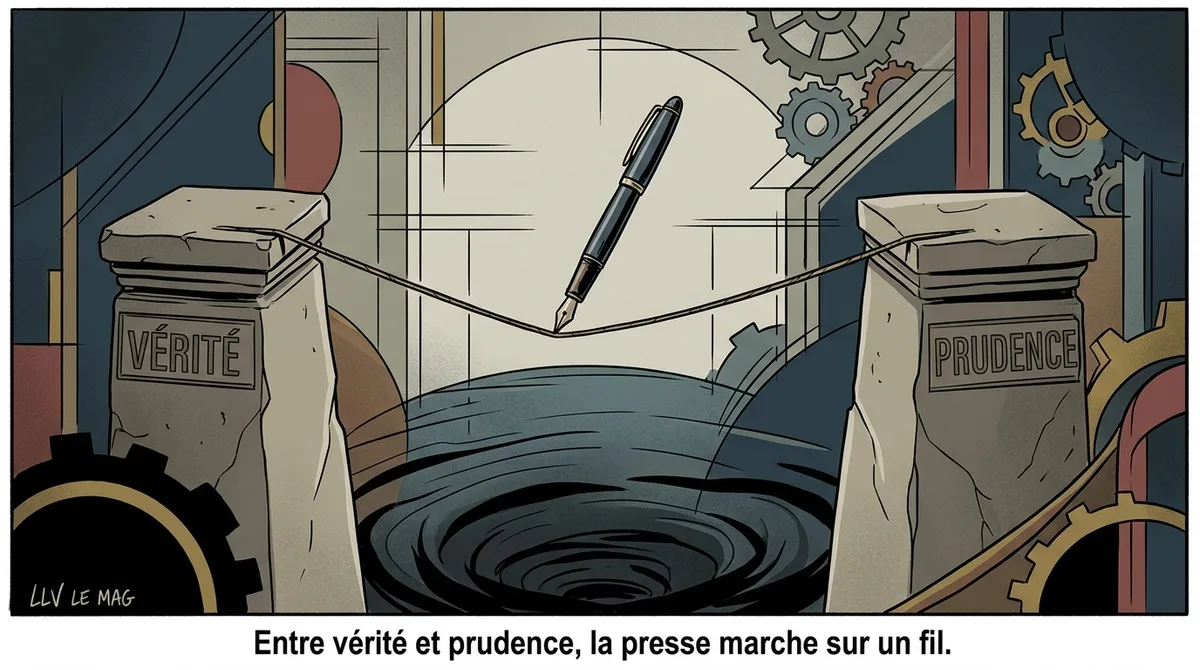
At the heart of the debate lies journalistic ethics: how far can speculation be justified before it crosses into defamation? The piece stresses the need for a balance between the duty to inform and respect for human dignity, especially when it concerns a leader whose country's stability hinges on public perception.
In conclusion, Djaleu calls for a more open dialogue between the media and institutions so that freedom of expression does not become a pretext for misinformation. He proposes that journalists, while retaining their watchdog role, adopt internal safeguards to avoid feeding rumors that could destabilize Cameroonian society.