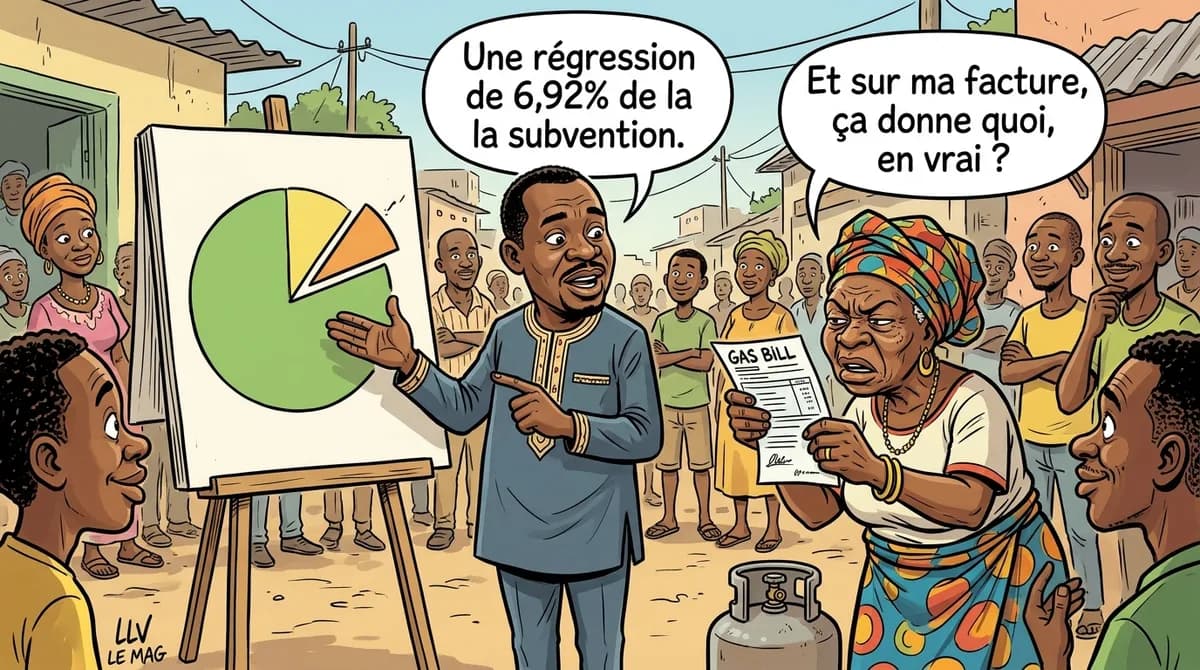
On June 25, 2026, the Journal du Cameroun published the official figures for the domestic gas subsidy for 2025. The total amount stands at 48.96 billion CFA francs, down from 52.6 billion in 2024, a reduction of 3.64 billion, equivalent to a 6.92% decline. This data, drawn from the ministerial report, serves as the starting point for a discussion on the country's budgetary and social challenges.
Why the cut? The government says the reduction stems from a mix of factors: a gradual control of gas import costs, the implementation of energy‑efficiency measures, and a refocusing of public spending toward other priorities such as health and education. By limiting subsidies, the state aims to shrink the fiscal deficit while encouraging households to adopt more responsible consumption habits.
For Cameroonian families, the domestic gas subsidy is a vital safety net. In 2025, despite the cut, the support remains one of the largest in the energy sector, guaranteeing access to clean energy at affordable prices. Low‑income households, which make up nearly 40 % of the population, rely heavily on this aid for cooking and heating, especially in rural areas where electricity is still intermittent.
The contraction of the subsidy, however, has tangible repercussions. Some consumers report higher gas prices at retail points, which may push families toward cheaper but more polluting fuels such as charcoal. This shift could fuel deforestation and undermine Cameroon’s climate‑change mitigation goals slated for 2030.
From a macro‑economic perspective, the 3.64 billion CFA franc reduction frees resources that could be redirected to infrastructure projects or social programmes. The Ministry of Finance has mentioned the possibility of investing these savings in strengthening the national electricity grid, to ensure a more stable supply and reduce reliance on domestic gas. Such a pivot could, in the medium term, boost the country’s competitiveness and spur job creation in the renewable‑energy sector.
Private‑sector players, including gas distributors and appliance manufacturers, are watching these developments closely. Some advocate for greater cooperation with the government to develop more efficient storage and distribution solutions that could offset the subsidy cut without penalising consumers. Others stress the need for clear communication to avoid misunderstandings and social tensions.
Ultimately, the 2025 reduction in the domestic gas subsidy opens a broader debate on public‑resource management and Cameroon’s energy transition. While the fiscal tightening aims to reinforce financial discipline, it also obliges authorities to ensure that the most vulnerable households are not left behind. The challenge will be to balance state savings with equitable access to clean energy, a prerequisite for the country’s wellbeing and sustainable development.