On Tuesday, June 23, 2026, in Douala, the national president of the Cameroon Independent Journalists' Union (SYNAJIC) issued a strongly worded statement demanding the immediate release of Jean‑Pierre Amougou Belinga, who has been incarcerated for several years as part of the investigation into the murder of journalist Martinez Zogo.
The case, which has shaken Cameroon’s media landscape since 2022, links former minister Amougou Belinga to the death of investigative reporter Martinez Zogo. His continued detention has been seen as a symbol of the sluggishness of justice and of what the journalistic community views as arbitrary imprisonment.
On Monday, June 22, sworn judicial expert Georges Bell Bitsoka appeared before the Yaoundé military court and declared that he had found no incriminating evidence after retrieving the deleted messages exchanged between Justin Danwe and Amougou Belinga. This first expert report cast serious doubt on the strength of the case against the former minister.
The following Tuesday, the same day SYNAJIC’s statement was released, the conclusions of Bitsoka’s report were confirmed by a second sworn judicial expert. Jean‑Pierre Oloumou was tasked with conducting a second analysis, thereby reinforcing the legitimacy of the finding that there is no tangible evidence linking Amougou Belinga to Martinez Zogo’s assassination.
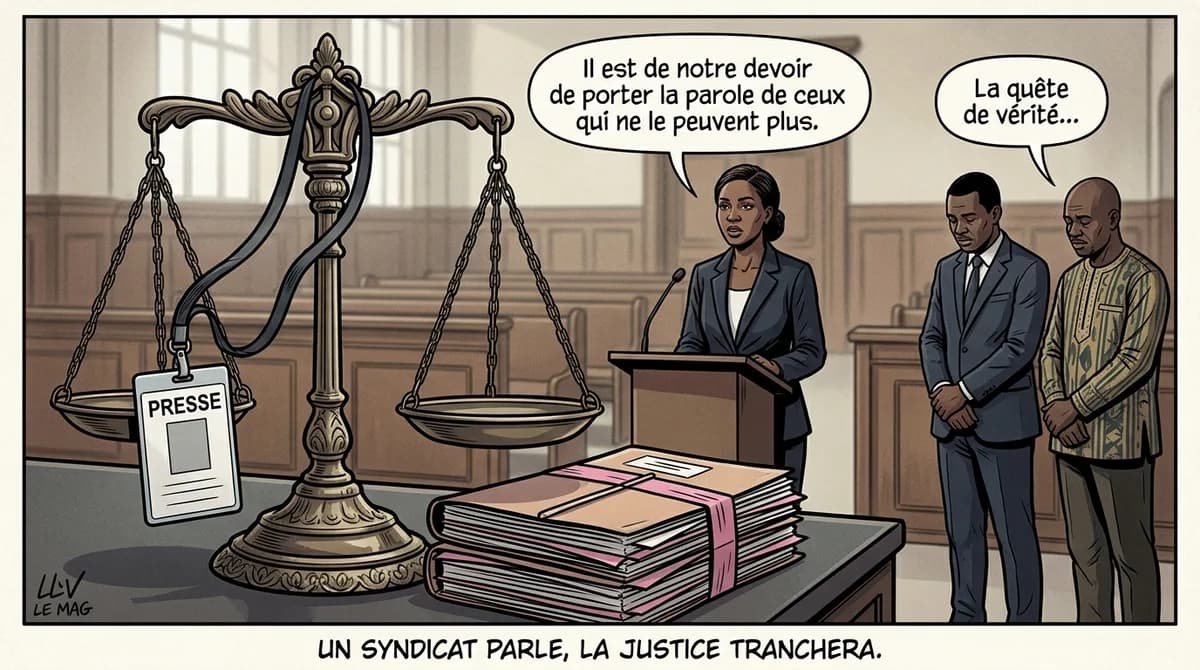
“SYNAJIC denounces the arbitrary detention and calls for the release of Jean‑Pierre Amougou Belinga if there is no evidence against him,” the statement reads. The union, which represents independent journalists, reminds that press freedom cannot be guaranteed while political figures remain imprisoned without clearly established charges.
This demand carries great significance for Cameroon. On one hand, it highlights the tension between the judiciary and political actors; on the other, it underscores the crucial role of the media in monitoring justice. The eventual release of Amougou Belinga could be seen as a goodwill gesture, easing the concerns of a profession that fears repression.
The military tribunal continues to examine testimonies, and the next hearing could determine whether additional pieces of the puzzle will be presented. If investigations confirm the lack of a link, pressure from SYNAJIC and civil society could accelerate a release decision, bolstering the credibility of the judicial system in the eyes of Cameroonians.
While awaiting further developments, SYNAJIC remains vigilant, warning that each day of unjust detention fuels a sense of impunity. The fate of Amougou Belinga thus becomes a barometer of Cameroon’s ability to reconcile justice, transparency and press freedom—two pillars essential to the country’s democratic stability.