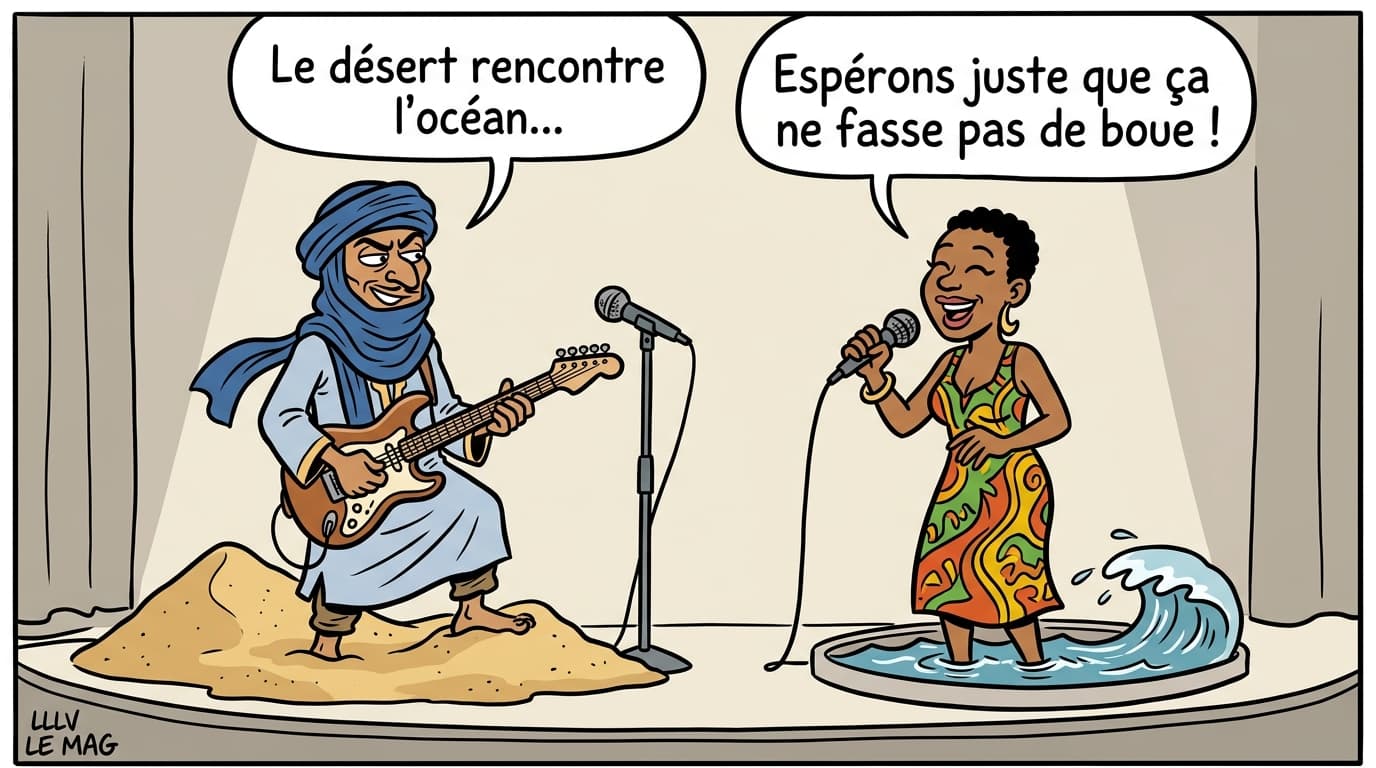
Tuareg music, embodied by bands like Tamikrest, has become a symbol of resistance and cultural preservation for the Kel Tamasheq people of the Sahara. For 20 years, Tamikrest—whose name means 'connection' in Tamasheq—has used guitar and song to narrate exile, loss, and the struggle for freedom.
Across the Indian Ocean, Maya Kamaty transforms maloya, the traditional music of Réunion, into a global, multilingual pop sound. Her EP *Dann Tournan* marks a turning point between diasporic heritage and modernity, reflecting the cultural dynamics of the Indian Ocean islands.
Tamikrest released their sixth studio album, *Assikel*, recorded live on analog tape, featuring a guest appearance by Ibrahim Ag Alhabib of Tinariwen. The band, formed in 2006 by Ousmane Ag Mossa and Cheikh Ag Tiglia, hails from Tinzawaten, near the Mali-Algeria border. Réunionese artist Maya Kamaty released *Dann Tournan*, an EP blending maloya, pop, and diasporic influences. The RFI #SessionLive showcased tracks like *Adagh Oyantid* and *Eillal* (with Ibrahim Ag Alhabib) for Tamikrest, and selections from *Dann Tournan* for Maya Kamaty. Tamikrest’s lineup includes Ousmane Ag Mossa, Cheikh Ag Tiglia, Paul Salvagnac, and Cédric 'Momo' Maurel.
Tamikrest’s music is far more than a genre—it’s an act of cultural resistance. In a context where the Kel Tamasheq people face exile, conflict, and marginalization, their sound becomes a tool for preserving identity. *Assikel*, their latest album, embodies this 'journey' through raw, atmospheric tones while paying tribute to their roots with Ibrahim Ag Alhabib’s legendary presence.
Maya Kamaty, meanwhile, reinvents maloya by fusing it with contemporary influences. *Dann Tournan* isn’t just music—it’s a cultural manifesto. By weaving Réunionese Creole, English, and French, she crafts a *Creole Indian Pop* aesthetic that transcends borders. For Africa and its diaspora, this approach resonates as a celebration of diversity and resilience in island cultures.
Though distinct, these two projects share a common pursuit: freedom. Whether through desert chants or Indian Ocean rhythms, Tamikrest and Maya Kamaty show how music can be a vessel for memory, resistance, and innovation. Their collaboration in the RFI #SessionLive is a powerful symbol for Africa and its diaspora, proving culture remains a bulwark against erasure and a bridge to the future.
For Cameroon and Francophone Africa, the visibility of artists like Tamikrest and Maya Kamaty offers a chance to strengthen cultural exchange. Their music, rooted in local traditions yet open to the world, could inspire a new generation of African musicians to explore bold fusions. Festivals like the *Festival in the Desert* and platforms like RFI Musique play a key role in amplifying often-marginalized voices.
Politically and socially, Tamikrest’s music underscores the importance of preserving minority languages and cultures. In countries like Mali or Niger, where Tuareg communities face conflict, this musical visibility can raise global awareness. Maya Kamaty’s work on maloya and diasporic heritage offers vital reflections on postcolonial identity—a critical issue for Africa and its diasporas.
Tamikrest and Maya Kamaty don’t just play music—they write their people’s history through melody. *Assikel* and *Dann Tournan* transcend borders, reminding us that culture is a universal language. As Africa and its diaspora navigate tradition and modernity, these artists show that freedom lives in the notes of a guitar or the rhythm of a drum. Their legacy, already profound, is only beginning.