
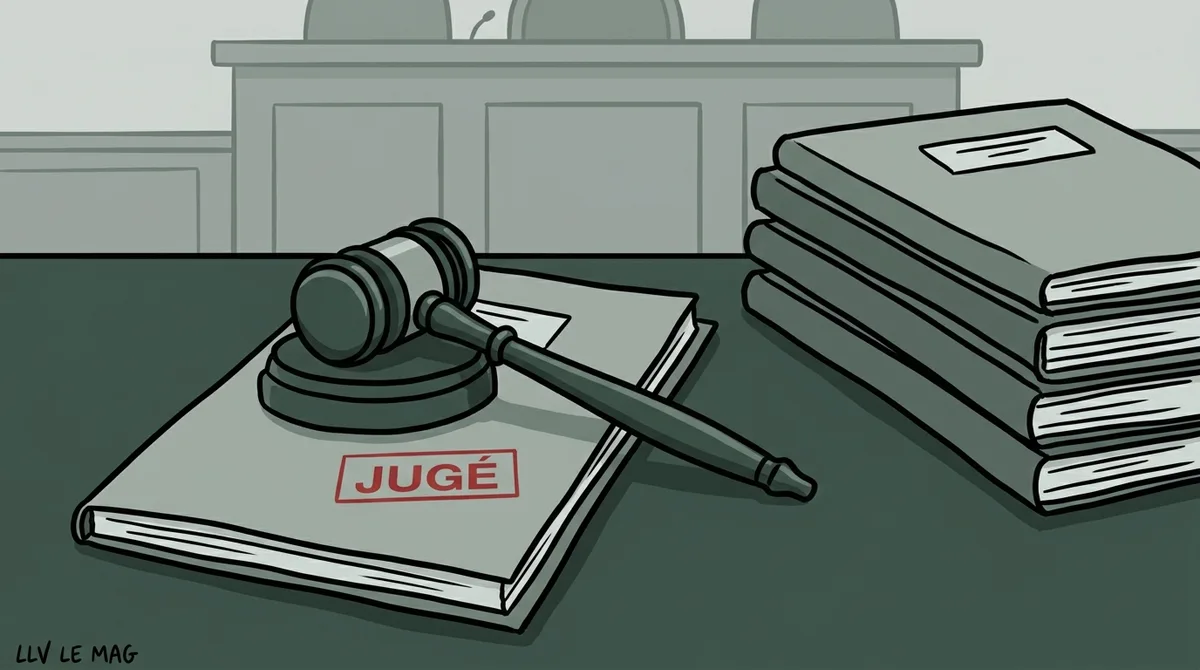
On July 13, 2026, as the country continues to grapple with the fallout from the 2025 elections, the Central Military Court in Yaoundé issued its first judgment in seven pending cases. Announced at 09:55 GMT, the decision represents the first milestone of a judicial process aimed at restoring order and punishing acts deemed a threat to state security.
The military court, an exceptional criminal jurisdiction, was tasked with trying dossiers that civil authorities consider to fall under discipline and national security. The seven defendants, drawn from various backgrounds, received distinct sentences reflecting the seriousness and nature of the alleged offenses.
Among those convicted, a woman was sentenced to one year in prison with a three‑year suspended term, a measure that combines incarceration and probation. Two men received prison sentences, though the exact lengths were not disclosed in the official communiqué. The remaining four defendants were handed varied sanctions, ranging from imprisonment to other restrictive measures, with details not made public.
These verdicts come in the wake of the turmoil that rocked the country after the 2025 elections, where accusations of fraud, violence and disruption of the electoral process fueled instability. The recourse to military justice underscores the executive’s intent to swiftly address serious infractions while reaffirming the rule of law even in times of crisis.
Legally, the military court’s decision carries a dual significance. On one hand, it shows the state mobilising all legal tools at its disposal to meet security challenges. On the other, it raises questions about the separation of powers between civilian and military justice, a debate that could shape forthcoming institutional reforms.
For Cameroonian citizens, the convictions may be seen as a sign of firmness, but also as a test of the judiciary’s legitimacy. If the public judges the penalties to be proportionate to the crimes, confidence in institutions could strengthen. Conversely, a perception of injustice or political targeting could spark new tensions.
The judicial process is not yet complete: several cases remain pending and additional matters may be brought before the same court. The next steps will depend on the government’s ability to balance security, respect for fundamental rights and national dialogue. The country now awaits a justice system—whatever its form—to contribute to lasting reconciliation and the consolidation of democracy.