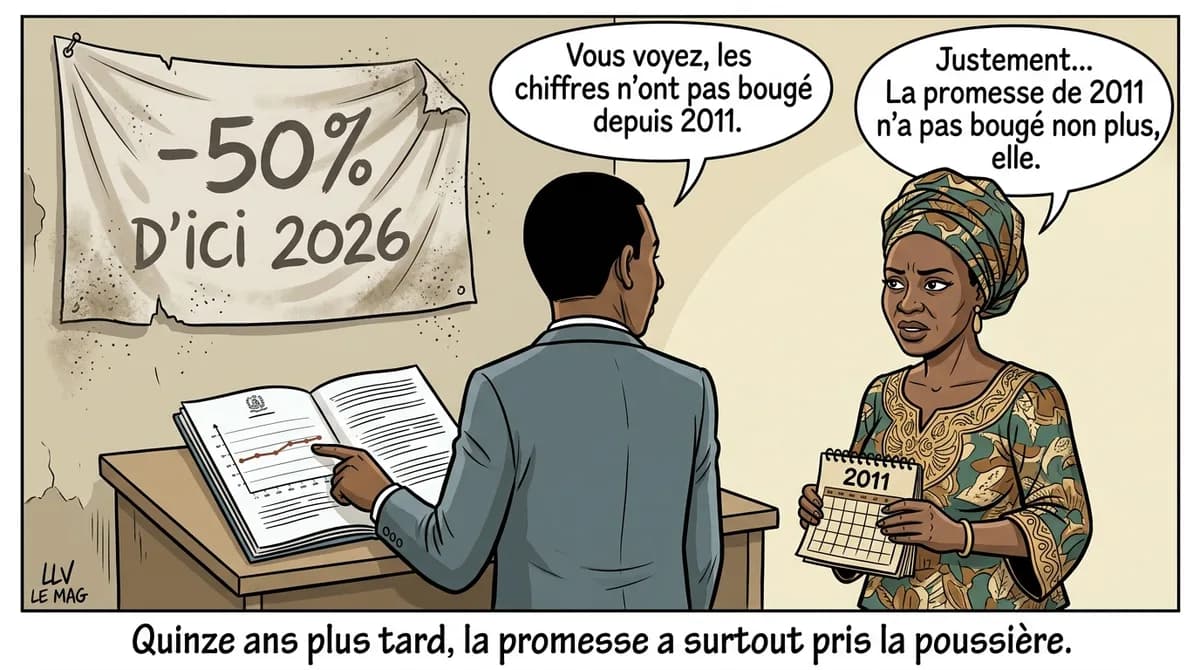
On June 24, 2026, Human Rights Watch released a report that casts a stark light on Cameroon’s policy to combat violence against women and girls. Since 2011, the country had pledged to halve such violence by 2026, a target meant to mark a decisive step forward for the safety and well‑being of Cameroonian women.
That promise, embedded in the national roadmap, was backed by a suite of measures: strengthening the legislative framework, establishing shelters, training law‑enforcement personnel and earmarking specific budget resources. The aim was to build a protective net capable of rapid intervention and long‑term prevention.
Fifteen years on, the HRW report concludes the government has fallen short of its commitments. The authors cite a lack of real funding, uneven enforcement of existing laws and an absence of reliable data to gauge progress. Without these pillars, protection mechanisms remain fragile and victims continue to face institutional obstacles.
For women and girls, the picture translates into an alarming persistence of domestic, sexual and economic violence. Beyond individual trauma, such violence hampers women’s participation in the labour market, civic life and education, deepening the gender inequalities already present in Cameroonian society.
Politically, HRW’s findings are feeding public debate ahead of the 2025 elections. Civil‑society organisations, already active in defending women’s rights, are intensifying calls for transparency and accountability. The government is under fire both domestically and internationally, which could shape voter perceptions of the state’s ability to protect its female citizens.
The report offers a series of concrete recommendations: strengthen the penal code with more deterrent sanctions, guarantee a dedicated budget for victim‑support services, improve training for police and judges, and establish a national data‑collection system. These steps aim to plug the identified gaps and create an environment where every woman can live without fear of violence.
The future remains uncertain, but the signal from Human Rights Watch adds pressure for Cameroon to meet its obligations. The international community, donors and regional partners are called upon to back the necessary reforms. If the 2011 commitments finally translate into tangible actions, Cameroonian society could witness a lasting shift, making women’s security an indisputable national priority.